Glowlight Tetra Tank Setup: A 24 x 15 Inch Base, Acidic Water, and Planted Cover
On This Page▾

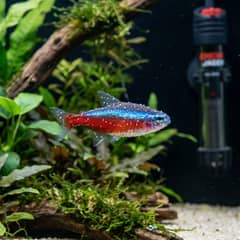
Glowlight tetras come from forested tributaries of the Essequibo River in Guyana, where the water is stained dark brown by tannins and often strongly acidic. An adult reaches about 1.6 inches (4 cm), and a tank for a school of 10 is built around floor space, soft acidic water and dense plants.
Tank Size: A 24 x 15 Inch Base for Ten
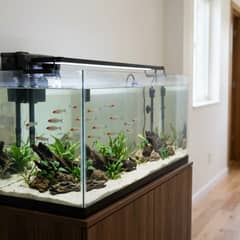
Buy for the base. The tank for a school of 10 has a floor of at least 24 x 15 inches (60 x 38 cm), which works out to roughly 18 to 20 gallons. A 20-gallon long covers the same floor area as that 24 x 15 base, so it fits the school too.
A 10-gallon tank is sometimes sold as enough for these fish, but its floor falls short of that base. Six is the least that works, and 10 is the school to buy. A school of that size fills the middle of the tank and, the larger it gets, works lower toward the floor. The larger base leaves that water open instead of crowding the fish against the glass and the plants.
Temperature: 75 to 82°F, Held Steady
75 to 82°F (24 to 28°C) is the range, held by a submersible heater. Set the heater inside the band, since 82°F is the top of it and nothing is gained by running closer.
That is the same band as an ember tetra tank. A neon tetra tank runs cooler, at 70 to 77°F, so the two share only 75 to 77°F.
Water Chemistry: The Acidic Side for Color
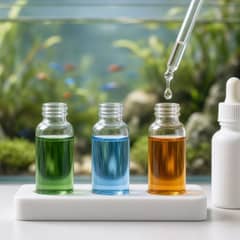
The target is a pH of 5.5 to 7.5 and a general hardness of 2 to 15 dGH. Captive-bred glowlights settle into a wide range of conditions and survive slightly alkaline water, but the fish color up best at the acidic end of the pH range, so a tank that lands near the middle or below is the better outcome than one pushed toward 7.5.
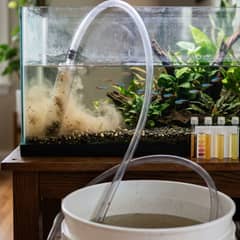
Test the tap water before the tank is filled. Water outside those numbers moves by adjusting GH and KH together, which carries the pH with it; a pH-down product on its own drags the number briefly and then lets it drift back. Every fill and water change is treated with a water conditioner that removes chlorine and chloramine.
Filtration: Four to Five Turnovers an Hour
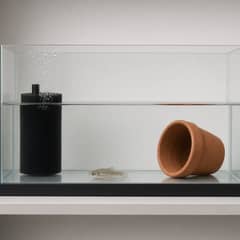
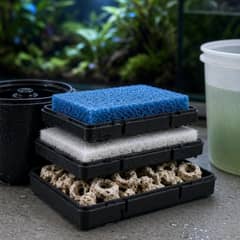
Size the filter to turn the tank's whole volume over four to five times an hour, which for an 18-gallon tank means a filter rated at roughly 70 to 90 gallons an hour. A sponge filter sized for the tank is the simple choice. It does its work as a home for the bacteria that process waste, so the biological media is the part to check when choosing a size, and its output leaves the open water in the middle of the tank calm. A hang-on-back works as well.
Substrate: A Thin Bed of River Sand
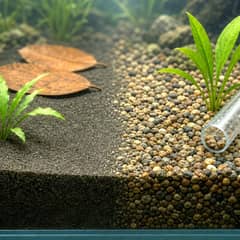
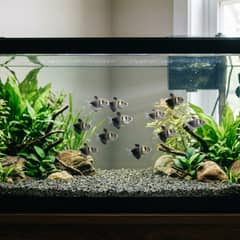
River sand is the floor for this species, with a few driftwood branches laid across it, and a thin layer of fine sand is all the bed needs to be.
The bed should be inert. A glowlight survives slightly alkaline water, so a calcareous floor is less dangerous here than in a cardinal tank, but it still drags the water away from the acidic side where the stripe looks its best. Even standard pea gravel carries enough calcium to raise pH and hardness, and coral sand pushes the pH past 8.0, beyond the 7.5 top of this fish's range.
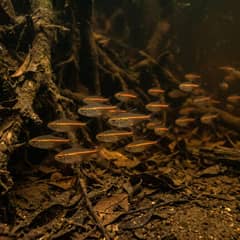
About 1 inch (2.5 cm) of sand is plenty, since sand this fine tends to stagnate in a deep layer. A bed planted into runs 2 inches (5 cm) or more of gravel, with root tabs pushed in beside the rooted plants. Leaf litter on top suits glowlights, which are as much at home among wood and fallen leaves as among plants.
Plants: Fine Leaves at Several Heights
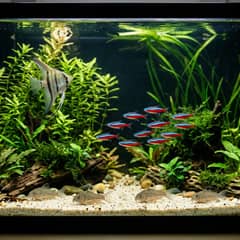
Plant the tank with a wide variety of plants, and favor fine-leaved species at several heights so the school has cover at every level. Glowlights look their best in a heavily planted tank and can appear washed out in a spartan one. Leave a clear space in the center of the tank, because that open water is where the school swims. Floating plants add surface cover on top.
Lighting: Fairly Dim, 8 to 10 Hours
Use fairly dim lighting, on for roughly 8 to 10 hours a day. Glowlights show their best color in soft water under dim light with a tannin tint, and floating plants do part of the dimming.
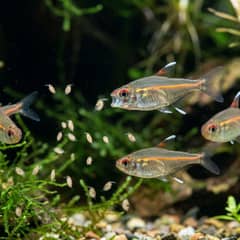
The 1917 redescription of the glowlight tetra describes its stripe as a broad band without chromatophores, cherry red in life. The species name agrees: erythrozonus means red-banded.
Source: U.S. Fish and Wildlife Service, quoting Eigenmann (1917); The ETYFish Project
Tankmates: Peaceful, Similar in Size
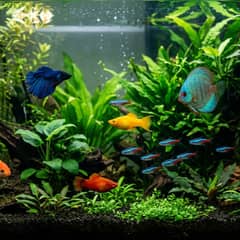
Keep the tank calm. The glowlight is peaceful and sometimes a little shy, one of the best tetras for a general community, and it suits companions of a similar size and temperament. Anything big enough to swallow a 1.6-inch fish does not belong. Every pairing also has to pass the same four checks on temperature, water, size and fins that any two species face before sharing a tank.
The companions that work:
- Most livebearers, danios, rasboras and other small tetras.
- Peaceful bottom dwellers such as Corydoras and kuhli loaches.
- Cherry barbs and small gouramis such as honey and sparkling gouramis.
- Dwarf cichlids in a larger tank, where a glowlight school makes a good dither fish.
Glowlights leave slow, long-finned fish alone, and aggression is rarely a problem. Angelfish are the one to rule out: they are notorious for eating glowlights.
Blackwater or Clear Water
Either works. The wild streams are stained dark, but every glowlight sold is farm-bred, and captive-bred fish settle into a wide range of conditions, plain tap water included. The tint is about color: it brings out the stripe.
For the stained look, river sand goes down with driftwood and a few handfuls of dried beech or oak leaves. The wood and leaves color the water like weak tea, with old leaves pulled every few weeks before they rot and foul the water. A small bag of aquarium-safe peat in the filter, the old tannin source, is not needed: its collection is unsustainable and environmentally destructive.
Cycle the Tank Before the School Goes In
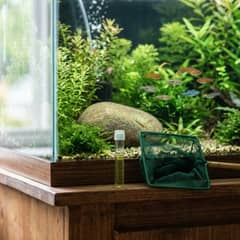
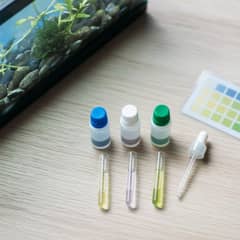
A finished cycle is the single most important step when a glowlight tank is first set up. The tank is cycled before any fish are added: ammonia and nitrite both read zero, and nitrate has started to build. The whole school can go in together once the readings hold steady, with the water tested daily until they settle.
Cycle the tank at the tap water's own chemistry, and bring the pH down with leaves and wood only after the cycle has finished, so the water shifts once the bacteria are established.
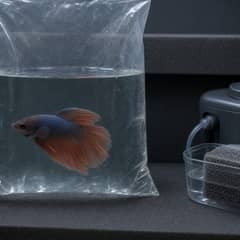
Quarantine is the single most important step for every fish added. New fish spend 30 days in a bare quarantine tank before they join a display tank that already holds fish.
Sources & Further Reading
Last reviewed 31 Oct 2026 · 4 sources
- Seriously Fish: Hemigrammus erythrozonus (Glowlight Tetra); Paracheirodon axelrodi (Cardinal Tetra)
- Practical Fishkeeping: What can I keep to add midwater movement?; Frequently asked questions on aquarium substrates, Matt Clarke
- Glowlight Tetra, Fishkeeper
- Glowlight Tetra 101, Aquarium Source
Frequently Asked Questions
What size tank do glowlight tetras need?
A tank with a base of at least 24 x 15 inches (60 x 38 cm), roughly 18 to 20 gallons, for a school of 10. A 20-gallon long has the same floor area.
Can glowlight tetras live in a 10-gallon tank?
A 10-gallon falls short of the 24 x 15 inch base the species is given. Six is the smallest group that works, and a school of 10 needs the larger base.
What temperature do glowlight tetras need?
75 to 82°F (24 to 28°C), held steady with a heater. Set it inside the range, since 82°F is the top.
What pH and hardness do glowlight tetras want?
A pH of 5.5 to 7.5 and a hardness of 2 to 15 dGH. Fish kept on the acidic side of that pH range show more color.
Do glowlight tetras need live plants?
Yes, a good spread of them. Fine-leaved plants at several heights give cover, with a clear stretch of open water in the middle for the school to swim.
What substrate is best for glowlight tetras?
River sand, kept thin and inert, with driftwood and some leaf litter on top. Pea gravel and coral sand push the pH up and away from the acidic side where glowlights color best.
What fish can live with glowlight tetras?
Peaceful fish of a similar size: livebearers, danios, rasboras, other small tetras and peaceful bottom dwellers such as Corydoras. Angelfish and anything else big enough to swallow a 1.6-inch fish do not belong.
Do glowlight tetras need blackwater?
No. Every glowlight sold is farm-bred and settles in clear tap water. A tea-colored tint from driftwood and dried leaves, with the light kept dim, brings out the stripe.
More on the Glowlight Tetra
Recommended Gear
As an Amazon Associate I earn from qualifying purchases through the links above, at no extra cost to you.
Written by Michael Ryan
Mike keeps two rescued bearded dragons, Dex and Cera, and writes the care guides on BeastlyFacts from his own research and mistakes. He is not a veterinarian.
More about Michael Ryan →You May Also Like
Subscribe - it's free
An occasional email when something new is worth your time. No spam.
Deep Dive
Health and More