Glowlight Tetras Are Never Handled, So the Trip Home and the Tankmates Matter
On This Page▾

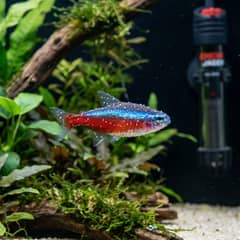
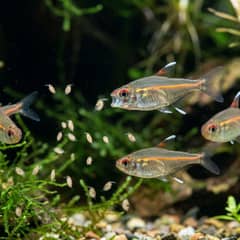
A glowlight tetra (Hemigrammus erythrozonus) is a lively, peaceful fish marked with a red stripe along each side, and an adult measures about 1.6 inches (4 cm). Nobody picks one up. The hands-on part of keeping it comes down to a net, a bag and the time it takes to move from shop water into tank water. After that, the choices that shape its life are the size of the school and which fish share the tank.
How Many to Bring Home
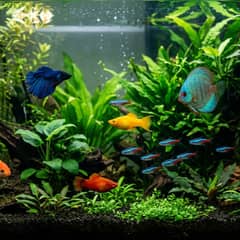
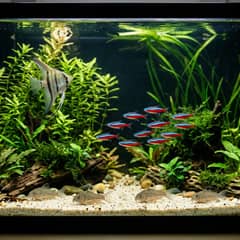
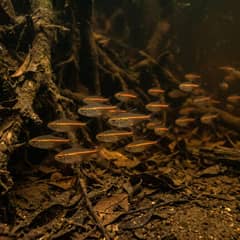
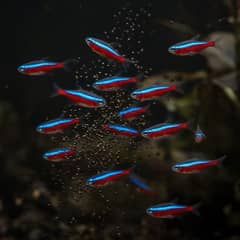
Six is the floor, and ten or more is the number to buy. Glowlights shoal by nature and fare much better among their own kind, and a school of 10 fills the middle of the tank with movement and color, working lower toward the floor as it grows.
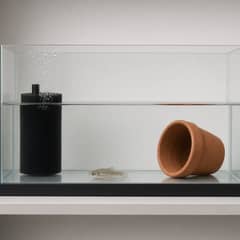
That school needs a tank with a base of 24 x 15 inches (60 x 38 cm), roughly 18 to 20 gallons, a footprint that beats the 10 gallons sometimes sold for the species. Ten fish arriving together add a sudden load of waste, so they belong in a tank that has finished its nitrogen cycle and has been running since.
Netting: One Net per Tank
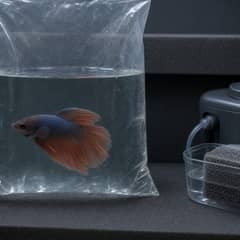
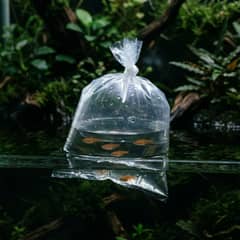
A net is the only thing that touches a glowlight, and the transfer goes most smoothly with the bag already in the water. Float a partly filled bag at the surface, open it there, and net the fish across into it. A helper holding a half-full bag up in the air while fish get tipped in from the net is the version to avoid.
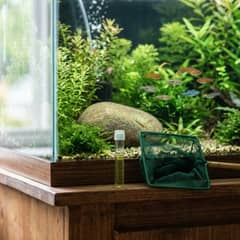
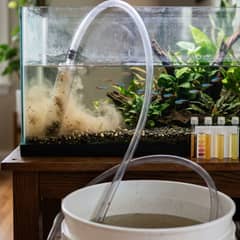
The net belongs to one tank. Nets, siphon hoses and other gear that have not been disinfected should never pass between tanks, because they can carry ich from one tank to the next. A quarantine tank gets its own net, and so does the display.
The Drive Home
| In the bag | What handles it |
|---|---|
| Oxygen | One part water to three parts air: the bag looks underfilled, but the air holds the oxygen the fish breathe |
| Light on the ride | A dark container, or the bag wrapped in a towel or a few sheets of newspaper |
| Ammonia rising and pH falling as waste and carbon dioxide build up | The bag water never goes into the tank |
A journey of more than a short drive calls for the oxygen and insulation planning in moving fish over a longer trip.
Acclimation: Float, Drip or Straight In
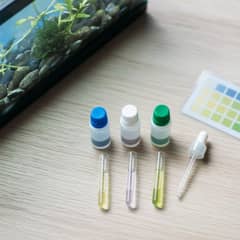
Wild glowlights come from soft, acidic water, and the tank should run at pH 5.5 to 7.5 and 2 to 15 dGH. Testing the tank's pH and hardness beforehand shows how far apart the shop's water and the home tank sit, and that decides the method.
| Method | How long | When it fits a glowlight |
|---|---|---|
| Floating and mixing | 30 to 60 minutes | The routine for small tropical fish, and the one that suits a glowlight from a shop |
| Drip acclimation | About two hours | Meant for sensitive animals such as Caridina shrimp; for a glowlight it earns its time only when shop and tank water differ widely |
| Temperature match, then straight in | Only as long as the temperatures take to match | After a long shipment. The bag water arrives with ammonia piled up and its pH pushed down by the fishes' breathing, which keeps most of the ammonia in a less harmful form; each pour of tank water nudges the pH up, and with it the toxic share, so the slower the mix, the longer the fish sit in it. The other option is an ammonia detoxifier in the bag, then the usual mix |
The floating routine:
- Turn the lights off. New arrivals stay in the dark for the whole process, never under a bright tank lamp.
- Mix the water gradually. Roll the top of the bag down and add a little tank water every few minutes, until the bag holds mostly aquarium water.
- Net the fish across. Lift them out and release them into the tank, and discard what is left in the bag. It carries waste from the trip and can carry pest snail eggs.
- Count, then give them quiet. Check the bag, net and floor for a fish left behind. An hour or two with the lights still off lets the school settle.
Do not expect the first meal on day one. New arrivals often take a day or two to start feeding; offer a little food and remove what is ignored. If they are still refusing after that, the fix is a different food, not more of the same.
Quarantine is the single most important step for every fish added, and most of all for fish bought online. New arrivals spend at least 30 days in quarantine before they join an established tank.
Temperament: Lively and Peaceful
Glowlights are active, colorful and peaceful, with aggression rarely a concern. They use the open water in the center of the tank, with larger shoals sitting low, which makes a school of them a natural fit for a calm community.
Tankmates That Work
The test is a peaceful fish of similar size that cannot swallow a 1.6-inch tetra. Good matches include:
- Livebearers such as guppies and mollies.
- Danios, rasboras, cherry barbs and other peaceful tetras.
- Bottom dwellers such as corydoras, kuhli loaches and clown loaches.
- Honey and sparkling gouramis.
Larger fish that see a small tetra as a meal are the ones to avoid. Angelfish are the standard example: a mature one will eat tankmates this size. Any candidate's adult size is worth checking before it goes in.
Telling Males From Females
Adults are easy to sex. Mature females are rounder through the belly and tend to grow a little larger than males, while males are slimmer, with a slightly sunken belly. A school of 10 needs no sorting, and the distinction matters only to a keeper planning to breed.
The glowlight tetra was first described in 1909, from fish collected on a 1908 expedition to British Guiana run jointly by Indiana University and the Carnegie Museum.
Source: GBIF
Fish Tank Granuloma: Gloves Over Cuts
Floating the bag, netting the school across and every bit of tank care afterward put a keeper's hands into aquarium water, where Mycobacterium marinum can live. The bacterium is found in fresh and salt water and in home aquariums, and a cut or scrape is its way in, which puts people who keep fish at higher risk.
A reddish to purple bump is the usual first sign, typically 2 to 3 weeks after exposure, and it slowly turns into a painful nodule that may break open into a sore. Fingers, elbows and the backs of the hands are where it most often appears. Treatment can run for several months on more than one antibiotic, so a lump that does not go away needs a doctor, told about the tank.
Prevention is simple: rubber gloves for any job in the water, a hand with a fresh cut kept out of it, and the hands and arms washed thoroughly when the work is done.
First-Timer Mistakes
- Buying three or four. Six is the floor and ten the goal.
- Stocking an uncycled tank. Ten fish arrive with ten fishes' waste.
- Sharing one net between tanks. Each tank keeps its own.
- Pouring the bag in. Net the fish and tip the water away.
- Slow-mixing a shipped order. Temperature first, then straight in or a detoxifier.
- Skipping quarantine. Thirty days, above all for fish bought online.
- Adding an angelfish. A grown one eats glowlights.
- Bare hands over a cut. Gloves first.
A school of ten glowlights that came home in a dark bag, crossed on its own net and settled in a quiet, dim tank has had the only handling this fish ever needs, and from there its welfare rests on the company it keeps.
Sources & Further Reading
Last reviewed 31 Oct 2026 · 4 sources
- Hemigrammus erythrozonus (Glowlight Tetra), Seriously Fish
- Practical Fishkeeping: How to breed the Glowlight tetra, John Rundle; What you need to know about bagging fish, Nathan Hill
- University of Florida IFAS Extension: Francis-Floyd R, Yanong RPE, Pouder DB. Ichthyophthirius multifiliis (White Spot) Infections in Fish. UF/IFAS Extension CIR920; Francis-Floyd R, Watson C, Petty D, Pouder DB. Ammonia in Aquatic Systems. UF/IFAS Extension FA16
- Mycobacterium marinum infection, MedlinePlus, US National Library of Medicine
Frequently Asked Questions
How do you acclimate glowlight tetras?
Dim the room, then add a little tank water to the bag every few minutes until it holds mostly aquarium water, which takes 30 to 60 minutes. Net the fish across and leave the bag water behind.
How many glowlight tetras should you buy?
Ten or more is the goal, and six is the least that counts as a school. Ten need a tank with a base of 24 by 15 inches.
Can glowlight tetras live with angelfish?
No. A full-grown angelfish treats a 1.6-inch tetra as food, and the two should not share a tank.
Are glowlight tetras aggressive?
No. They are lively and peaceful, and they do well in a community of other small, calm fish.
How should glowlight tetras be bagged for the trip home?
Fill the bag with one part water to three parts air, then keep it dark in a box or wrapped in a towel or newspaper.
How do you tell a male glowlight tetra from a female?
Look at the belly. Adult females are rounder and grow slightly bigger, while males are slimmer. In grown fish the difference is easy to see.
Should glowlight tetras that were shipped be acclimated slowly?
Not after a long journey. Ammonia builds up in the bag, and mixing in tank water raises the pH, which makes more of that ammonia toxic. Match the temperature, then net the fish straight in, or add an ammonia detoxifier to the bag before mixing.
More on the Glowlight Tetra
Written by Michael Ryan
Mike keeps two rescued bearded dragons, Dex and Cera, and writes the care guides on BeastlyFacts from his own research and mistakes. He is not a veterinarian.
More about Michael Ryan →You May Also Like
Subscribe - it's free
An occasional email when something new is worth your time. No spam.
Deep Dive
Health and More