How Much Does Glowlight Tetra Ownership Cost?
On This Page▾

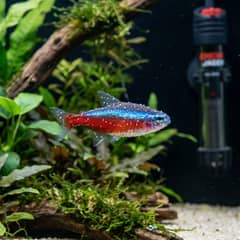
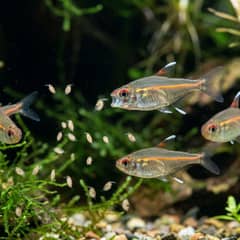
The glowlight tetra (Hemigrammus erythrozonus) is a small fish from the Essequibo River in Guyana, about 1.6 inches (4 cm) long, with a cherry-red stripe down each side. It is sold by the school, and the school is the cheap part of the bill.
The Fish: $30 to $50 for a School of 10
Stores and online sellers list glowlight tetras at about $3 to $5 a fish. The group to buy is 10, with 6 as the lowest workable number, and 10 fish come to $30 to $50 before shipping, which online orders add on top.
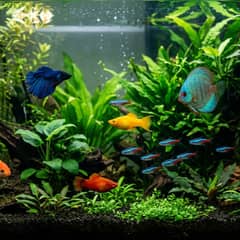
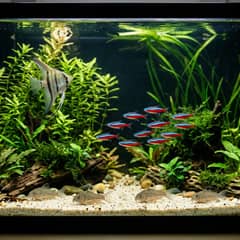
At that price the fish are a small line next to the tank. The same is true of a school of neon tetras, and in both cases most of the budget is the glass and the equipment.
Buy all ten together. A glowlight school added to a few fish at a time goes through quarantine once per batch, and the display waits each time.
The glowlight tetra reached aquarists from Guyana in the 1930s, and its name has been revised so many times since that one early guess placed it in an entirely different tetra genus. The species name itself is plain description: erythrozonus means red-banded.
Source: Practical Fishkeeping; ETYFish Project
Upfront Setup: $165 to $380 for a 20 Gallon Tank
| Item | Cost Range |
|---|---|
| 20 gallon tank with a base of at least 24 x 15 inches | $35 - $150 |
| Aquarium heater | $15 - $35 |
| Sponge filter | $5 - $20 |
| Live plants in varied heights, with floating plants on top | $15 - $30 |
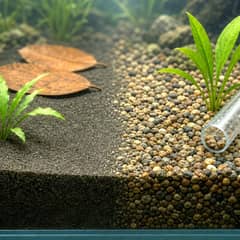
| Two 15.4 lb bags of black sand, or a dark fine gravel, that leaves the pH alone (check the quantity against your tank's floor) | $60 - $80 |
| Liquid water test kit | $25 - $40 |
| Water conditioner that neutralizes chlorine and chloramine | $5 - $15 |
| First supply of micro pellets | $5 - $10 |
| Setup total | $165 - $380 |
Typical price ranges across retailers.
The tank is the biggest line, and it is sized by floor space: a base of at least 24 x 15 inches (60 x 38 cm), which comes to roughly 18 to 20 gallons, for a school of 10. A 10 gallon tank is sometimes sold as enough for these fish, and the glowlight tetra tank setup guide explains why the larger base is the recommendation.
The other lines follow from the fish's range. Glowlights are tropical and kept at 75 to 82°F (24 to 28°C), so the heater is not optional, and a sponge filter covers the filtration on a tank this size. Live plants of varying heights, with some free swimming room left open in the middle, suit them best. The table prices two bags of black sand, or a dark fine gravel, for the 24 x 15 inch floor, and the bed should be one that leaves the pH alone.
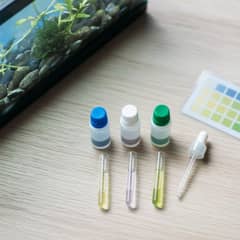
The liquid test kit earns its place twice. It confirms the tank has finished cycling before the fish go in, which is a reading and not a count of days, and that finished cycle is the single most important step when the tank is first set up. It also reads pH, and glowlights are kept at a pH of 5.5 to 7.5, with the acidic end bringing out the best color. Tap water outside that range is a GH and KH question, and what moves them and what does not decides whether a tap needs any work at all.
The Extras: A Spare Tank for Quarantine
| Extra | Cost Range |
|---|---|
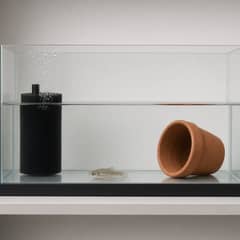
| Bare 10 gallon tank for quarantine, with no substrate or decor | $15 - $30 |
| Heater for the quarantine tank | $15 - $30 |
| Sponge filter for the quarantine tank | $5 - $20 |
| All the extras together | $35 - $80 |
Typical price ranges across retailers.
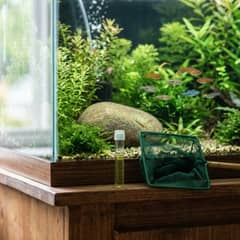
Quarantine is the single most important step for every fish added. New fish spend 30 days in a separate tank before joining the display, and 30 days is the minimum, because at the warm temperatures tropical fish are kept at, ich often shows 1 to 3 weeks after shipping. The tank gets its own net and siphon hose, since equipment passed between tanks can carry the parasite. The fish quarantine guide covers how to run the bare tank priced above.
The same tank is where an ich outbreak is treated. Heat only goes up to the top of the range at 82°F to speed the parasite's cycle, so a bottle of salt or medication is the likely expense. Salt is an option only for fish that tolerate the dose, and it can harm live plants, which is one more reason the treating happens in the bare tank.
Topping up the school later means another round. Fish that survive ich can go on carrying it, so every new batch, two fish or ten, gets its own 30 days apart before it meets the school.
Buying Checklist: Farm-Bred Stock in a Healthy Tank
Wild glowlights are not part of the trade. Every fish on sale is mass bred on a commercial farm, so the choice is between farmed batches, and the albino in some shops is a selectively bred form kept the same way as the standard fish. What decides a batch is its condition and the tank it comes from.
| Check | Buy | Leave it |
|---|---|---|
| Skin and scales | Smooth and unblemished | Spots, patches or sores |
| Fins | Intact | Bloody or ragged |
| Eyes | Bright | Cloudy |
| Swimming | Steady, moving with the group | Circling, drifting or listless |
| The tank | Clean, with other fish that look healthy | Dirty, or holding fish that look sick |
Color is a weak test in a shop. Glowlights can look washed out in a sparse tank and do their best in a heavily planted one, so a dealer tank of pale but lively fish is not a reason to walk away by itself. A fish that passes the checklist still goes through quarantine, since ich may not show for weeks.
Shipping Fish Online
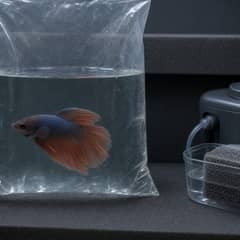
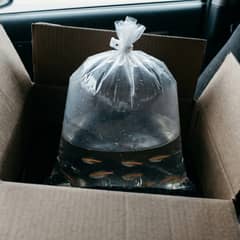
Online orders travel in sealed bags, and the water inside degrades on the way. The fish keep breathing and excreting, so the pH falls and the ammonia climbs the longer the trip runs, which is why bag water is no use as a sample when a fish's water needs testing.
Ongoing Costs: Food, Conditioner and Test Kit Refills
Glowlights eat almost anything offered, and the staple is a micro pellet or small flake. The first supply in the table runs $5 to $10. Small live and frozen foods such as bloodworm, daphnia and brine shrimp add a modest recurring cost on top.
Water conditioner at $5 to $15 a bottle, a little electricity for the heater and filter, and test kit refills make up the rest. How much electricity depends on the equipment and the room. Conditioner goes into every change, so the water change schedule a tank runs on sets how fast a bottle empties.
Vet Costs
A fish vet is worth paying for when a school keeps losing fish and the cause is not clear. Day to day, a school of glowlights is kept healthy through water quality and, when needed, over-the-counter treatment. Guessing costs more than it looks: fish are often given one over-the-counter product after another when the first fails, which usually does more harm than good. When fish start dying, the signs that separate a water problem from a disease decide whether the next spend is a water change, a medication, or a visit to a vet who treats fish. A fish health lab works from live, sick fish and about a quart of water taken from the tank before any water change.
Lifespan
Glowlight tetras live about 2 to 4 years. That is short next to the equipment: the heater, filter, test kit and 20 gallon tank all outlast the first school and can house the next one.
Sources & Further Reading
Last reviewed 31 Oct 2026 · 3 sources
- Hemigrammus erythrozonus (Glowlight Tetra), Seriously Fish
- Francis-Floyd R, Petty BD. Selection of Fish, Merck Veterinary Manual
- University of Florida IFAS Extension: Francis-Floyd R, Yanong RPE, Pouder DB. Ichthyophthirius multifiliis (White Spot) Infections in Fish. UF/IFAS Extension CIR920; Klinger R, Francis-Floyd R. Submission of Fish for Diagnostic Evaluation. UF/IFAS Extension FA55
Frequently Asked Questions
How much do glowlight tetras cost?
About $3 to $5 a fish in stores and online, before shipping. Ten fish come to $30 to $50.
What does a glowlight tetra tank setup cost?
Plan on $165 to $380 for a 20 gallon tank with a heater, a sponge filter, live plants, sand, a liquid test kit, water conditioner and the first micro pellets. A bare quarantine tank with its own heater and filter is extra.
Do glowlight tetras need a heater?
Yes. They are tropical fish kept at 75 to 82°F (24 to 28°C), so the setup budget includes a heater. An ich outbreak never calls for more heat than 82°F, so a second heater is not part of the plan.
How many glowlight tetras should I buy?
Ten is the school to price. Six is the least that works, and the cost of four more fish is small next to the tank.
How long do glowlight tetras live?
About 2 to 4 years, so the tank, heater and filter usually outlast the first school.
Are glowlight tetras wild-caught?
No. Glowlights in the trade are mass bred on commercial farms in several parts of the world, and wild specimens are not offered for sale. The albino is a selectively bred form with the same care.
Do glowlight tetras need a quarantine tank?
Yes. New fish spend at least 30 days in a bare tank with its own heater and sponge filter, because ich in shipped tropical fish often shows 1 to 3 weeks after arrival. Each batch added later starts its own 30 days.
Why do glowlight tetras look faded in the store?
A glowlight can look washed out in a bare, sparse tank and colors up best in a heavily planted one with acidic water. A dull stripe in a bare dealer tank is not a fault on its own; spots, ragged fins or listless swimming are.
More on the Glowlight Tetra
Recommended Gear
As an Amazon Associate I earn from qualifying purchases through the links above, at no extra cost to you.
Written by Michael Ryan
Mike keeps two rescued bearded dragons, Dex and Cera, and writes the care guides on BeastlyFacts from his own research and mistakes. He is not a veterinarian.
More about Michael Ryan →You May Also Like
Subscribe - it's free
An occasional email when something new is worth your time. No spam.
Deep Dive
Health and More