Glowlight Tetra Enrichment: A School, Open Water and Stained-Stream Cover
On This Page▾

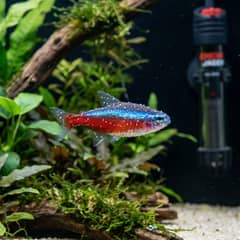
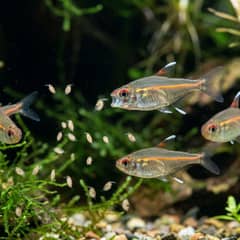
A glowlight tetra is a fish of about 1.6 inches that spends its days in open water with a group, and its enrichment is built around that habit.
Glowlight tetras come from dark, forested streams and live as a school that watches for danger together. Enrichment means giving them that: a school of 10, fine-leaved plants with open space in the center, floating plants and dim light for a stained-stream feel, and small live or frozen food as a treat. Tannin-stained water is optional for these farmed fish.
How They Live in the Wild
The glowlight tetra is known only from the Essequibo River in Guyana. It lives mainly in forested areas, in tributaries that branch off the main river channel. The water there is stained dark brown by tannins from decaying organic material, the color of black tea, and it is often strongly acidic. Light levels in those streams are low.
That brown, shaded water is the brief for the tank: acidic and dim in places, with plenty of plant cover close by and clear water to swim through.
The fish in the shop has never seen that stream. All glowlights in the trade are mass bred on commercial farms, and wild ones are seldom seen.
The School: Ten or More
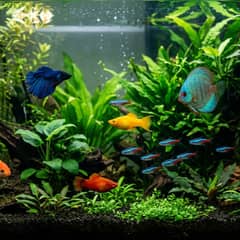
Six is the floor and 10 or more is the target. A group of 10 fills the mid-waters of a tank with movement and color, while a few fish scatter, and larger shoals tend to settle into the lower reaches of the tank. Buy them as one species, together.
The school is also how a glowlight finds out about danger. When a glowlight detects the alarm chemical carried in its own species' skin, it flicks its fins, and the rest of the shoal reads the signal: shoals watching a fin-flicking glowlight turned to antipredator behavior, while shoals watching one that did not flick carried on. The display works on predators too. They kept farther from a fin-flicking tetra, took longer to strike at it and bit at it less.
Glowlights also learn their enemies. In lab trials, a glowlight came to recognize a convict cichlid on sight as a threat only if it had both smelled the cue of a predator that had been eating glowlights and swum out to inspect the cichlid. A group that watches and learns like this is one more reason to keep the full school.
That makes the choice of tankmates simple. Glowlights are peaceful, sometimes slightly shy, and suit a community of fish of similar size and temperament. They are not safe with larger species that may see them as food, such as angelfish, and the cichlids used as predators in those trials belong in other tanks. In a larger aquarium a glowlight school makes a good dither fish for dwarf cichlids.
Plants, Open Water and Shade
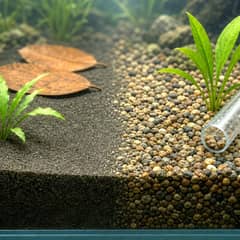
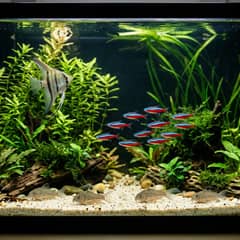
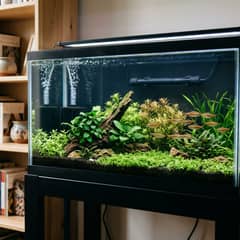
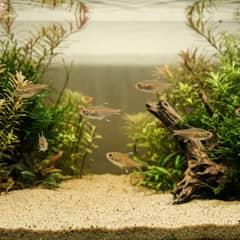
Plant the tank with a variety of fine-leaved plants at different heights, and keep a patch of open water in the center. The school uses that open stretch as its swimming lane, and the plants around it give somewhere to retreat. Glowlights like the cover of aquatic plants, and they look their best in a heavily planted tank; in a very spartan setup they can look washed out. Fine sand makes a gentle floor.
Floating plants shade the surface the way forest cover shades the home streams. Fairly dim lighting suits the species, and under it the fish shows its full color.
A school of 10 needs a tank with a base of 24 x 15 inches (60 x 38 cm), which leaves room for both the planting and the open water.
Clear Water or Tannin-Stained?
The home streams run like black tea, and the question for a tank is what that stain does for the fish.
The case for the stain is color. Glowlights are more colorful in acidic water, and they show their best color in soft water with dim lighting and a tannin tint. Scattered leaf litter adds to the effect and releases tannins as it breaks down, and the same fish is just as at home in a tank furnished with wood and leaf litter as in a planted one.
The case for clear water is where the fish come from now. Farmed, captive-bred glowlights acclimatize to a wide range of aquarium conditions and are hardy and adaptable, thriving in ordinary tap water in many areas. No one has tested glowlights in stained against clear water, so the stain is a choice for color, and a plain planted tank is a fair home.
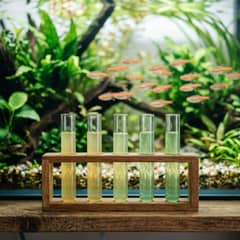
For a stain, driftwood and dried leaves do it, coloring the water like weak tea, with old leaves pulled every few weeks before they rot. A small bag of aquarium-safe peat in the filter is the older way to the same effect, and it is not needed: peat collection is unsustainable and environmentally destructive.
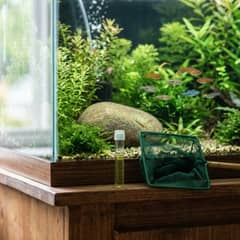
Leaves and wood soften and acidify the water as they stain it, so test first and keep the tank inside pH 5.5 to 7.5, and check the tap water's GH, KH and pH before adding any of them.
Small Live and Frozen Food
A glowlight is an easy eater, and in the wild it takes worms, small crustaceans and plant matter. Small live and frozen foods such as bloodworm, Daphnia and brine shrimp are the closest a tank gets to that, and they give the school something to hunt. Regular meals of them keep the fish in its best condition and color.
Offer them as a treat beside a staple of micro-pellets or small flakes, kept small in portion and light in each feeding.
Glowlight tetra eggs are extremely sensitive to light, so breeders shield the spawning tank from bright light.
Source: Seriously Fish; Practical Fishkeeping, How to breed the Glowlight tetra
Priority Order
- A school of 10 glowlight tetras, one species
- Fine-leaved plants at several heights, with open water in the center
- Floating plants and fairly dim light
- Water on the acidic side at 75 to 82°F
- Small live or frozen food as a treat
- Peaceful tankmates of similar size, with no angelfish or other fish big enough to eat them
- Leaf litter and wood, optional
What Not to Do
Do not buy three because the tank looks big. Do not fill the middle of the tank with decor and leave no room to swim. Do not leave the tank bare and brightly lit. Do not run the heater above 82°F. Do not skip a 30-day quarantine for new fish.
In the forest streams of the Essequibo, a glowlight's world was shaded water, plants within reach and a group moving around it. A tank that supplies those covers most of what the fish needs.
Sources & Further Reading
Last reviewed 31 Oct 2026 · 4 sources
- Seriously Fish: Hemigrammus erythrozonus (Glowlight Tetra); Paracheirodon axelrodi (Cardinal Tetra)
- What can I keep to add midwater movement? Bob Mehan, Practical Fishkeeping
- Hemigrammus erythrozonus, Glowlight tetra, FishBase
- PubMed (U.S. National Library of Medicine): Brown GE, Godin JGJ and Pedersen J (1999). Fin-flicking behaviour: a visual antipredator alarm signal in a characin fish, Hemigrammus erythrozonus. Animal Behaviour 58(3): 469-475; Brown GE and Godin JGJ (1999). Who dares, learns: chemical inspection behaviour and acquired predator recognition in a characin fish. Animal Behaviour 57(2): 475-481
Frequently Asked Questions
How many glowlight tetras should be kept together?
Ten or more. Six is the lowest number that counts as a group, but a group of 10 is what fills the middle and lower water of a tank with activity and color.
What plants suit glowlight tetras?
A wide mix of fine-leaved plants at different heights, with a stretch of open water in the center of the tank for swimming. Fine sand suits the bottom.
Do glowlight tetras need tannins or leaf litter?
Neither is required. Their home streams run dark brown with tannins, so leaf litter, driftwood or floating plants echo that water, provided pH stays between 5.5 and 7.5. Peat in the filter does the same job and is not needed.
What live foods do glowlight tetras like?
Small live and frozen foods such as bloodworm, Daphnia and brine shrimp, offered as a treat beside a staple of micropellets or small flakes.
Why do my glowlight tetras flick their fins?
Fin flicking is this species' alarm display. A glowlight that picks up the alarm chemical in its own kind's skin flicks its fins, and the rest of the shoal turns wary in response.
More on the Glowlight Tetra
Recommended Gear
As an Amazon Associate I earn from qualifying purchases through the links above, at no extra cost to you.
Written by Michael Ryan
Mike keeps two rescued bearded dragons, Dex and Cera, and writes the care guides on BeastlyFacts from his own research and mistakes. He is not a veterinarian.
More about Michael Ryan →You May Also Like

Subscribe - it's free
An occasional email when something new is worth your time. No spam.
Deep Dive
Health and More