How Much Does Rummy-Nose Tetra Ownership Cost?
On This Page▾

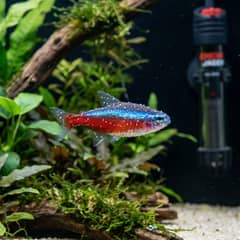
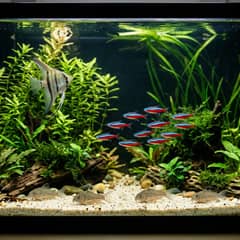
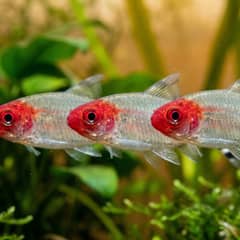
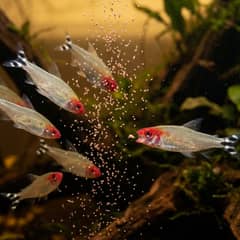
The rummy-nose tetra (Petitella bleheri, formerly Hemigrammus bleheri) is a slender schooling fish from the tannin-stained blackwater rivers of the Negro and Meta basins in South America. Adults reach about 2 inches (5 cm) and carry a bright red nose and head. It is kept in a school of 10 or more, and the long tank that school needs costs more than the fish themselves.
The Fish: $45 to $80 for a School of 12
Online sellers ask about $4 to $6.50 a fish before shipping, often in packs of 6, 9 or 12. Ten is the smallest school to buy, and 12 is the number priced here: a school of 12 comes to $45 to $80, with live-fish shipping charged on top. Buying in person can cost more, with one store listing them at $8.99 a fish.
Both the per-fish price and the school size sit above those of the ember tetra, so the fish line for a rummy-nose tank lands well above an ember school's.
Buy the full school in one go. Rummy-noses are one of the more tightly shoaling small tetras and do poorly in groups that are too small, so the whole school is one purchase.
Rummy-nose tetras school so strongly that physicists use them to study how groups of animals decide things. In a ring-shaped tank, a U-turn is usually started by a fish at the front and passes back through the school. Group size changes how often that happens: groups of 10 turned around about once every 20 minutes, while pairs did it about every 12 seconds.
Source: Lecheval et al. (2018), Proceedings of the Royal Society B
Upfront Setup: $230 to $435 for a 36-Inch Tank
| Item | Cost Range |
|---|---|
| 36-inch tank, 30 to 40 gallons (check the length before you buy) | $70 - $165 |
| Aquarium heater (check the wattage against your tank's volume) | $15 - $35 |
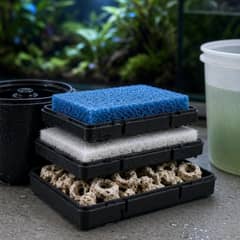
| Gentle filter (check its rating against your tank's volume) | $5 - $20 |
| Live plants | $15 - $30 |
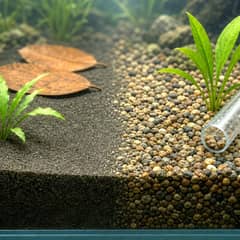
| Three 15.4 lb bags of black sand, or a dark fine gravel, that leaves the pH alone (check the quantity against your tank's floor) | $90 - $120 |
| Liquid water test kit | $25 - $40 |
| Water conditioner that neutralizes chlorine and chloramine | $5 - $15 |
| First supply of micro pellets | $5 - $10 |
| Setup total | $230 - $435 |
Typical price ranges across retailers.
The tank is the largest line, and its length is what to shop by. Rummy-noses are active fish that swim back and forth the length of the tank, so buy a tank at least 36 inches (90 cm) long for a school of 10. That length comes as a 30 gallon (36 x 12 inches) or a 40 gallon breeder (36 x 18 inches). A 20 gallon long measures only 30 inches, and the rummy-nose tank setup guide lays out how to keep the full 36 inches open for swimming.
The heater is a necessity for a tropical fish held at 73 to 79°F (23 to 26°C), and it needs the wattage to warm 30 to 40 gallons. Filtration can stay gentle, which a sponge filter rated for the tank's volume covers. Live plants are not part of the rummy-nose's home rivers, but the fish settle well in a planted tank. The table prices three bags of black sand, or a dark fine gravel, for the 36-inch floor, and whatever goes down has to leave the pH alone: this fish's colors fade in alkaline water.
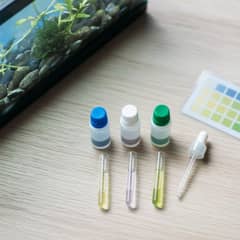
The liquid test kit pays for itself first by showing when the tank has finished cycling, which a kit reading settles and a calendar does not. A finished cycle is the single most important step when the tank is first set up. The kit also tracks pH, and this species prefers soft, acidic water: a pH of 5.5 to 7.0 and a hardness of 2 to 12 dGH. Hardness needs a separate GH test, and what raises or lowers GH and KH decides whether a given tap is worth softening. The kit has one more job with this fish: the red on the head fades when a rummy-nose is stressed or kept in poor water, so a washed-out school is the cue to test.
The Extras: A Spare Tank for Quarantine
| Extra | Cost Range |
|---|---|
| Bare 10 gallon tank for quarantine, with no substrate or decor | $15 - $30 |
| Heater for the quarantine tank | $15 - $30 |
| Sponge filter for the quarantine tank | $5 - $20 |
| All the extras together | $35 - $80 |
Typical price ranges across retailers.
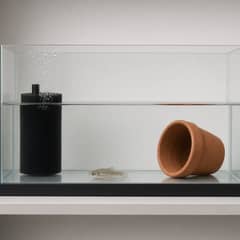
Quarantine is the single most important step for every fish added. New rummy-noses spend at least 30 days in the bare tank priced above before they meet the display school, because in tropical fish, ich often shows up 1 to 3 weeks after shipping and the month gives it time to surface. That tank gets its own net and siphon, since nets and hoses shared with the display can carry the parasite across. The fish quarantine guide sets out how to run it.
Rummy-noses sometimes arrive carrying ich, and because 79°F is the top of their range, an outbreak is cleared with salt or medication and the heater goes no higher than 79°F, so a bottle of treatment is the likely extra spend.
The spare tank keeps working after the first school. Each later purchase, whether two replacements or a second dozen, starts its own 30 days while the display school waits, so topping up a school is a second quarantine as well as a second order.
Buying Checklist: Red Noses and a Healthy School
A healthy rummy-nose shows it in the head color, the body and the way it swims.
| Check | Buy | Wait or walk away |
|---|---|---|
| Nose and head | Bright red | Pale: wait half an hour or come back another day, since new arrivals and fish just chased with a net lose the red for a while |
| Body | Slightly rounded belly | Thin, or bloated |
| Activity | Swimming actively with the school | Lethargic, or hanging apart from the group |
| Skin and fins | No white spots or other marks | White spots, lesions or growths, or fins clamped, frayed or bloody |
Wild fish are still part of the supply. From 2006 to 2015, Brazil's Amazonas state exported more than 142 million ornamental fish, and the rummy-nose made up 5.0% of them, over 7 million fish. That put it third, behind the cardinal tetra at 64.6% and its relative Paracheirodon simulans at 7.5%. Those exports have lost ground to fish bred in Asia, and they are expected to narrow to species that are not bred in large numbers in captivity, the rummy-nose among them.
Wild or tank-bred, a fish that passes the checklist still goes into the quarantine tank. The checklist only decides which fish go in.
Shipping Fish Online
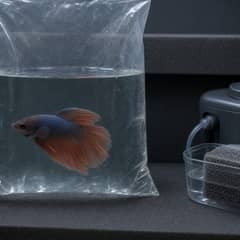
A school ordered online spends the trip sealed in a bag, and the water changes on the way: the fishes' breathing and waste push the pH down and the ammonia up. Rummy-noses can also play dead in the bag, lying still until the bag is set down on a solid surface, when they right themselves. A pale head on arrival is the same short-lived fade new arrivals show in a shop.
Ongoing Costs: Food, Conditioner and Test Kit Refills
Rummy-noses are omnivores with small mouths. The staple is a small flake, granule or micro pellet, and the first supply in the table runs $5 to $10. An opened tub of dry food kept at room temperature should be thrown out after 2 months, so a small tub that the school finishes in that time is the better buy. Small live and frozen foods such as baby brine shrimp, daphnia and mosquito larvae add a modest recurring cost, and a varied menu like this brings out the best color. The school eats small portions at least once a day.
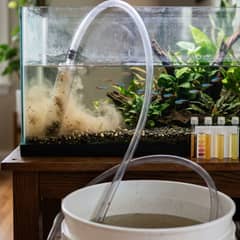
Water conditioner at $5 to $15 a bottle, power for the heater and filter, and test kit refills make up the rest. A planted rummy-nose tank needs a partial water change every week, and the water change schedule a tank follows decides how fast a bottle of conditioner runs out. The heater adds to the power bill by an amount that depends on the equipment and how cool the room runs.
Vet Costs
A fish vet is the spend worth making when a school keeps losing fish and the cause is not clear. Day to day, a rummy-nose school stays healthy on stable water and, when needed, over-the-counter treatment. Guesswork costs money of its own: fish are often given one over-the-counter product after another when the first fails, which usually does more harm than good. When fish fall ill, the signs that separate a water problem from a disease decide whether the next spend is a water change, a medication or a visit to a vet who sees fish. A fish health lab works from live, sick fish and a water sample taken from the tank before any water change, since the water a fish traveled in no longer matches the tank.
Lifespan
Rummy-nose tetras live about 5 years in a well-kept tank. That is a long run for a fish under 2 inches, and the 36-inch tank, heater, filter and test kit bought on day one serve the school for all of it.
Sources & Further Reading
Last reviewed 31 Oct 2026 · 4 sources
- Petitella bleheri (Firehead Tetra), Seriously Fish
- Tribuzy-Neto IA, Beltrão H, Benzaken ZS, Yamamoto KC (2020). Analysis of the ornamental fish exports from the Amazon State, Brazil. Boletim do Instituto de Pesca 46(4): e554
- Nutritional Diseases of Fish (Petty, Francis-Floyd and Yanong), Merck Veterinary Manual
- University of Florida IFAS Extension: Francis-Floyd R, Yanong RPE, Pouder DB. Ichthyophthirius multifiliis (White Spot) Infections in Fish. UF/IFAS Extension CIR920; Klinger R, Francis-Floyd R. Submission of Fish for Diagnostic Evaluation. UF/IFAS Extension FA55
Frequently Asked Questions
How much do rummy-nose tetras cost?
About $4 to $6.50 a fish from online sellers before shipping, and a local store can charge closer to $9. Twelve fish come to $45 to $80 before shipping.
What does a rummy-nose tetra tank setup cost?
Plan on $230 to $435 for a 36-inch, 30 to 40 gallon tank, a heater, a gentle filter, live plants, fine sand, a liquid test kit, water conditioner and the first micro pellets. A bare quarantine tank with its own heater and filter is extra.
What size tank do rummy-nose tetras need?
One at least 36 inches (90 cm) long for a school of 10, which works out to a 30 gallon or a 40 gallon breeder. Length matters more than gallons for a fish that swims laps.
Do rummy-nose tetras need a heater?
Yes. They are tropical fish that belong at 73 to 79°F (23 to 26°C), so the heater is a required purchase and stays set inside that range.
How long do rummy-nose tetras live?
About 5 years in a well-kept tank, so a school bought today shares its tank and equipment for half a decade.
Do rummy-nose tetras need a quarantine tank?
Yes. Every new batch spends at least 30 days in a bare tank with its own heater and sponge filter before it joins the school. Ich in newly shipped tropical fish often shows up 1 to 3 weeks after arrival, inside that window.
Are rummy-nose tetras wild-caught?
Some still are. Brazil's Amazonas state shipped more than 7 million of them from 2006 to 2015, its third biggest ornamental fish export, and wild exports continue alongside fish bred in Asia.
Why do the rummy-noses in the shop have pale heads?
Fish that arrived a day or two ago, or were just chased with a net, often lose the red for a while. Wait half an hour or come back another day; a school that stays pale is the one to leave.
More on the Rummy Nose Tetra

Recommended Gear
As an Amazon Associate I earn from qualifying purchases through the links above, at no extra cost to you.
Written by Michael Ryan
Mike keeps two rescued bearded dragons, Dex and Cera, and writes the care guides on BeastlyFacts from his own research and mistakes. He is not a veterinarian.
More about Michael Ryan →You May Also Like
Subscribe - it's free
An occasional email when something new is worth your time. No spam.
Deep Dive
Health and More