Common Glowlight Tetra Health Issues (and Why the Ich Heat Cure Stops at 82°F)
On This Page▾

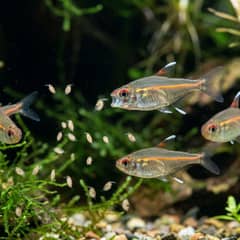
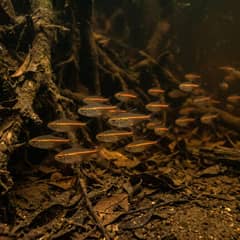
The glowlight tetra is a fish of about 1.6 inches from the Essequibo River in Guyana, and no disease belongs to it in particular. The problems recorded for it are the short list every small community tetra shares: fin rot, white spot, parasitic infestations and general bacterial infections. Where it differs from some relatives is temperature. The top of its range sits below the heat that kills ich, and that changes how the disease is treated, while the soft, acidic water that brings out its color is also where copper medicines do the most damage.
Signs That Need Action Today
Counting the school of 10 at each feeding is the daily check, and these are the signs that cannot wait a day.
Test ammonia and nitrite first:
- Fish gasping at the surface or breathing fast.
- Two or more fish showing the same sign at once.
- A fish found dead. Take the body out of the tank before anything else, since ich parasites quickly leave a dead fish to multiply in the water.
Start treatment today:
- White spots like grains of salt on the body or fins.
- Fins that look shortened, ragged or reddened along the edges, worse than the day before.
- Fast breathing that continues once the water tests clean, since ich can infect the gills.
Watch closely and check again tomorrow:
- Flashing: rubbing against plants, glass or substrate.
- A fish off its food or hanging listless.
- Fins held clamped against the body.
- Color fading to dull.
The last group are early signs that fit several problems, ich among them, so a fish showing them gets a close look every day until they pass. Gasping and a lost appetite point to the water about as often as to a parasite, so telling a water problem from an illness begins with the test kit. A fish with an open ulcer, or illness moving through several fish in a tank, is past home observation and needs an aquatic veterinarian.
One behavior is easy to misread. Glowlights flick their fins as a visual alarm signal to the rest of the school when they detect a chemical alarm cue in the water, which is a different movement from flashing, where a fish rubs its body against objects.
What a Healthy Glowlight Looks Like
| Check | Healthy | Worth a closer look |
|---|---|---|
| Stripe | Bright red-orange, with white fin tips in strong contrast | Faded to dull |
| Fins | Intact and held open | Clamped, ragged or reddened at the edges |
| Skin and scales | Smooth and unblemished | White spots, sores or red patches |
| Eyes | Bright, not cloudy | Cloudy or bulging |
| Swimming | Lively and steady, with the school | Circling, drifting or listless |
| Appetite | Takes almost anything offered | Off its food |
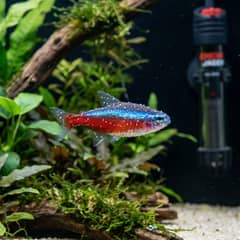
The tank sets the baseline for color: glowlights show the most in acidic, dimly lit, tea-tinted water. The albino strain, widely sold, is cared for exactly like the standard form.
Water Quality Comes First
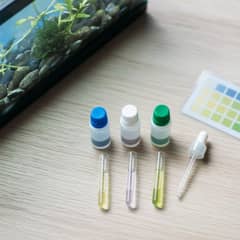
Glowlights do best at 75 to 82°F, pH 5.5 to 7.5 and 2 to 15 dGH. Holding the tank steady inside those ranges matters more than hitting one number. A liquid test kit used before each water change catches a drift early, and in soft water KH is what holds pH still, the same reading that decides whether copper is ever an option.
Food is the other half. A glowlight takes micropellets or small flakes, and light portions keep uneaten food from fouling the water.
The glowlight tetra has no reported population established outside Guyana, even though the species has been a staple of the aquarium trade for decades.
Source: U.S. Fish and Wildlife Service
Ich: Warm to the Ceiling, Then Treat
Ich, or white spot disease, is highly contagious and can kill, and it usually reaches a tank through infected water or a newly added fish, so keeping it out is one of the main reasons every incoming fish is quarantined. Every freshwater fish is considered susceptible. Outbreaks tend to start when the water temperature is changing quickly and hit hardest in crowded tanks. The spots surface well after infection begins, which makes the watch list above the usual first clue. Because the parasite multiplies explosively, a fish carrying even one is treated straight away, and an outbreak left alone can kill every fish in the tank.
Most ich strains die off in water above 86°F, which is why fish that live happily that warm can be cured by holding the tank there. Even the cardinal tetra is kept only to 81°F, so it does not get this cure. A glowlight tops out at 82°F, four degrees below 86°F, so the cure is off the table for it too. Warming to the 82°F limit is still worth doing: the parasite breeds faster in warmer water, and each generation that hatches sooner meets the treatment sooner. At 75 to 79°F the whole cycle takes about three to six days, so treatment goes in daily, at least three to five times. Bring the tank up to 82°F gradually with a reliable aquarium heater, add an air stone for the extra oxygen the treatment needs, and treat with one of these:
- Not aquarium salt. Salt kills ich only at 4 to 5 grams per liter, a bath given only to species known to handle it, and no salt tolerance has been measured for the glowlight. Live plants may not tolerate raised salt either. Use an ich medication instead.
- An ich medication, given at the label dose or as a vet directs, and in soft water one without copper, for the reasons in the copper section below. Heat and salt are weaker than a chemical treatment. Potassium permanganate is not recommended for ich.
Keep treating until every sign of illness has gone and the deaths have stopped, following the full warm-then-treat course for fish whose ceiling falls short of 86°F. Survivors of an outbreak can stay carriers of the parasite.
Fin Rot and Fungus: Damage First, Then Infection
Fin rot, in early and late stages, is on the species' recorded list. It begins as fraying at the fin edge and works inward. Treatment starts with correcting the water that let it take hold. A fish still losing fin after that needs an antibacterial medication, given in a hospital tank away from the display.
Cottony growths are a separate problem. Water molds such as Saprolegnia are fungus-like organisms that invade tissue already damaged by an injury, poor water or low temperature, so they are a second problem sitting on a first. A deeper fungal infection has also been described in a close relative, the pretty tetra: fish with a fungus in the swim bladder went off their food, developed popeye, swam erratically, lost scales, showed pale gills and swelled at the belly, and the fungi probably came in on wood decor and plants.
General bacterial infections and parasitic infestations by protozoa or worms complete the list. Sores and red patches on the body are the cue to get a diagnosis before choosing a medication.
Internal Parasites
The worms and protozoa on the glowlight's list mostly show as a fish that thins or loses interest in food. Camallanus is the visible one, red worms protruding from the vent, and it travels inside Cyclops and Daphnia, so live crustaceans are a way in. Fenbendazole or levamisole treats it. Spironucleus causes weight loss and a lost appetite and is treated with metronidazole, and praziquantel is the drug for tapeworms. A wet mount or smear under a microscope is what tells them apart, which makes the drug a vet's or a lab's call.
Neon Tetra Disease and Its Lookalikes
The microsporidian behind neon tetra disease, Pleistophora hyphessobryconis, takes its name from its type host, the neon tetra. It has turned up in a broad range of aquarium fish across several families, some 20 freshwater species in four orders, so the name does not fence it in. A close relative in the same genus, Hemigrammus ocellifer, was recorded with it as early as 1942, though no report names the glowlight itself.
Fish catch it by eating spores. Spores released from dead fish are a likely source, and spawning can release them too, into eggs that tankmates are quick to eat.
Mycobacteriosis is the other disease that can pass for it. Tetras are among the families more prone to the infection, and its signs are variable and nonspecific, wasting, paleness and skeletal deformity among them. There is no effective treatment for an infected fish, so a glowlight that wastes away with no clear cause is a case for a lab and not a guessed medication.
Copper, Soft Water and Shrimp
Copper sulfate is toxic to fish, above all in water of low alkalinity, and it is not to be used at all when total alkalinity is under 50 mg/L, about 2.8 dKH, or when the alkalinity is unknown. A glowlight kept soft and acidic is the low-alkalinity case. Characins are the copper-sensitive group: in ion-poor Amazon water, all four characin species tested were more sensitive to copper than the catfish and cichlids, and the most sensitive was the rummy-nose tetra, another Hemigrammus at the time of the test.
Most invertebrates are highly sensitive to copper and will not survive a treatment. Shrimp sharing the tank leave it before treatment starts, no matter what a label promises, and dosing in the hospital tank keeps every drug out of the display.
Quarantine Every New Fish
In warm aquarium water, shipped fish frequently fall ill one to three weeks after they arrive, so every new glowlight spends a minimum of 30 days in quarantine before it swims with the others. Longer periods may be needed. Quarantine is the single most important step for every fish added.
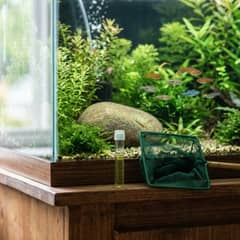
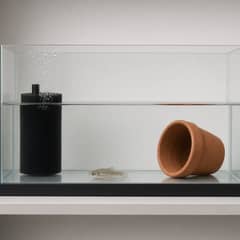
A modest separate tank with a gentle sponge filter is enough, and it serves as the hospital tank when one falls ill. Nets and siphon hoses are not shared with the main tank unless they have been disinfected, and plants that sat with infected fish can carry the parasite's cyst stage across.
When a Fish Vet Is Worth It, and How to Find One
Store medications get used on the wrong problem all the time, and working through one product after another tends to hurt the fish more than it helps. Each parasite, bacterium and fungus above is named under a microscope or in a lab, and that diagnosis is what a fish vet provides.
Licenses keep a vet to one state, but consultations do not: any vet can bring in an aquatic vet from any state, so a nearby exotic or small-animal clinic is a good first call. Fish vets can be searched by state or country through the American Association of Fish Veterinarians, and anyone outside North America can turn to the World Aquatic Veterinary Medical Association. Online advice with no exam cannot form a legal treatment plan.
Bring:
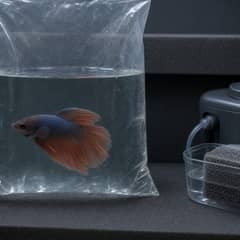
- About a quart of tank water, collected the moment the fish begin acting abnormally, ahead of any water change, and chilled. The water from a transport bag does not stand in for it.
- A live sick fish where possible. Dead fish are seldom useful, and frozen ones are not.
- The tank's record: size and age, the species and numbers, recent additions, when the signs began, the food and amounts, the date of the last water change, and each treatment given with its dose.
A glowlight that is eating, showing a bright stripe and moving with its school in steady water is a healthy one. Most of the species' troubles start in that water or come in with the next new fish.
Sources & Further Reading
Last reviewed 31 Oct 2026 · 8 sources
- Fish White Spot Disease (Ich), VCA Animal Hospitals
- Glowlight Tetra (Hemigrammus erythrozonus) Ecological Risk Screening Summary, U.S. Fish and Wildlife Service (PDF, downloads)
- Hemigrammus erythrozonus (Glowlight Tetra), Seriously Fish
- PubMed (U.S. National Library of Medicine): Pleistophora hyphessobryconis (Microsporidia) Infecting Zebrafish (Danio rerio) in Research Facilities (Sanders, Lawrence, Nichols, Brubaker, Peterson, Murray and Kent, 2010), Diseases of Aquatic Organisms; Duarte RM, Menezes AC, da Silveira Rodrigues L, de Almeida-Val VM, Val AL (2009). Copper sensitivity of wild ornamental fish of the Amazon. Ecotoxicology and Environmental Safety 72(3):693-698; Řehulka J, Kubátová A, Hubka V (2018). Swim bladder mycosis in pretty tetra (Hemigrammus pulcher) caused by Exophiala pisciphila and Phaeophleospora hymenocallidicola, and experimental verification of pathogenicity. Journal of Fish Diseases 41(3):487-500; Brown GE, Godin JGJ, Pedersen J (1999). Fin-flicking behaviour: a visual antipredator alarm signal in a characin fish, Hemigrammus erythrozonus. Animal Behaviour 58(3):469-475
- University of Florida IFAS Extension: Francis-Floyd R, Yanong RP, Pouder DB. Ichthyophthirius multifiliis (White Spot) Infections in Fish. UF/IFAS Extension CIR920; Use of Copper in Marine Aquaculture and Aquarium Systems (Yanong), UF/IFAS Extension FA165; Submission of Fish for Diagnostic Evaluation (Klinger and Francis-Floyd), UF/IFAS FA55
- Merck Veterinary Manual: Mycotic Diseases of Fish; Parasitic Diseases of Fish; Bacterial Diseases of Fish; Management of Aquarium Fish; Selection of Fish
- Francis-Floyd R (2011). Mycobacterial Infections of Fish. SRAC Publication 4706 (PDF, downloads)
- How To Find A Fish Vet To Help Your Fish (Jessie Sanders, DVM, Fish Practice)
Frequently Asked Questions
Can you cure ich in glowlight tetras with heat?
Heat alone will not do it. The temperature that kills most ich strains is 86°F, and a glowlight's range stops at 82°F. Warm the tank slowly up to 82°F with an air stone running to speed the parasite's cycle, and treat with an ich medication. Salt is unproven for this species at the 4 to 5 grams per liter that kills ich.
How long should new glowlight tetras be quarantined?
At least 30 days in a separate tank. A month is long enough for a hidden infection to show in a place where it can be treated without putting the established school at risk.
What diseases do glowlight tetras get?
The recorded list is short: fin rot, white spot (ich), parasitic infestations and general bacterial infections. None is unique to the species.
What signs mean a glowlight tetra needs help today?
Surface gasping, several fish sick together or a body in the tank send you to the ammonia and nitrite test. White spots, fins that are ragged and red, or breathing that stays fast after a clean test mean treating the same day.
What water conditions keep glowlight tetras healthy?
Keep the temperature between 75 and 82°F, the pH between 5.5 and 7.5, and hardness anywhere from 2 to 15 dGH. The acidic end of the pH range brings out the most color.
Is a copper ich medication safe for glowlight tetras?
It is a risky pick. Characins, the group glowlights belong to, were more sensitive to copper than catfish or cichlids in soft Amazon water, and copper sulfate is not to be used below 50 mg/L total alkalinity. Test alkalinity first, or choose a medication without copper, and take any shrimp out before treating.
Can glowlight tetras get neon tetra disease?
No case in a glowlight has been reported, but the parasite behind it infects about 20 freshwater species, and one was another Hemigrammus tetra. A fish that dies is removed at once, since the spores spread when tankmates eat infected tissue.
How do I find a vet for a sick glowlight tetra?
Ask the vet you already see first: any vet may consult an aquatic vet in another state on the case. The American Association of Fish Veterinarians lists fish vets by state or country. Bring about a quart of tank water collected before any water change, kept cold.
More on the Glowlight Tetra
Recommended Gear
As an Amazon Associate I earn from qualifying purchases through the links above, at no extra cost to you.
Written by Michael Ryan
Mike keeps two rescued bearded dragons, Dex and Cera, and writes the care guides on BeastlyFacts from his own research and mistakes. He is not a veterinarian.
More about Michael Ryan →You May Also Like

Subscribe - it's free
An occasional email when something new is worth your time. No spam.
Deep Dive
Health and More