Ember Tetras Are Never Handled, So the Trip Home Is the Part to Get Right
On This Page▾

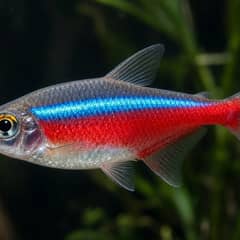
An ember tetra is a small South American characin from the Araguaia River basin in central Brazil, and a full-grown one measures about 0.8 inch (2 cm) from snout to the base of the tail. Nobody picks one up. The handling this fish gets comes down to a net, a bag and the hour it takes to move from shop water into tank water, and at this size each of those steps has its own way to go wrong.
Netting a Fish This Small
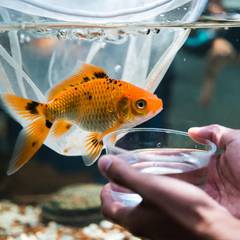
A net is the one tool that touches an ember tetra, and the common way to use it is the clumsy one: a helper holds a half-filled bag open in the air while the fish get tipped into it from the net. The better method keeps the bag in the water. Float a partly filled bag on the surface of the tank, open it there, and net the fish straight across into it, so the whole transfer happens at the waterline.
Size is the other problem. A fish 0.8 inch long can stay stuck in a net or jump out along the way without anyone seeing it go, so count the fish before and after the move.
Bagging and the Drive Home
Fill the bag one part water to three parts air. It looks underfilled, but the air is what holds the oxygen the fish breathe on the trip. For the journey, set the bags in a dark container, or wrap them in a towel or a few sheets of newspaper.
The water in the bag gets worse the longer the trip runs. Ammonia builds up from the fishes' waste, and pH drops as carbon dioxide accumulates. Both are reasons the bag water never ends up in the tank, and anything longer than a short local drive calls for the oxygen, insulation and container choices that go into moving fish on a longer trip.
Acclimation, Step by Step
This is the standard routine for small fish, and with a species this small the last step matters as much as the first.
- Switch the tank lights off. New arrivals should be kept fairly dark, never blinded by the tank lighting.
- Mix the water slowly. Add a little tank water to the bag every few minutes, and keep going until the bag holds more aquarium water than shop water. The whole process takes 30 to 60 minutes.
- Net the fish out. Lift them from the bag and release them into the tank. Never pour the bag in: its water carries the waste from the trip and can carry pest snail eggs from the shop.
- Check for strays. Before the bag goes in the trash, look through it, the net and the floor once more for a fish that got stuck or jumped.
Ember tetras are soft-water fish, kept at 1 to 10 dGH and a pH of 5.0 to 7.0. When the shop's water and the home tank sit far apart on either figure, drip acclimation changes the chemistry more gradually, over about two hours. It is aimed at sensitive animals such as Caridina shrimp, and a big chemistry gap is the case where it earns those two hours. Testing the tank's pH and hardness before the trip, and asking the shop for its figures, settles which method the day needs.
The same routine applies when the bag goes into a quarantine tank first, which is advisable wherever the fish were bought. New fish spend at least 30 days in quarantine before they join an established tank.
How Many to Bring Home
Ten. A minimum of 8 to 10 is the recommended purchase, and 10 is the number to plan around. Embers are relatively outgoing, especially in large groups, and a bigger school is where that shows.
In the group-size study on neon tetras, groups of 10 had the greatest tendency to shoal.
A school of 10 needs a 10-gallon tank with an 18 x 12 inch (45 x 30 cm) footprint, and the ember tetra tank setup guide explains why that size beats the 5 gallons sometimes suggested. Ten fish arriving in one trip is a sudden jump in waste, so they go into a tank that has finished its nitrogen cycle and has been running for a while since.
Temperament: Peaceful, and Easily Outcompeted
Ember tetras are very peaceful fish, and they lose out to any tankmate that is rowdy or much bigger than they are. That one trait decides most of what goes in the tank with them. In a calm community they work well, and they make an ideal dither fish for Apistogramma and other dwarf cichlids.
Tankmates That Work
The test is a peaceful animal of similar size that won't eat them. That covers:
- Similarly sized, peaceful characids.
- Small catfish.
- Calm fish that keep to the surface.
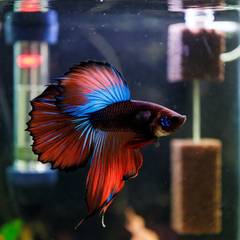
Bettas and dwarf gouramis are the two to think twice about, since either may turn territorial.
Shrimp are a split answer. Embers leave adult dwarf shrimp alone, so a grown shrimp colony is safe with them. Shrimplets are another matter: almost all fish will opportunistically go after baby shrimp, and embers are no exception. A tank meant to raise shrimp and hold a school of embers will lose some of its young to the fish.
Telling Males From Females
Adult males carry the stronger color, most of all in spawning condition. Males are slender in profile, while females are rounder through the body, which shows best when the fish are seen from above. A mixed school needs no sexing at all. The difference matters only to a keeper setting up a breeding group.
The Araguaia River, whose basin the ember tetra comes from, is home to over 800 species of fish.
The ember tetra encyclopedia profile covers the species itself.
Sources & Further Reading
Last reviewed 1 Nov 2026 · 5 sources
- Hyphessobrycon amandae (Ember Tetra), Seriously Fish
- Care Guide for Ember Tetras, Aquarium Co-Op
- A guide to acclimatising your new fish or shrimp, Practical Fishkeeping
- What you need to know about bagging fish, Practical Fishkeeping
- Finding ember tetras in Brazil, Tai Strietman, Practical Fishkeeping
Frequently Asked Questions
How do you acclimate ember tetras to a new tank?
Turn off the tank lights and mix tank water into the bag a little at a time over 30 to 60 minutes, until tank water outweighs shop water. Then net the fish across, discard the bag water, and look over the bag, net and floor for a missing fish.
How many ember tetras should you keep together?
Ten is the target, with 8 to 10 as the least to buy. Housing that group takes a 10-gallon tank whose base measures 18 by 12 inches.
Can ember tetras live with shrimp?
With adult dwarf shrimp, yes: embers ignore grown shrimp. Baby shrimp are a different story, since embers, like nearly every fish, will pick off shrimplets whenever they get the chance.
How should ember tetras be bagged for the trip home?
Use a ratio of one part water to three parts air, since the oxygen sits in the air. For the ride, put the bag inside a dark box or cover it with a towel or newspaper.
Can ember tetras live with a betta?
Think twice. Bettas and dwarf gouramis may turn territorial, and an ember loses out to any tankmate that is rowdy or much bigger, so a peaceful fish of similar size is the safer companion.
How do you tell male and female ember tetras apart?
Males carry stronger color and a slender profile; females are rounder, clearest from above.
More on the Ember Tetra
Ember Tetra care guide
🐠 How Much Does Ember Tetra Ownership Cost?
🐠 Common Ember Tetra Health Issues (and Why the Ich Heat Cure Stops at 82°F)
🐠 Ember Tetra Tank Setup: A 10-Gallon School, Soft Water, and Dense Plants
🐠 Ember Tetra Feeding: Diet, Food Size, and How Often to Feed
🐠 Ember Tetra Enrichment: Bright Orange, Built to Vanish
Written by Michael Ryan
Mike keeps two rescued bearded dragons, Dex and Cera, and writes the care guides on BeastlyFacts from his own research and mistakes. He is not a veterinarian.
More about Michael Ryan →