Common Black Skirt Tetra Health Issues (and Why Ich Heat Stops at 79°F)
On This Page▾

The black skirt tetra (Gymnocorymbus ternetzi), also sold as the black widow tetra, comes from the Rio Paraguay and Guaporé basins of South America, and every fish in the trade today is captive bred. Generations of tank breeding have made it relaxed about water chemistry, but not about disease. It gets ich, fin rot and dactylogyrid gill flukes, and it is a recorded host of both mycobacteriosis and a microsporidian infection first described in it in 2021. Ich in this fish can turn fatal in two days.
Signs That Need Action Today
A quick count at feeding time is the daily check on a school of 12. These are the signs that set the order of what happens next.
Test the water first:
- Two or more fish off their food or moving slowly at the same time.
- A fish found dead. Take the body out of the tank before anything else.
- The whole school gone sluggish and eating less. Read the thermometer along with the test kit, since a cold tank slows every fish in it.
- Fish piping at the surface or coughing. If the water tests clean, gill flukes are one cause.
Start treatment today:
- White spots on the body or fins.
- A fish that turns darker, keeps apart from the school and refuses food while the water tests clean.
Watch and check again tomorrow:
- A torn or ragged fin on a single fish.
- One fish eating less than the others but otherwise behaving normally.
- A slow run of losses, one fish at a time, with no clear cause.
Each fish on the watch list gets a close look every day until the sign clears or turns into one from the lists above. A slow run of losses is the pattern two of the diseases further down leave behind, and it is the point to involve a fish vet.
What a Healthy Black Skirt Looks Like
| Check | Healthy | Worth a closer look |
|---|---|---|
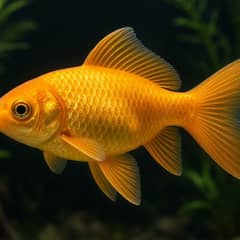
| Color | Deepest black when young, fading toward silvery gray with age | Suddenly darker, with the fish keeping apart |
| Fins | Whole, the skirt held open | Torn, ragged or bloody |
| Skin and scales | Smooth and unblemished | White spots, ulcers, scales raised or missing |
| Eyes | Bright, not cloudy | Cloudy or bulging |
| Swimming | Lively and steady, with the school | Circling, drifting or listless |
| Appetite | Eats eagerly at feeding time | Holds back or refuses food |
A fading black is not a sign of illness on its own. Beyond the slow change with age, the black can fade or deepen from day to day with the fish's mood.
Water Quality Comes First
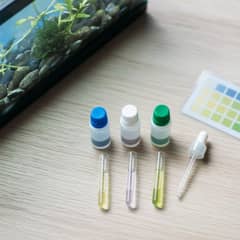
Captive breeding has given this species an easy range: 68 to 79°F (20 to 26°C), pH 6.0 to 7.5 and 5 to 19 dGH. Holding the tank steady inside it matters more than any one number. A tank that has finished cycling, the single most important step when it is first set up, and a liquid test kit kept beside it answer the first group of signs above before anything gets treated. Several fish turning lethargic, going off their food and dying in a new tank is the classic picture of a cycle that has not caught up.
The species name ternetzi honors Carl Ternetz, a Swiss naturalist who collected in South America over a period of more than thirty years.
Source: FishBase
How Cold Is Too Cold
White skirt tetras, the pale form of the same species, have been cooled by 1°C a day from 68°F (20°C) to find where they fail. At about 63°F (17°C) they fed and moved less. Close to 54°F (12°C) they stopped eating, they stopped moving just above 50°F (10°C), and at 9.95°C, a fraction under 50°F, they lost their balance.
The bottom of the normal range sits only 5°F above the point where appetite drops, so a failed heater in a cool house can take the tank into that zone. A reliable aquarium heater sized for the tank prevents it, and when the power goes out, oxygen comes first and heat second. A chilled fish is also an easier target for water molds, as the fin section below explains.
Ich: Fast in This Fish, Treated Below 86°F
Ich, or white spot disease, can kill a black skirt tetra fast. In one outbreak, a batch of fluorescent widow tetras bought at a market in India was found heavily infected. The sick fish darkened, separated from the group, slowed down and quit eating. Fins had broken down, gill filaments were gone entirely, and the fish died within 48 hours of the first symptoms. The water at the time was 73°F (23°C) at pH 7.5, well inside the range the species is kept in, so a tank in good order does not hold ich off once an infected fish arrives.
That darkening fits the wider ich picture, along with lethargy and clamped fins, and losses can be rapid and catastrophic. When the parasite sits only on the gills there may be no spots at all, just a sudden run of deaths. It spreads by direct contact with infected fish and on nets and other shared gear, and survivors can pass it to fish that never had it.
Most strains of ich die in water above 86°F, but not every fish can stand that much heat. The black skirt's range ends at 79°F, 7°F short of that, so heat is a helper here and not the cure. Breeders do run a spawning pair at 82 to 86°F for a short stay, but no source shows a school coping with the days at 86°F an ich cure needs. Heat still helps up to 79°F, because the parasite multiplies faster in warmer water and the course of treatment moves along faster with it. Raise the tank slowly to 79°F, run an air stone, since extra oxygen is essential whenever the water is warmed, and let aquarium salt or an ich medication kill the parasite. Over-the-counter ich medications built on formalin and malachite green are effective, and at warm aquarium temperatures they go in daily, often three to seven times, as the warm-then-treat course for fish below 86°F sets out. Cysts on the bottom shrug off the drugs, so a thorough gravel clean between doses removes them. Treatment repeated over several doses, together with the raised temperature, is how outbreaks are brought under control.
Salt has one exception in this species. In a tank holding newly hatched fry, salt at 1 and 3 parts per thousand killed black skirt fry in large numbers while they still carried their yolk sacs, yet barely touched fry that were already swimming. A breeding tank with young fry in it is treated with something else, or the sick adults move to a hospital tank. The stronger salt baths vets list for ich are meant for species known to tolerate them, and adult black skirts have never been tested.
Fin Rot and Fungus: Damage First, Then Infection
The black skirt has a reputation as a fin nipper, mostly toward slow or long-finned tankmates. A school of 12 is the usual fix, since the fish then mostly keep their squabbling among themselves. Which tankmates are safe with it, and which to leave out, comes down to temperament and pairing.
Fin rot affects this species at both an early and a late stage, so a torn fin is worth watching until it either regrows or starts to erode. The difference between a clean tear and fin tissue being lost to a bacterial infection is what decides whether to treat. Ich can strip fins too, so a fish with ragged fins and white spots goes on the ich treatment first. Fin damage is also among the signs of mycobacteriosis, which makes a ragged fin on a fish that is also wasting a case for the section on lookalikes below.
Cottony growth on skin or fins is usually a water mold such as Saprolegnia, a fungus-like organism that settles on tissue already hurt by an injury or poor water, and low temperature is one of its triggers. Correct the water and the temperature first, then move the fish to the hospital tank, since the mold is a secondary problem and the original one still needs fixing.
Internal Parasites and Gill Flukes
Capillaria and its relatives live in the gut of tetras, among other aquarium fish, and cause weight loss and a pot belly. Camallanus shows as red worms protruding from the vent, and Daphnia and Cyclops carry it as intermediate hosts, so the live daphnia this species enjoys should come from a reputable source. Tapeworms respond best to praziquantel. Organophosphates are a class of treatment kept away from some characins, a group the black skirt belongs to.
Gill flukes are the parasite most closely tied to this fish. A dactylogyrid fluke, Diaphorocleidus armillatus, was described as a new species from black skirt tetras kept as introduced aquarium fish in India, and later turned up on their gills there again. Fish carrying flukes pipe at the surface, cough and lose weight, and high numbers can cause catastrophic losses. Praziquantel and formalin are the treatments, and fresh smears or a gill biopsy under a microscope are how a vet tells flukes from ich or a water problem.
Neon Tetra Disease and Its Lookalikes
The parasite behind neon tetra disease, Pleistophora hyphessobryconis, is a microsporidian whose primary host is the neon tetra. It has been reported from some 20 species of freshwater fish in four orders. No report so far names the black skirt among them, which neither rules it in nor out. The microsporidian on record in this species is a different one.
Tetra Disseminated Microsporidiosis
Tetra disseminated microsporidiosis is a microsporidian disease first described in 2021, in two aquarium fish: the black tetra and the cardinal tetra. The parasite, named Fusasporis stethaprioni and placed in a new genus, spreads through most of the internal organs and into the gills. In black tetras it was linked to a steady, drawn-out run of deaths in a farmed population, while in cardinals it turned up in dying fish held in quarantine at a public aquarium.
It is a separate parasite from the one behind neon tetra disease, though both are microsporidians.
Mycobacteriosis
The black tetra is a documented host of mycobacteriosis. Mycobacteria were described in it as early as 1940, and it appeared again among the tuberculosis-like cases in ornamental fish logged by a diagnostic team between 1995 and 2004. The signs in those fish ran from loss of appetite, lethargy, staying alone in a corner and floating at the surface to wasting, lost color, severe popeye, a swollen belly, raised or missing scales, skin ulcers and fin damage. One of the species involved, Mycobacterium smegmatis, has been recorded in black tetras and can infect people.
Outbreaks follow crowding and poor water, low pH and low dissolved oxygen above all, and fish can pick it up by eating dead tankmates. Infections respond poorly to antibiotics, no vaccine exists, and an affected group often has to be removed from the system altogether. The disease cannot be detected with nonlethal tests.
The early signs overlap with ich, and the difference shows within days: ich brings white spots and kills fast, while mycobacteriosis is slow and moves on to wasting, scale loss, ulcers or popeye.
White, Long-Fin, GloFish and Dyed Skirt Tetras
The plain black, white and long-fin forms are all the same fish. White skirts were produced by selecting a naturally occurring pale trait, and long fins are a naturally occurring trait bred up for the aquarium trade. No study has looked at the health of long-fin skirts, but long, trailing fins draw fin nippers, so a long-fin form gets the same calm company any long-finned fish needs. GloFish Skirt Tetras are this species too. No formal study has compared their disease risk with ordinary skirts, and the case that they are no more prone rests on the company's own veterinary statements.
Artificially dyed skirt tetras are a health problem from the start. The color is injected, or applied by stripping the slime coat with acid and then soaking the fish in dye, the process puts the fish under heavy stress, and it often cuts their lives considerably short. The color fades with time anyway.
Copper, Soft Water and Shrimp
Black skirts are not a soft-water fish, but a tank run at the low end of their range, near pH 6.0 on soft tap water, can still fall below the line where copper turns dangerous. The lower the total alkalinity, the harder copper hits fish, and once it drops below 50 ppm, about 2.8 dKH, the chance of a kill is high enough that copper treatment is not recommended. The alkalinity has to be known before any copper goes in. A strong treatment can also knock back the filter bacteria, and a temporary rise in ammonia and nitrite should be expected for weeks to months afterward, which puts the test kit back on daily duty.
Copper is extremely toxic to invertebrates and plants, so plants come out before copper goes in, and shrimp and snails leave before any medication at all, whatever the label claims. The hospital tank is where the treatment happens.
Quarantine Every New Fish
Every new black skirt lives at least 30 days in quarantine before it joins the school, and quarantine is the single most important step for every fish added. A month is long enough for ich to show, and it gives a slow disease a chance to surface where only the newcomers are exposed. A valuable fish is better held 30 to 60 days. Quarantine cannot catch everything, including the mycobacteriosis described above, but that is no reason to skip the month.
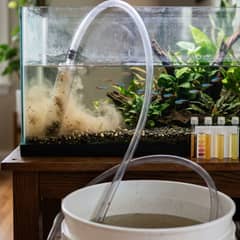
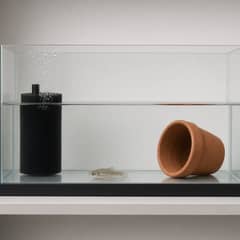
A modest quarantine tank running a sponge filter does the job, and it doubles as the hospital tank later. It gets its own nets, buckets and siphon, since ich travels on gear, and it is tended last each day, after every other tank.
When a Fish Vet Is Worth It, and How to Find One
Gill flukes are confirmed under a microscope, and mycobacteriosis and the microsporidian in a lab. Wrong guesses with store-bought medicine are common, and stacking a second product on a failed first usually does the fish more harm than good.
Licenses do not cross state lines, but a vet anywhere can bring an aquatic specialist from another state onto the case, so the practice that sees the household's other animals can take a fish with that help. The American Association of Fish Veterinarians runs a finder that sorts fish vets by state or country, and for keepers beyond North America the World Aquatic Veterinary Medical Association fills the same role. A treatment plan cannot legally rest on an online chat with no exam.
For the visit:
- Water. About a quart of tank water, drawn when the fish first act abnormally, before any water change, and kept cold. A water sample goes with every fish.
- The fish. A live fish near death tells a vet the most. A freshly dead one goes in a sturdy plastic bag on ice, and a fish that has been in the freezer is of limited use.
- The history. Tank size and age, how many fish of which species, recent additions, when the signs began, the food, the date of the last water change, and every treatment so far with its dose.
A black skirt that eats eagerly, swims with the school and keeps its fins whole in steady water is a healthy fish. Most of what goes wrong with the species arrives with a new fish or follows a slip in the water, and both can be caught early.
Sources & Further Reading
Last reviewed 31 Oct 2026 · 8 sources
- PubMed (U.S. National Library of Medicine): Ciliate parasite Ichthyophthirius multifiliis causing acute mortality in tiger barb (Puntigrus tetrazona) and widow tetra (Gymnocorymbus ternetzi) (Banu, Swain, Bharathi Rathinam, Singh and Kamei, 2025), Journal of Parasitic Diseases; Tetra disseminated microsporidiosis: a novel disease in ornamental fish caused by Fusasporis stethaprioni (Lovy et al., 2021), Parasitology Research; Jogunoori W, Kritsky DC, Venkatanarasaiah J (2004). Neotropical Monogenoidea. 46. Three new species from the gills of introduced aquarium fishes in India. Systematic Parasitology 58(2):115-124; Chaudhary A, Verma C, Singh HS (2016). First report on the molecular characterization of Diaphorocleidus armillatus infecting the gills of introduced fish, Gymnocorymbus ternetzi, in India. Acta Parasitologica 61(3):639-644; Pleistophora hyphessobryconis (Microsporidia) Infecting Zebrafish (Danio rerio) in Research Facilities (Sanders, Lawrence, Nichols, Brubaker, Peterson, Murray and Kent, 2010), Diseases of Aquatic Organisms; Delghandi MR, El-Matbouli M, Menanteau-Ledouble S (2020). Mycobacteriosis and Infections with Non-tuberculous Mycobacteria in Aquatic Organisms: A Review. Microorganisms 8(9):1368
- Environmental Risk Assessment of the GloFish Electric Green Tetra and Long-Fin Electric Green Tetra (Leggatt, Johnson and McGowan, 2018), Fisheries and Oceans Canada (PDF, downloads)
- Fish White Spot Disease (Ich) - VCA Animal Hospitals
- Seriously Fish: Gymnocorymbus ternetzi (Black Widow Tetra)
- Řehulka J, Kaustová J, Řehulková E (2006). Causal Agents of Mycobacterial Diseases in Freshwater Ornamental Fish and their Importance for Human Health in the Czech Republic. Acta Veterinaria Brno 75:251-258 (PDF, downloads)
- Merck Veterinary Manual: Parasitic Diseases of Fish; Mycotic Diseases of Fish; Management of Aquarium Fish; Routine Health Care of Fish; Disorders and Diseases of Fish; Selection of Fish
- University of Florida IFAS Extension: Use of Copper in Freshwater Aquaculture and Farm Ponds (Watson and Yanong), UF/IFAS Extension FA-13; Submission of Fish for Diagnostic Evaluation (Klinger and Francis-Floyd), UF/IFAS FA55
- How To Find A Fish Vet To Help Your Fish (Jessie Sanders, DVM, Fish Practice)
Frequently Asked Questions
Can black skirt tetras take the 86°F ich heat treatment?
Not as a plan. 86°F is 7°F past the 79°F top of the species' range, so the tank goes only to 79°F, with an air stone running, and aquarium salt or an ich medication kills the parasite.
How fast can ich kill a black skirt tetra?
Within about two days. Infected fish in a recorded outbreak died inside 48 hours of their first symptoms, in water at an ordinary 73°F, so treatment begins the same day spots show.
Do black skirt tetras need a heater?
Yes, unless the room keeps the tank at 68°F or warmer all year. They feed and move less once the water cools to about 63°F (17°C), and stop eating near 54°F (12°C).
Why are my black skirt tetra's fins ragged?
Nipping and fin rot are the two usual causes in this species. A fin that keeps fraying needs treatment, and ragged fins on a fish that also carries white spots point to ich.
Is my black skirt tetra losing its color because it is sick?
Usually not. Young fish carry the deepest black and turn paler as they mature. A fish that goes darker and sits apart from the school is the one to check for ich.
How long should new black skirt tetras be quarantined?
At least 30 days in their own tank. A month gives ich, and slower problems like a microsporidian infection, time to show before the new fish meet the school.
Can black skirt tetras get mycobacteriosis?
Yes. The black tetra is on record as a host, with signs such as wasting, popeye, a swollen belly, lost or raised scales and skin ulcers. It responds poorly to antibiotics, and some of the bacteria involved can infect people, so a suspected case goes to a fish vet or lab.
Are dyed or painted skirt tetras safe to buy?
They are best left in the shop. The color goes in by injection or by an acid dip followed by a dye bath, the process is very stressful, it often shortens the fish's life considerably, and the color fades anyway. White, long-fin and plain black skirts are the same fish without that harm.
More on the Black Skirt Tetra
Recommended Gear
As an Amazon Associate I earn from qualifying purchases through the links above, at no extra cost to you.
Written by Michael Ryan
Mike keeps two rescued bearded dragons, Dex and Cera, and writes the care guides on BeastlyFacts from his own research and mistakes. He is not a veterinarian.
More about Michael Ryan →You May Also Like
Subscribe - it's free
An occasional email when something new is worth your time. No spam.
Deep Dive
Health and More