Glowlight Tetra
Hemigrammus erythrozonus
Beastly Facts · Updated
On This Page▾
Overview
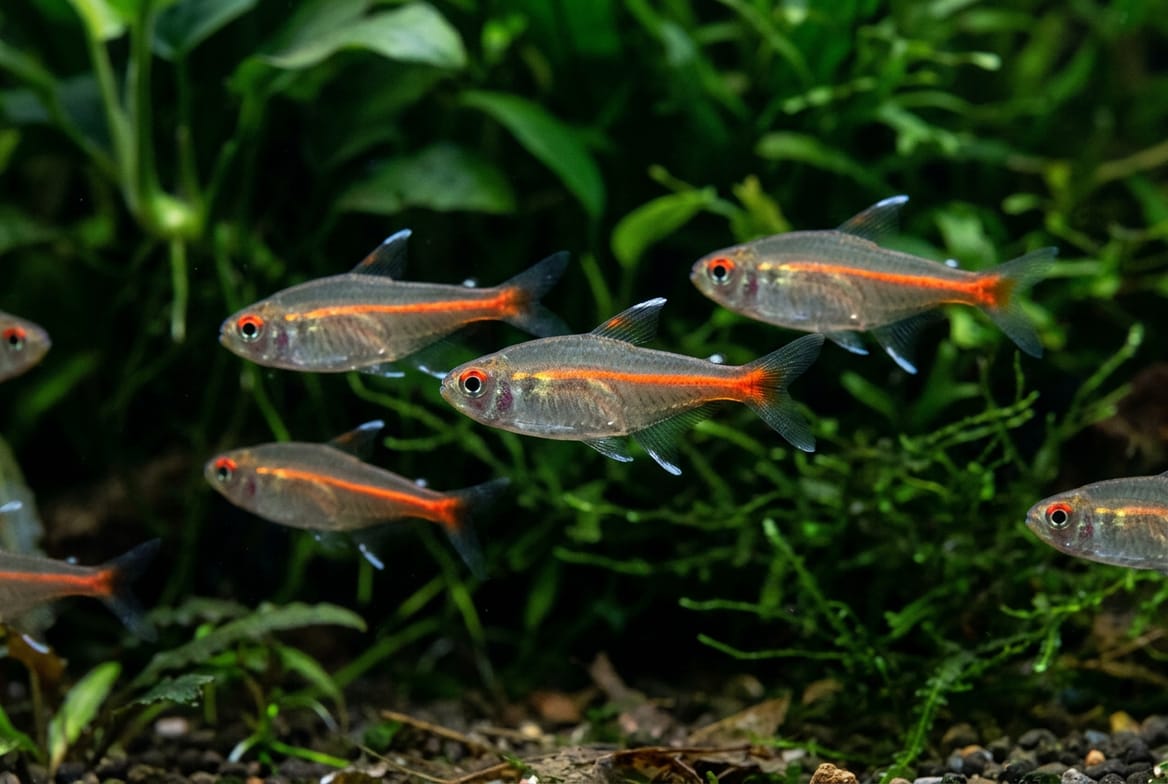
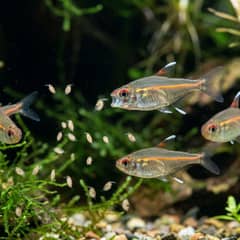
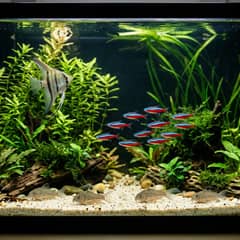
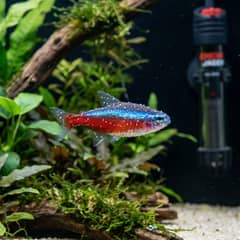
The glowlight tetra is a slim, translucent schooling fish from the Essequibo River in Guyana, named for the glowing red-orange stripe that runs from its head to its tail. It is peaceful, easy to feed and adaptable, and it shows its best color in soft, acidic water and a group of 10 or more.
Quick Facts
Native Range
Essequibo River basin, Guyana
Natural Habitat
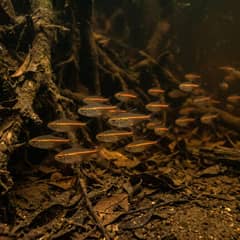
Forest tributaries off the main river channel, in water stained dark brown with tannins
Adult Size
About 1.6 inches (4 cm)
Wild Diet
Worms, small crustaceans and plants
Wild Lifespan
Not documented in the wild; about 2-4 years in captivity
Conservation Status
Least Concern (IUCN)
History
Marion Durbin described the species in 1909 from fish collected on the 1908 Indiana University and Carnegie Museum expedition to British Guiana. Its name, erythrozonus, means red-banded, for the stripe along its side. The glowlight reached the aquarium trade from Guyana in the 1930s, and an early identification as Hyphessobrycon gracilis was later rejected.
Compare
Glowlight Tetra
Human
Adult Size
About 1.6 inches (4 cm)
5-6 feet (150-185 cm); ~135-200 lbs
Wild Lifespan
Not documented in the wild; about 2-4 years in captivity
~73 years (global average)
Wild Diet
Worms, small crustaceans and plants
Omnivorous - eats just about anything
Native Range
Essequibo River basin, Guyana
Global - originated in Africa roughly 300,000 years ago
Natural Habitat
Forest tributaries off the main river channel, in water stained dark brown with tannins
Everywhere from arctic tundra to tropical megacities
Conservation Status
Least Concern (IUCN)
Least Concern (8+ billion and counting)
Test Yourself
What's the Glowlight Tetra's native range?
Care Guide
Glowlight Tetra Care Guide
The easygoing schooler with a stripe that glows like a lit fuse!
Subscribe - it's free
New animal facts and care guides straight to your inbox. No spam.
Deep Dive

Health and More







Did You Know?
The glowlight's stripe is a band where the dark pigment cells are missing: the species name, erythrozonus, means red-banded, and a 1917 scientific description called the stripe cherry-red in life.
Explore More