Cockatiel Cage Setup: Width, Safety, and the Diet Debate
On This Page▾

A cockatiel's cage is the single biggest factor in its day-to-day wellbeing, and a few specific details, width, bar spacing, and placement, matter more than overall size alone.
Cage Size and Shape
Reference tables commonly list a minimum of about 20 by 20 by 30 inches for a single cockatiel, though many keepers aim closer to 24 by 24 by 30 inches for more comfortable movement. Prioritize width over height, cockatiels are horizontal flyers, so a tall, narrow cage wastes exactly the space they'd actually use. A wide flight-style cage built for this kind of lateral space is worth the extra footprint.
Bar Spacing, Non-Negotiable
Bar spacing needs to be half an inch or smaller to prevent head entrapment, a genuine and avoidable injury risk with wider spacing.
Bar direction matters too. Vertical bars are the better choice for a cockatiel: when a wing catches between horizontal bars during a flapping bout, the bird can damage it as it struggles free.
The emphasis on cage width over height reflects how cockatiels fly in the wild: short, fast, horizontal bursts between perches rather than the vertical climbing typical of some other parrot species. A floor-to-ceiling cage can look impressive in a store display without giving a cockatiel any of the flight space it actually needs.
Perches and Layout
Provide multiple perches of varying diameter and texture rather than a uniform set, this supports better foot health over time. Diameters from about 5/8 inch to 1.5 inches (1.6 to 3.8 cm) suit a cockatiel's foot. Include foraging toys for enrichment, and position food and water dishes so droppings can't fall into them.
Placement and the Kitchen Danger
Keep the cage away from the kitchen entirely. Overheated non-stick or PTFE-coated cookware releases fumes that are rapidly fatal to birds, documented cases describe multiple birds dying within 30 minutes of exposure to fumes from a single accidentally overheated pan, and the danger isn't limited to birds in the same room, the fumes travel. This is one of the few genuinely non-negotiable placement rules in bird keeping.
The room itself should sit at about 70 to 80°F (21 to 27°C). Aerosols, scented candles, drafts, and direct sun on the cage belong on the same list of household hazards.
Sleep
Cockatiels need 10 to 12 hours of quiet, dark sleep every night. They're prone to night frights, sudden panicked flapping in the dark, so a cage cover or a small night light can help prevent injuries during these episodes. Avian vets in earthquake-prone California have noticed that cockatiels, more than other species, turn up injured the morning after a tremor, and a Melbourne bird clinic saw cockatiels come in with minor injuries after two small tremors there.
Diet: Pellets First, Seeds as a Treat
Pellets should lead the diet, with seeds kept to a small minority: pellets at roughly 75 to 80% of the diet, fresh vegetables and fruit no more than 20 to 25%. Provide a cuttlebone or mineral block for calcium, along with fresh water daily. Ten to twelve hours of UV light exposure, or safe supervised outdoor time, supports healthy vitamin D levels.
Cleaning Routine
Daily: spot-clean the cage, taking out soiled paper and discarded food, and wash the food and water bowls. Fresh produce comes out within a couple of hours, before it spoils in the dish.
At least weekly: replace the paper or liner in the tray, more often when two or more cockatiels share the cage. A grate over the tray keeps the bird off its own droppings between changes.
The full clean: move the cockatiel to a travel cage in a different room first, so it is in a separate air space while anything is being sprayed or scrubbed. Strip out the old paper and every accessory, wash the cage and the accessories with a bird-safe habitat cleaner or freshly mixed household bleach at 1 part to 32 parts water, about half a cup per gallon, then rinse until no trace of the cleaner or its smell is left. Let everything dry completely before the paper, perches and toys go back in and the bird returns.
Use only cleaning agents made for use around pets. A bird's respiratory system reacts to aerosolized fumes, which is why the bird leaves the room before anything is sprayed. Dilutions, contact times, ventilation, and the products that must never be mixed are set out in the bird household hazards guide.
Two checks belong to this species. Rope toys come out at the first frayed strand, since cockatiels swallow the fibers and the matted strands can block the gut. Scan the cage for anything metal the bird has worked loose as well: cockatiels are among the species avian vets see most often with heavy metal poisoning. And because a cockatiel is one of the few pets that produces powder down, the fine white dust on the bars and the furniture next to the cage comes back daily and is wiped away as part of the routine.
Sources & Further Reading
Last reviewed 8 Sep 2026 · 5 sources
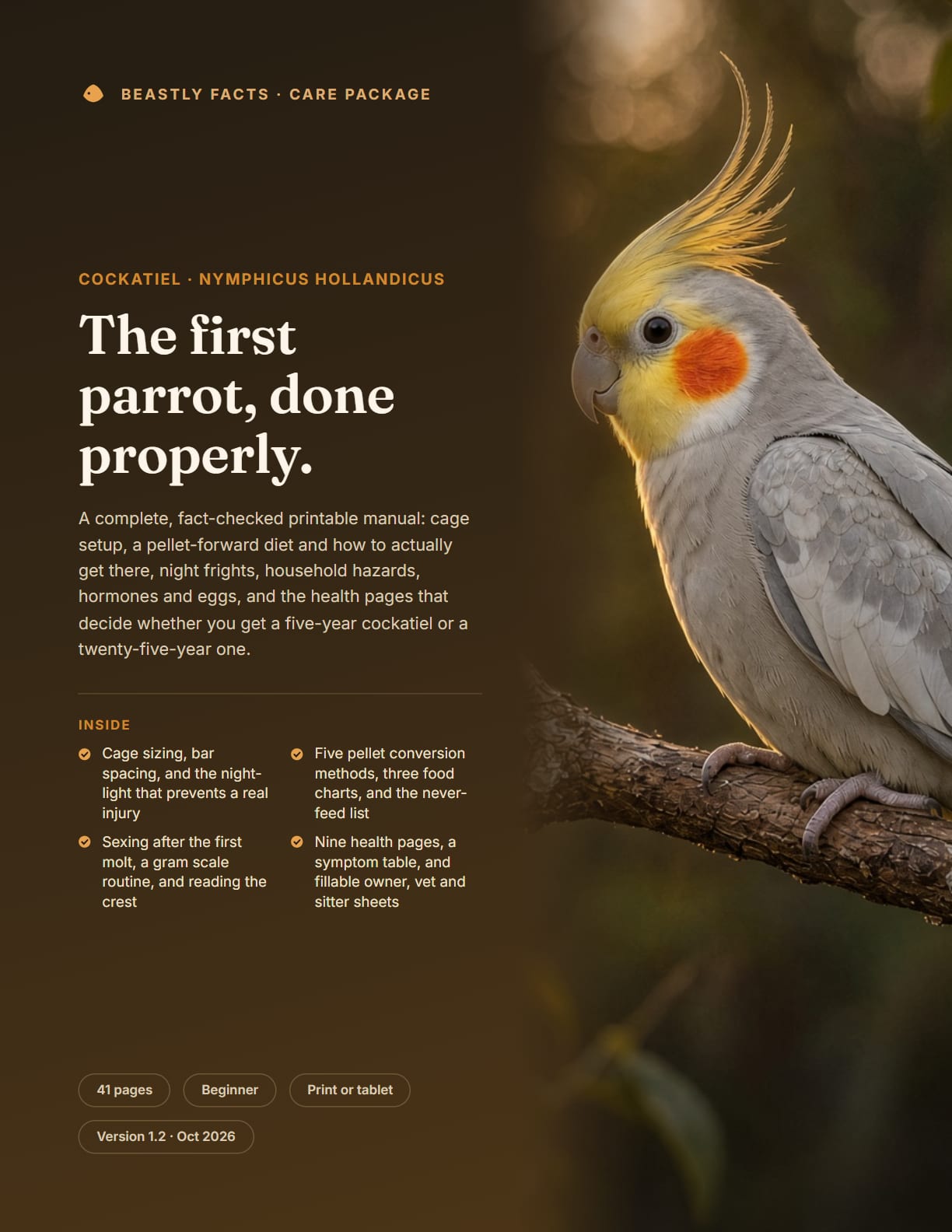
The Cockatiel Care Package carries this setup as a checklist with the targets to hit, in a 52-page PDF you can keep by the cage, $8.99.
Frequently Asked Questions
What size cage does a cockatiel need?
Reference tables put the minimum near 20 by 20 by 30 inches for one bird, and many keepers go to 24 by 24 by 30 for easier movement. Width matters more than height, since cockatiels are horizontal flyers.
What bar spacing is safe for a cockatiel cage?
Half an inch or smaller. Wider spacing creates a genuine and avoidable risk of head entrapment.
What's the ideal diet balance for a cockatiel?
Pellets should make up roughly 75 to 80% of the diet, fresh vegetables and fruit no more than another 20 to 25%, and seeds a small minority rather than the foundation. A seed-only diet is directly linked to nutritional disease.
Why is the kitchen dangerous for a pet cockatiel?
Overheated non-stick or PTFE-coated cookware releases fumes that are rapidly fatal to birds, with documented cases of multiple birds dying within 30 minutes of exposure. The danger isn't limited to birds in the same room since the fumes travel, so keeping the cage away from the kitchen entirely is essential.
More on the Cockatiel
Recommended Gear
As an Amazon Associate I earn from qualifying purchases through the links above, at no extra cost to you.
Written by Michael Ryan
Mike keeps two rescued bearded dragons, Dex and Cera, and writes the care guides on BeastlyFacts from his own research and mistakes. He is not a veterinarian.
More about Michael Ryan →