Cockatiel Feeding: Schedule, Diet, and Why They Stop Eating
On This Page▾

There's no strict meal schedule for a cockatiel the way there is for a dog, what matters is getting the ratio of pellets to seeds to fresh food right, and catching appetite loss quickly in a bird this small.
Feeding Approach
Cockatiels are free-choice eaters, not scheduled ones. Their fast metabolism means most choose to eat throughout the day, so refresh the base pellet bowl in the morning when they're hungriest and top it up if it empties before evening, it should never sit empty for long.
Fresh fruits and vegetables should make up no more than about 20 to 25% of the daily diet by volume, but pull anything uneaten within a couple hours to prevent spoilage and bacterial growth. Treats and table food should stay small, no more than about 10% of the weekly diet, a teaspoon for a cockatiel is roughly equivalent to a dinner-plate-sized portion for a person. Fresh water needs to be available continuously, with dishes cleaned daily.
Weaning typically happens around 42 to 52 days old, and most pet owners acquire cockatiels only after they're already weaned onto solid food, hand-rearing very young chicks is specialist territory best left to an experienced breeder or avian vet. Once weaned, cockatiels stay on the same pellet-based diet as adults, laying hens are the one group that need extra calcium consideration.
How Much a Day
A cockatiel fed seed gets about 1.5 to 2 level measuring teaspoons a day, in a shallow dish. Two birds sharing a cage get a dish each, so the lower-ranked bird still eats. Seed left over at the end of the day means too much went in, and the bird has been picking out its favorites.
On pellets, the bowl stays topped up and the bird sets its own intake. To put a number on one particular bird, use a gram scale: weigh the food going in, weigh what is left 24 hours later, and average the difference over seven days. That average is the full day's food, and it is the amount to keep offering while seed is traded out for pellets. Weigh the bird through any diet change as well. Losing more than 1 to 2% of body weight in a week means the change is running too fast.
What Cockatiels Eat
The foundation should be a formulated pellet diet, roughly 75 to 80% of daily intake, with fresh vegetables and fruit filling no more than another 20 to 25% and seeds kept to a small minority rather than the base diet. This matters more than it might sound like: commercial seed mixes are high in fat and carbohydrates but deficient in protein, vitamins, and minerals including calcium and vitamin A, and birds will pick their favorite seeds (sunflower, millet) while skipping the more balanced components. All-seed diets are a well-documented cause of the malnutrition commonly seen in pet cockatiels, and it's linked to fatty liver disease.
Fresh produce should be washed and cut small, with apple seeds removed. Small amounts of table food are fine in moderation, cooked lean meat, fish, egg, or a little cheese, but skip processed foods. Cockatiels don't need grit, they hull seeds before swallowing, and overconsuming grit is actually a real risk, especially for a sick bird. Laying hens need a diet with enough calcium, since a shortfall is a direct route to egg binding. A bird eating 75 to 80% of its diet as pellets does not need vitamin or mineral supplements on top.
Safe Treats and Foods to Avoid
Safe: apple with seeds removed, apricot, banana, blueberries, melon, mango, papaya, peach, pear, strawberries, broccoli, carrots, leafy greens, bell peppers, pumpkin, squash, sweet potato, zucchini, and small amounts of cooked lean meat, fish, egg, or cheese.
The bright yellow, red and orange foods carry the most vitamin A: bell peppers, broccoli, carrots, sweet potatoes, squash, mango, papaya and cantaloupe. Wash all produce well and buy organic where you can, because birds are very sensitive to pesticides and sprays. A cockatiel that refuses a new vegetable has not decided anything yet: offer the same one every day for 3 to 5 days before giving up on it.
Toxic, not just something to limit: avocado is the single most consistently flagged toxic food across veterinary, manufacturer, and consumer sources alike. Onion and garlic contain chemicals that can harm a bird's blood cells, and chocolate, caffeine, and alcohol are also genuinely dangerous. Iceberg lettuce and celery aren't toxic, but they're nutritionally close to empty calories, worth skipping in favor of more nutrient-dense produce.
Why Cockatiels Stop Eating
- Resistance to switching from seeds to pellets. This can take days, weeks, or even months in a mature bird. Offering pellets when the bird is hungriest, and mixing them with seed or moist food at first, tends to help. The conversion sequence runs much the same way for any seed-eating bird.
- Heavy molting. Growing a full new set of feathers raises the demand for protein, calcium, and iron sharply, and can be taxing on the body.
- A new environment or handling stress. A short adjustment period of reduced eating after a move or a new home is commonly reported, though this one is less rigorously documented for cockatiels specifically than the others on this list.
- Reproductive problems. Chronic egg laying is one of the common non-infectious problems in cockatiels, and a hen laying clutch after clutch draws down the calcium the diet has to replace.
- Egg binding. A hen that can't pass an egg normally shows weakness, straining, and reluctance to perch. This is a genuine emergency, not something to monitor.
- General illness. Listlessness, sleeping fluffed on two feet, nasal discharge, clicking respiration, and tail bobbing commonly accompany appetite loss in a genuinely sick bird.
When to Worry
We couldn't find a single, consistently sourced number for exactly how many hours or days a cockatiel can safely go without eating, and would rather say that honestly than invent a round figure. What's well documented instead is a set of concrete warning signs: becoming listless or withdrawn, sleeping on two feet with feathers fluffed (rather than the normal one-foot-up resting posture), nasal discharge, bubbles from the beak or clicking respiratory sounds, tail bobbing, vomiting (distinct from normal regurgitation, vomit sticks to the face and chest feathers), and generally unkempt, ratty-looking plumage from neglected preening.
Given how small cockatiels are and how fast their metabolism runs, treat any noticeable, sustained drop in eating alongside these signs as a same-day or next-day call to an avian vet rather than something to watch for a few days first. For egg-bound hens specifically, this is a same-day emergency, small birds can die within a few hours of becoming egg-bound.
Sources & Further Reading
Last reviewed 25 Jul 2026 · 5 sources
- VCA Animal Hospitals: the cockatiel feeding page and the fruits and vegetables in bird diets page
- LafeberVet: Basic Information Sheet for the Cockatiel
- Merck Veterinary Manual: Nutritional Diseases of Pet Birds
- New Plymouth Vet Group: Feeding a Cockatiel
- University of Florida Small Animal Hospital: How to Care for Your Pet Bird
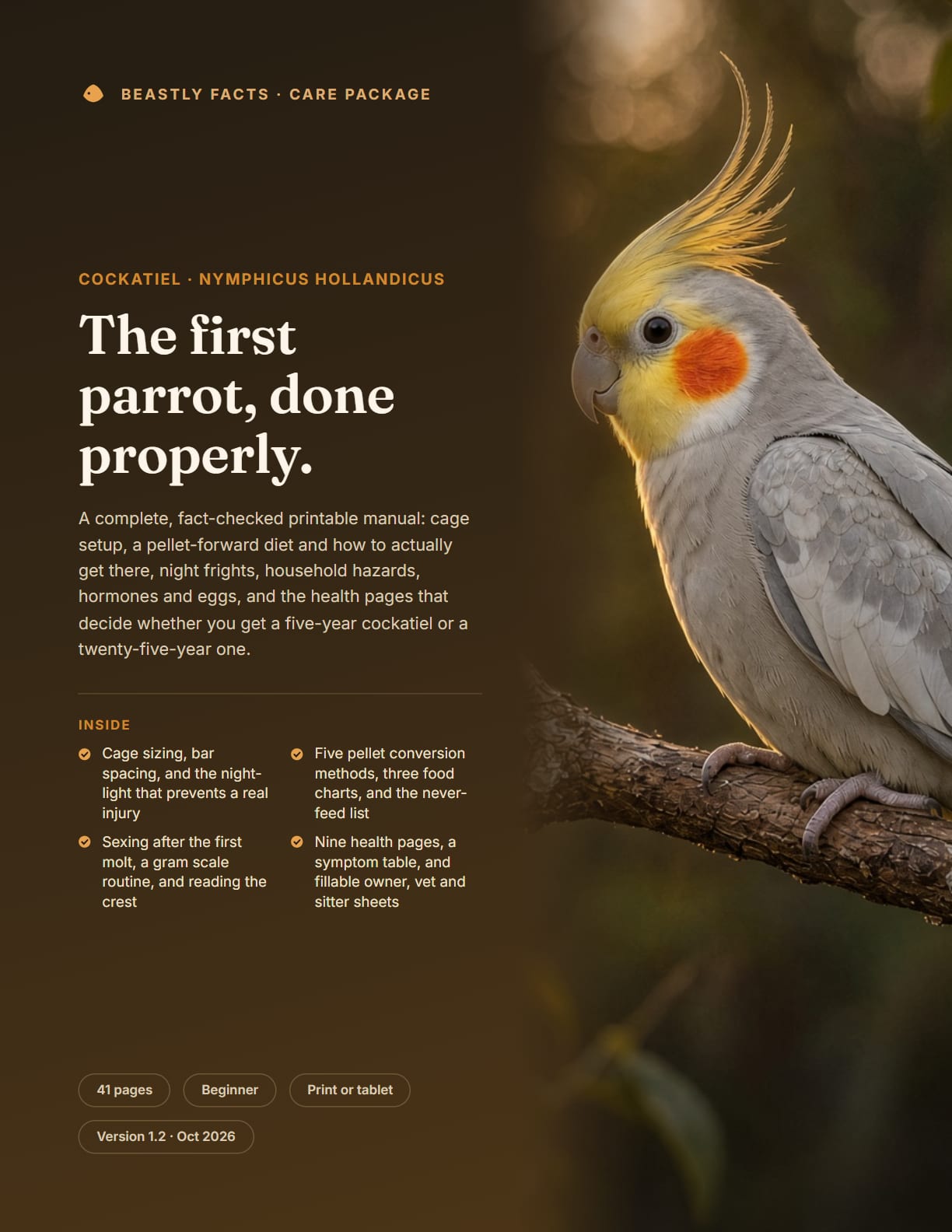
The Cockatiel Care Package puts the feeding section, an owner log and a pet-sitter sheet on paper, in a 52-page PDF you can keep by the cage, $8.99.
Frequently Asked Questions
How often should I feed my cockatiel?
Cockatiels aren't fed on a set meal schedule the way a dog or cat is. Their fast metabolism means they eat throughout the day, so the base pellet bowl should be topped up in the morning when they're hungriest and never allowed to sit empty.
Should a cockatiel's diet be mostly seeds or pellets?
Pellets. A formulated pellet diet making up roughly 75 to 80% of intake is the figure most veterinary sources point to, with fresh vegetables and fruit filling no more than another 20 to 25% and seeds kept to a small minority on top of that. All-seed diets are a well-documented cause of malnutrition in pet cockatiels.
What foods are toxic to cockatiels?
Avocado has the strongest, most consistent warning across veterinary and manufacturer sources alike. Onion, chocolate, caffeine, and alcohol are also flagged as toxic, not just foods to limit.
Do cockatiels need grit to digest their food?
No. Cockatiels hull seeds before swallowing them, so unlike some other bird groups, they don't need grit. Overconsuming grit is a real risk, particularly in a sick bird, and can cause a dangerous gastrointestinal blockage.
Why has my cockatiel stopped eating?
It's often something manageable, resistance to switching from seeds to pellets, heavy molting, or a new environment. But because cockatiels are small with a fast metabolism, appetite loss paired with any sign of illness, listlessness, nasal discharge, tail bobbing, deserves a same-day or next-day call to an avian vet rather than a wait-and-see approach.
Is egg binding related to diet?
Yes, directly. Cockatiels are prone to low dietary calcium, and a calcium shortfall can lead to egg binding, so a calcium-poor, seed-heavy diet feeds straight into the risk. Egg binding is a genuine emergency, a small bird can die within hours of becoming egg-bound.
Recommended Gear
As an Amazon Associate I earn from qualifying purchases through the links above, at no extra cost to you.

Written by Michael Ryan
Mike keeps two rescued bearded dragons, Dex and Cera, and writes the care guides on BeastlyFacts from his own research and mistakes. He is not a veterinarian.
More about Michael Ryan →