Common Cockatiel Health Issues (And Why the Kitchen Can Be Dangerous)
On This Page▾

Birds hide illness as a survival instinct, which means a cockatiel that looks visibly sick is often further along than the same symptoms would suggest in a cat or dog. A few conditions come up often enough, and one specific household hazard, that every owner should know about.
A pellet-forward diet and a well-set-up cage prevent most of what's on this list.
Normal Numbers Worth Knowing
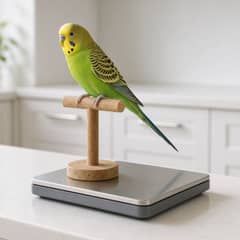
A healthy adult cockatiel weighs 80 to 125 g, about 90 g on average, runs a body temperature of about 107°F (41.8°C), has a resting heart rate of roughly 206 beats a minute, and breathes 40 to 50 times a minute at rest. Only the weight is something to measure at home: a gram scale used at the same time every day shows a loss before the bird looks thin, and the weight and body condition guide explains the keel check that goes with it.
Nutritional Disease From Seed-Only Diets
This is the most common preventable illness in pet birds. As one avian practice puts it plainly, birds that eat only seeds, especially sunflower seeds and peanuts, are the most prone to hypovitaminosis A, a vitamin A deficiency that shows up across multiple body systems. Standard seed mixes provide vitamin A at levels well below what a cockatiel actually needs. The signs are nasal discharge, sneezing, swelling around the eyes, conjunctivitis, labored breathing, drinking and urinating more, poor feather quality, feather picking and loss of appetite.
Calcium deficiency, sometimes leading to a condition called nutritional secondary hyperparathyroidism, is common too, and cockatiels are noted as especially prone to it. It shows as weakness, unsteadiness, tremors, depression, seizures and bones that break with no real injury. A cuttlebone or mineral block kept in the cage at all times helps close that gap.
Wild cockatiels live in flocks where predators single out the weakest-looking bird, so hiding illness is a hardwired survival strategy, not a choice a bird makes. A cockatiel can mask sickness well enough that owners often don't notice anything is wrong until the illness has already progressed, which is exactly why routine wellness exams matter so much for this species specifically.
Reproductive Disease
Chronic egg-laying, egg binding, soft or shell-less eggs, and oviduct prolapse are all common, even in single female cockatiels with no male present. The likely reason is where the species comes from. Wild cockatiels live in arid Australia and come into breeding condition only when food and water are plentiful, and a pet bird with a full bowl lives in permanently good times. Hens mature at 6 to 12 months. A cockatiel clutch runs 3 to 8 eggs, 5 on average, with 19 to 21 days of incubation. Longer term, changes to the bird's day or a hormone-suppressing implant from the vet can stop the cycle. Egg binding specifically is a life-threatening emergency, not something to wait out at home: small birds can die within a few hours of becoming egg-bound. Mildly affected hens may respond to supplemental heat, injectable fluids, calcium, vitamin D3 and oxytocin, a hormone that makes the oviduct contract, and a severe case can need the egg's contents drawn out with a needle passed through the vent, or surgery. Budgies and lovebirds run into the same repeat-clutch problem.
Feather Destructive Behavior
Often traced back to boredom, loneliness, or stress rather than a purely medical cause. If your cockatiel starts plucking or damaging its own feathers, both environmental changes and a vet visit are worth pursuing, since the underlying cause isn't always obvious from the outside. Consistent, patient handling goes a long way toward preventing the boredom and stress that often sit behind this.
Obesity and Fatty Liver Disease
A high-fat, seed-heavy diet combined with limited activity leads here. This ties directly back to the nutrition point above, diet really is the common thread running through most of this list.
Psittacosis
Caused by Chlamydia psittaci. Worth knowing about specifically because it's zoonotic, meaning it can pass to people in the household. In a cockatiel it tends to show as breathing trouble or conjunctivitis, and in some birds gray feathers turn black. Any of those is a reason to call the vet.
Giardia and Other Gut Flagellates
Motile parasites living in the lower intestine, linked to diarrhea in cockatiels. They do not show in the droppings to the naked eye: the vet finds them by looking at the droppings under a microscope, and treats with an antiparasitic drug. The first exam, which belongs inside quarantine within one to two weeks of bringing a new bird home, is the natural time to ask for that check.
Skid Injuries From a Hard Wing Clip
Cockatiels fly fast and land badly. A bird clipped too short cannot slow itself down and crash-lands on hard floors, which injures the keel or the skin just behind the vent. A correct trim still leaves a bird able to flutter down under control, and the clipping itself is a job for the vet.
Foreign Body and Toxin Ingestion
Cockatiels are noted as frequent offenders when it comes to ingesting rope fibers or heavy metal objects, curiosity plus a beak built for exploring makes this a real risk in a home that isn't fully bird-proofed.
The Kitchen Danger Worth Repeating
Overheated non-stick cookware releases fumes that are extremely dangerous, often fatal, to pet birds within minutes. This isn't a minor caution, it's one of the most serious preventable risks a bird owner can control simply by keeping birds out of the kitchen and being careful with cookware.
When to Call an Avian Vet
Because cockatiels hide illness so effectively, don't wait on: discharge from the eyes, nose, or mouth, bleeding, changes in droppings, sitting on the cage floor instead of perching, persistently fluffed feathers, tail-bobbing or labored breathing, or any sudden change in appetite or behavior. Annual wellness exams are worth doing even when nothing seems wrong.
Sources & Further Reading
Last reviewed 15 Jul 2026 · 4 sources
- VCA Animal Hospitals: the common conditions of pet birds and egg binding in birds pages
- Merck Veterinary Manual: Nutritional Diseases of Pet Birds
- Bird Vet Melbourne: Caring for Cockatiels
- LafeberVet: Basic Information Sheet for the Cockatiel
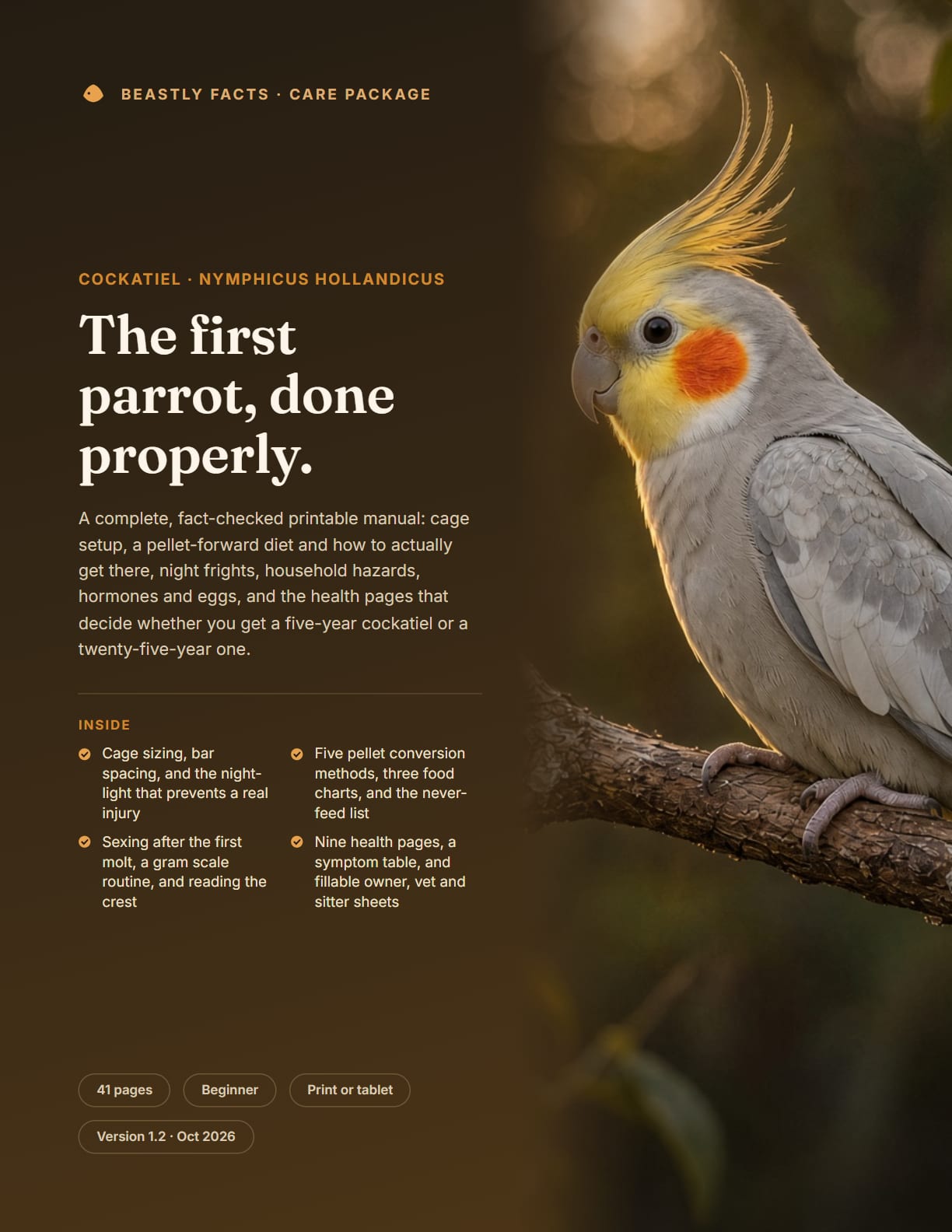
A sick cockatiel is no time to be scrolling. The Cockatiel Care Package puts these red flags, a symptom quick reference and an emergency card on paper, in a 52-page PDF, $8.99.
Frequently Asked Questions
What's the most common preventable illness in cockatiels?
Nutritional disease from a seed-only diet. Birds that eat mostly seeds, especially sunflower seeds and peanuts, are prone to hypovitaminosis A and calcium deficiency, and cockatiels are noted as especially prone to the calcium-related form.
What reproductive problems affect cockatiels?
Chronic egg-laying, soft or shell-less eggs, oviduct prolapse, and egg binding are all common, even in a single female with no male around. Egg binding specifically is a life-threatening emergency, not something to wait out at home.
Why is overheated non-stick cookware so dangerous for cockatiels?
The fumes are extremely dangerous, often fatal, to pet birds within minutes. Keeping birds out of the kitchen entirely and being careful with cookware is one of the most important preventable risks an owner can control.
What symptoms mean I should call an avian vet right away?
Discharge from the eyes, nose, or mouth, bleeding, a change in droppings, sitting on the cage floor instead of perching, feathers fluffed for long stretches, tail-bobbing or labored breathing, or any sudden shift in appetite or behavior. Cockatiels hide illness so effectively that these signs usually mean the problem is already advanced, so none of them should wait.
Recommended Gear
As an Amazon Associate I earn from qualifying purchases through the links above, at no extra cost to you.

Written by Michael Ryan
Mike keeps two rescued bearded dragons, Dex and Cera, and writes the care guides on BeastlyFacts from his own research and mistakes. He is not a veterinarian.
More about Michael Ryan →