Photoperiod and Sleep: The Light Schedule That Controls Your Bird's Hormones
On This Page▾

Most bird owners think about light in terms of what a cage looks like during the day, whether it gets enough natural brightness, whether a UV bulb is needed. Far fewer think about what happens after the lamps come on at 7pm and stay on until bedtime at 11. That gap matters more than almost anything else in a bird's daily routine, because a bird's body doesn't experience light the way a person's does. It reads day length as a season, and it uses that reading to decide when to go into breeding condition. Get the light schedule wrong, night after night, and you're not creating a cozy evening for your bird, you're running a hormonal experiment on it.
This guide applies across every companion bird, from a zebra finch or budgie up to a cockatoo or African grey. The sleep and darkness principle is universal. The chronic egg-laying angle applies most directly to hen-laying species, budgies, cockatiels, and lovebirds especially, and for those hens the light schedule is the lever behind most of the reproductive trouble they get into.
How Much Darkness a Bird Actually Needs
The figure that comes up consistently in avian behavior guidance is 10 to 12 hours of uninterrupted sleep a night. That range holds across the species kept as pets, there's no meaningfully different number for a budgie versus an African grey, though individual birds and households vary a little around it.
"Uninterrupted" is doing real work in that sentence. A bird that gets 11 hours of dark room time but has the hallway light flick on twice during that window, or a television glowing across the room, isn't getting the same rest as a bird with 11 genuinely dark, quiet hours. Birds prefer a constant sleep schedule, and a timer to keep the lights-out time consistent every night, rather than drifting with whatever else is happening in the house that evening.
The number to protect isn't just "hours of darkness." It's hours of darkness that are uninterrupted and happen at roughly the same clock time every night. A bird sleeping from 9pm to 7am on Tuesday and 11pm to 6am on Friday isn't getting a stable photoperiod even if both nights clear 10 hours.
The budgie health issues guide and its cockatiel and lovebird counterparts carry the egg-laying problems this schedule sits behind.
Why a Lit-Up Evening Reads as an Endless Summer
Wild birds from temperate and northern latitudes time their breeding to lengthening spring and summer days, then wind back down as days shorten into fall and winter. It's a genuinely elegant system in the wild: day length is a reliable, unambiguous seasonal signal, so a bird's reproductive hormones can key off it without needing to track temperature, food supply, or anything less consistent.
That system runs into trouble indoors. Captive and pet birds breed on environmental cues, principally photoperiod, and the major triggers are a long photoperiod, a nest box, a mate or perceived mate, and an unlimited food source. A photoperiod of more than 12 hours is a documented risk factor for excessive egg laying. A household that keeps the lights on from before dawn until 10 or 11pm every single day of the year is handing a bird's hormonal system exactly that extended-photoperiod signal, on repeat, with no autumn ever arriving to switch it back off. The same trigger shows from the behavior side: changing daylight hours can set off sexual behavior, and shortening the indoor day can help deter it. A lamp left on past sunset, or a bright television in the same room, isn't a neutral background detail to a bird. It's telling the bird's body that the day never ends, which is a very different message than a real long summer day, because a real one is always followed by shorter ones.
What Chronic Light Exposure Actually Does
The consequences aren't limited to egg laying, though that's the most visible one in hen species. Birds under ongoing reproductive hormones are often less friendly, more aggressive and more vocal as they protect a real or imagined clutch, and more cage protective and territorial than the same bird outside a hormonal state. At the extreme end, sustained hormonal stimulation brings territorial aggression, screaming, and feather destructive behavior.
Feather plucking deserves its own note here, because it's rarely caused by one thing alone. Sleep deprivation sits alongside boredom and sexual frustration among the recognized behavioral contributors to feather picking, and medical causes need to be ruled out by a vet before landing on a behavioral explanation. That order matters: don't assume a plucking bird just needs an earlier bedtime and skip the vet visit. But once medical causes are excluded, an inconsistent or too-short sleep schedule is a legitimate piece of the picture, not a fringe theory.
For hen species specifically, cockatiels, lovebirds, and budgerigars are the small parrots most commonly seen as emergencies for reproductive disease, including chronic egg laying and the egg binding it can end in. The light schedule is the upstream lever: it helps decide whether a hen's hormones ramp up in the first place, before any egg gets stuck.
The Managed Intervention: Shortening the Light Period
Deliberately shortening a bird's daily light exposure is one tool for breaking a chronic egg-laying cycle. Cutting daylight or room light to 8 hours a day, or 8 to 10 as a short-term measure, can reduce the stimulus to lay. It works as one part of a broader plan: converting to a pelleted diet, removing nest boxes, nesting material, and any object the bird is overly bonded to, and removing any real or perceived mate.
Two things are worth being clear about before trying this. First, it's a managed intervention, not a permanent setting or a DIY fix to reach for on your own the moment a hen lays an egg. It's meant to be discussed with an avian vet, especially for a bird already showing signs of chronic laying or egg binding, since the underlying cause sometimes needs medical treatment alongside the light change. Second, it is not a quick switch. It can take weeks rather than days before a hormonal pattern breaks, and the light schedule then gets lengthened back out gradually rather than snapped back to normal overnight.
Building a Real Sleep Schedule
The practical fix for most households isn't shortening the light period at all, it's protecting the 10 to 12 hours of dark, quiet sleep a bird should already be getting before hormonal problems start. A few things make the difference:
- Consistency matters more than the exact clock time. A bird settling into darkness at 9pm every night adapts better than one that gets lights-out at 8pm on quiet evenings and 11pm when guests are over.
- The main living-room cage is often the wrong sleep location. A cage that sits in the room where the household actually spends its evenings gets exposed to exactly the lamp glow and screen light this guide is about, right through the hours a bird should be asleep.
- A cover on the main cage isn't automatically the fix. Covering the cage at night may not provide optimal rest, and a separate dark room may be needed for a bird to get genuinely adequate sleep. A cover blocks light but does nothing about a nearby television's sound or a room people keep walking through.
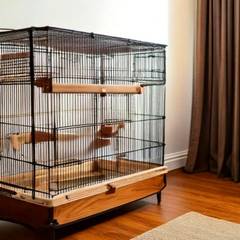
- A dedicated sleep cage in a quiet, dark room solves both problems at once. Moving a bird to a smaller, simple cage in a spare room or a quiet corner, at the same time every night, gives it real uninterrupted darkness away from the household's own schedule. It doesn't need toys or a busy setup, just a perch, water, and a room where the lights and the noise both actually stop.
None of this requires an unusual house or a major purchase. It requires treating a bird's bedtime as seriously as its diet, on a schedule that holds even on the nights the rest of the household is still up. The bird household hazards guide covers the other side of a bird-safe home, the daytime one.
Sources & Further Reading
Last reviewed 16 Sep 2026 · 5 sources
- Merck Veterinary Manual: Reproductive Diseases of Pet Birds
- VCA Animal Hospitals: Chronic Egg Laying in Birds; Sexual Behavior in Birds
- LafeberVet: Reproductive Emergencies in Birds
- UC Davis School of Veterinary Medicine: Feather-Picking in Parrots
- PetMD: How Long Do Parrots Live?
Frequently Asked Questions
How many hours of darkness does a pet bird actually need each night?
Most avian veterinary guidance puts it at 10 to 12 hours of uninterrupted sleep a night. That number holds across species, small finches and large parrots included, though individual birds vary a little.
Why does a lamp left on in the evening matter to a bird's hormones?
Birds are photosensitive: their bodies track day length as the main seasonal cue for breeding condition, and a long photoperiod switches on reproductive activity. A household evening with lamps and screens on well past sunset reads to that system as a long summer day, and unlike a real summer it never ends, so the bird's hormones never get the shorter days that would normally follow.
Does cutting the light schedule to 8 hours a day actually stop chronic egg laying?
It's one recommended tool, not a guaranteed fix on its own. Shortening daylight exposure to roughly 8 hours a day is part of managing chronic egg laying, alongside removing nest-like objects and, in ongoing cases, veterinary treatment. It should be done as a deliberate, vet-guided change, not a random light-timer adjustment.
Is covering my bird's cage at night enough, or do I need a separate sleep cage?
Covering the everyday cage helps some birds but doesn't always solve the problem. Covering the cage at night may not provide optimal rest, and a separate dark room is the answer for birds that aren't sleeping well where they normally live. A dedicated sleep cage in a quiet room is the more reliable fix for a bird in an active household.
Which pet birds are most at risk of hormonal problems from bad light exposure?
Small parrot species, budgies, cockatiels, and lovebirds especially, are the ones most often seen for reproductive emergencies tied to light and hormones. The sleep and darkness principle itself applies to every pet bird species, from finches and parrotlets up through African greys and cockatoos, even in males and in non-laying households.
Can too little sleep really cause a bird to pluck its feathers?
It's one recognized contributor. Sleep deprivation sits alongside boredom and sexual frustration among the behavioral causes of feather picking, and medical causes need ruling out with a vet before assuming poor sleep is the whole story.

Written by Michael Ryan
Mike keeps two rescued bearded dragons, Dex and Cera, and writes the care guides on BeastlyFacts from his own research and mistakes. He is not a veterinarian.
More about Michael Ryan →