Quarantining a New Bird: The Real Timeline and Why It Matters
On This Page▾

A new bird can look completely normal for weeks while carrying something that would spread through an entire flock in days. That gap between looking fine and actually being fine is the whole reason quarantine exists, and it's why skipping it, or shortening it because the new arrival seems bright-eyed and eating well, is one of the more common mistakes new bird owners make. This applies whether you're adding a budgie to a household that already has a cockatiel, bringing home your first lovebird with plans to get a second one down the road, or running a small aviary with a dozen finches. The species change some of the specific risks, but the underlying timeline and logic hold across budgie, lovebird, cockatiel, conure, African grey, cockatoo, canary, parrotlet, quaker parakeet, and zebra finch alike.
Quarantine isn't about assuming a new bird is sick. It's about the fact that several of the conditions avian vets worry about most, psittacosis among them, can be actively shed by a bird that looks and acts completely healthy.
How Long Quarantine Actually Needs to Be
Thirty days is the floor, not a suggestion with room to shave off a week if the bird seems fine. That applies to every newly acquired bird, including any that has been to a show, fair, or exhibition, and testing comes before the introduction. Plan on 30 to 45 days in a separate, isolated room while the new arrival is screened for chlamydia, salmonella, polyomavirus, and psittacine beak and feather disease (PBFD).
That window isn't arbitrary. It roughly tracks the incubation and shedding periods avian vets see across the conditions quarantine is built to catch, long enough for something that wasn't obvious on day one to become detectable by day thirty. Multi-bird households and aviaries deserve extra caution on top of that floor, since there's simply more to lose if the new arrival turns out to be shedding something. For avian polyomavirus, the recommendation is no new bird into an aviary without 90 days of quarantine and testing, since infected adult birds can shed the virus intermittently for up to 90 days before clearing it. The more established birds already sharing your home, the closer to that longer end it makes sense to run, rather than cutting straight to the bare 30-day minimum.
One thing worth correcting up front: doxycycline, the antibiotic used to treat confirmed avian chlamydiosis, isn't a shortcut around quarantine. Routine prophylactic antibiotic treatment is discouraged, since it can cause adverse effects in the bird and encourage resistant strains of the bacteria. Doxycycline has a real role once a bird is actually diagnosed, treatment for confirmed chlamydiosis typically runs 45 days, or 30 for budgerigars, but it's a treatment protocol, not a preventive substitute for time and testing.
Setting Up a Real Quarantine Space
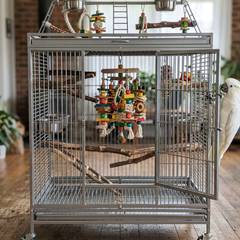
A second cage in the same room as your established birds isn't quarantine, it's proximity with extra steps. Isolation means housing the new bird in a separate air space from other birds, not just a separate enclosure sharing the same room's air. Ideally that means an entirely different room with its own door that stays shut, not a spare corner of the bird room with a sheet over the cage.
Everything that touches the new bird's enclosure needs its own set: food and water dishes, perches, toys, and cleaning tools, all completely separate from what your established birds use. Cross-contamination doesn't require obvious contact. A shared water dish, a sponge used on both enclosures, or a scoop that goes from one cage to the other is enough to move bacteria or a virus across the gap quarantine is supposed to maintain. Wash and disinfect the quarantine bird's equipment separately from everything else in the house for the entire window, not just when you remember to.
Why the New Bird Gets Fed, Watered, and Handled Last
Order matters as much as separation does. Care for your established, healthy birds first every single day, food, water, cage cleaning, playtime, all of it, and only handle the quarantined bird after everyone else is done. It is the standard rule for controlling the spread of infection: healthy birds before isolated or sick ones. Reversing that order, even by accident on a rushed morning, is how something on your hands or clothes from the new bird ends up on the birds you're trying to protect.
Wash your hands with soap and water, or change gloves, between handling the quarantined bird and handling any other bird or its enclosure. It is standard biosecurity practice, and it costs thirty seconds at the sink. If you're keeping a smock or a designated shirt just for quarantine-room visits, that habit is worth building too, since feathers, dander, and dried droppings travel on clothing more easily than most owners expect.
What a Vet Visit Adds That Watching Alone Can't
Symptom-watching feels like it should be enough. It isn't, and that's the part most new owners underestimate. A newly acquired young bird infected with PBFD may not show clinical signs for a long time, sometimes not until the disease has already progressed. PCR assays can detect infection in birds that still appear completely healthy, well before any outward sign would tip you off. Psittacosis behaves the same way. Some infected birds appear healthy and shed the organism only intermittently, which is exactly why a clean-looking bird on day 10 of quarantine can still test positive, or start showing signs, later in the window.
That's the case for pairing quarantine time with an actual vet visit rather than leaning on either one alone. A vet can run bloodwork and swabs for PBFD, avian polyomavirus, and psittacosis specifically, the three conditions quarantine protocols are largely built around, and catch a carrier that would otherwise look and act completely normal for the whole 30-day window. Polyomavirus adds one more wrinkle: a bird that's recovered from infection can remain a carrier and keep shedding the virus with no outward signs at all, and because shedding can be intermittent, a single negative test isn't the same as a clean bill of health. If you're bringing home a bird with any respiratory symptoms or feather issues already visible, our bird household hazards guide and the site's avian gastric yeast guide cover two more conditions where early screening, rather than a wait-and-see approach, makes the real difference.
When the First Exam Falls, and Who Should Do It
The first exam belongs inside quarantine, within one to two weeks of bringing the bird home. That lands in the first half of a 30 day window and leaves time for test results to come back before the new bird meets anyone. Expect a weight, a head-to-tail physical, blood work (a complete blood count and a chemistry panel), a fecal check for intestinal parasites, a Gram stain for abnormal bacteria or yeast, sometimes whole-body X-rays, and screening for chlamydiosis, polyomavirus, avian bornavirus and circovirus, the virus behind PBFD, as the bird's history calls for. After that first visit, avian vets commonly recommend checkups at least twice a year.
Not every small-animal clinic sees birds well. The minimum to ask for is a vet who is a member in good standing of the Association of Avian Veterinarians, whose Find-A-Vet search at aav.org lists members by location. Finding one before the bird comes home means the first exam is not waiting on the search.
If You Only Have One Bird Right Now
None of this is exclusive to households that already have a flock. If you own one bird today and plan to add a second at some point, whenever that turns out to be, the same 30-day window and vet screening apply to whichever bird arrives second. Treating quarantine as a hurdle only multi-bird households deal with, rather than a standard step for every new bird, is how a household that handled its first introduction carefully ends up skipping it on the second or third addition, right when there's actually something established to protect. Build the habit the first time, even with no other bird around yet to need protecting.
The Real Takeaway
Quarantine only works when all of its pieces are in place together: a genuinely separate airspace, dedicated dishes and tools, established birds cared for first, hands washed between birds, and a real vet visit with actual testing rather than a few weeks of watching and hoping. Skip any one piece and the rest doesn't fully cover for it, since each is catching something different, contact, cross-contamination, sequence, and the fact that PBFD, polyomavirus, and psittacosis can all hide behind a bird that looks completely fine. Thirty days is the floor for a reason. Treat it as one, and check your own species' care guide category for anything specific to what you're bringing home.
Sources & Further Reading
Last reviewed 16 Sep 2026 · 4 sources
- VCA Animal Hospitals: Veterinary Care for Your New Bird; Introducing a New Pet Bird; Psittacine Beak and Feather Disease in Pet Birds; Polyoma Virus Infection in Birds
- NASPHV: Compendium of Measures to Control Chlamydia psittaci Infection Among Humans (Psittacosis) and Pet Birds (Avian Chlamydiosis), 2009
- California Department of Food and Agriculture: Pet Bird Care and Disease Prevention Guide
- Merck Veterinary Manual: Viral Diseases of Pet Birds
Frequently Asked Questions
How long should I quarantine a new pet bird before introducing it to other birds?
At least 30 days, and 30 to 45 in a separate room while the bird is screened for chlamydia, salmonella, polyomavirus, and PBFD. For aviaries or households adding birds from multiple sources, stretch that to 90 days of quarantine and testing before introduction, because polyomavirus can be shed for that long.
Do I need to quarantine a bird if I only have one bird right now?
Yes, if you plan to add a second bird eventually. The same 30-day window and vet screening apply the day that second bird arrives, whether it's your first addition or your fifth. Building the habit from the very first introduction is easier than trying to start it once you already have birds to protect.
What actually counts as a separate airspace for quarantine?
A different room with its own door kept shut, not a second cage or a covered corner in the same room as your other birds. Isolation means a separate air space from other birds, since airborne and aerosolized transmission is part of how some of these conditions spread, not just direct contact.
Can a bird test negative during quarantine and still be a health risk?
Yes, which is why a single test partway through quarantine isn't the same as a clean bill of health. Avian polyomavirus can be shed intermittently, so several negative tests over time carry more weight than one, and PCR testing for PBFD can detect infection in birds that still look completely healthy.
Is doxycycline a substitute for quarantining a new bird?
No. Doxycycline is the treatment used once avian chlamydiosis is confirmed or strongly suspected, not a preventive shortcut. Routine prophylactic antibiotic use is discouraged, since it can cause side effects in the bird and contribute to antibiotic-resistant strains of the bacteria.
What order should daily care happen in during quarantine?
Established, healthy birds first, for every task, feeding, watering, cage cleaning, and handling, with the quarantined bird cared for last and hands washed or gloves changed in between. It is the standard rule for controlling disease spread: healthy birds before isolated ones.

Written by Michael Ryan
Mike keeps two rescued bearded dragons, Dex and Cera, and writes the care guides on BeastlyFacts from his own research and mistakes. He is not a veterinarian.
More about Michael Ryan →