African Fat-Tailed Gecko Enclosure Setup: Built for the Ground, Not the Branches
On This Page▾

Unlike most of the geckos commonly kept as pets, fat-tailed geckos are ground-dwellers and burrowers, not climbers.
Enclosure Size
36x18x18 inches is the current minimum for a single adult. The 20-gallon long (roughly 30x12x12 inches) that many care sheets still name is the old floor: it leaves too little room for a real warm-to-cool gradient and for exploring. A 40-gallon breeder at 36x18x16 inches gives the same floor space. Floor space matters far more than height. This is a terrestrial species that spends its time on the ground and underground, much like the leopard gecko it's so often compared to.
Temperature and Heat Source
Yes, this species needs supplemental heat, unlike some of the other geckos in this series. Warm side (basking surface) should run 88 to 92°F, cool side 75 to 80°F, with a nighttime drop to around 70 to 75°F. Provide belly heat through an under-tank heat mat covering about a third of the floor, always on a thermostat, with the probe positioned on the actual basking surface. Skip heat rocks and strong overhead basking bulbs entirely, both carry real burn risk. If using deep substrate, a heat mat under a warm hide often works better than one under thick substrate. An infrared temp gun makes checking your actual surface temperatures much easier than a stick-on thermometer alone.
Humidity
Higher than a leopard gecko needs, but this is still a mostly-dry enclosure overall. Ambient humidity around 50 to 70% works well, maintained with a permanent humid hide running 70 to 80%, that's the piece that actually prevents shedding problems. Some keepers run a seasonal cycle, but a consistent moist hide matters more than chasing an exact seasonal number.
Fat-tailed geckos are more vocal than most pet geckos, and the chirps and squeaks aren't random, they communicate real things like discomfort during handling. It's one more way this species diverges from the leopard gecko it gets compared to constantly, despite sharing eyelids, a lack of sticky toe pads, and a terrestrial lifestyle.
Substrate: The Detail That Makes This Species Different
Naturalistic sandy-soil mixes work well for healthy adults, a common blend is roughly 70% topsoil to 30% play sand, or a coconut fiber and reptile sand combination. Paper towel is the right choice for quarantine and juveniles. Provide enough depth, at least 4 inches, for genuine burrowing behavior.
A note on the sand debate: pure loose sand is sometimes flagged as an impaction risk, and it does dry a gecko out and interfere with shedding, which is reason enough to skip it on its own. The impaction part is narrower than it sounds, though: it tends to happen in geckos that are already unhealthy, dehydrated, or kept at incorrect temperatures, not simply from naturalistic substrate. Still, avoid pure sand for very young or unwell animals as a precaution.
Lighting
Fat-tailed geckos are nocturnal and can survive without UVB if given a high-D3 calcium supplement, but low-output UVB in the 2 to 5% range is increasingly recommended. Don't be fooled by the 2.5% on the linked tube: the percentage is the share of its light that is UVB, not how strong it is, and Arcadia's own chart puts this 24-inch, 14-watt tube at a higher UV index than a short 12-inch 7% kit at the same distance (1.0 against 0.65 at 12 inches), so set its height by its own distances: the gecko's back on its warm-side spot sits 8 to 14 inches below the tube through a screen lid, or 10 to 18 inches with no mesh, and 12 to 14 or 14 to 18 inches for albino and other pale geckos. A UV index meter confirms it. Run a 10 to 12 hour photoperiod, then lights off. Skip red and moonlight bulbs too: light after dark disrupts a reptile's day-night cycle, and the heat mat keeps working through the night without lighting the enclosure. Mount the UVB tube inside the enclosure or over a mesh top, never over glass, which blocks UVB, and replace the tube every 6 to 12 months, by the maker's rated life, long before it stops looking bright.
The Non-Obvious Requirement: Build for Digging, Not Climbing
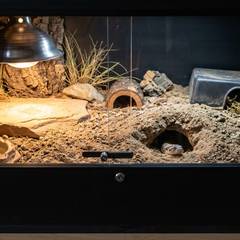
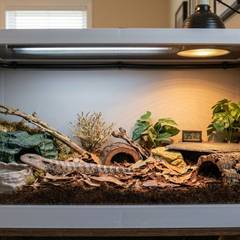
Skip the tall branches and climbing structures that other gecko species need, the gargoyle gecko and mourning gecko both want vertical space that would be wasted here. Instead, prioritize three hides, a warm one, a cool one, and a permanently moist one, plus enough substrate depth for real burrowing.
Furnishings, in Short
- A warm, dry hide
- A cool, dry hide
- A moist hide lined with damp sphagnum moss
- A shallow water dish
Keeping It Clean
Spot-clean droppings as soon as they appear, and change the sphagnum in the humid hide whenever it smells sour or looks soiled, since a warm, damp hide is where waste and mold build up fastest in this setup. The weekly wipe-down, monthly deep clean and substrate replacement follow the enclosure cleaning schedule that applies to every reptile tank, along with the hand-washing that goes with it.
Sources & Further Reading
Last reviewed 15 Sep 2026 · 5 sources
- Tree of Life Exotic Pet Medical Center: African Fat-Tailed Gecko Care
- Zoo Med: African Fat-Tail Gecko
- All Angles Creatures: African Fat-Tailed Geckos, Everything You Need to Know as a Pet Owner
- Cadillac Veterinary Clinic: African Fat-Tailed Geckos
- ReptiFiles: the African fat-tailed gecko care sheet, and the leopard gecko temperatures, humidity and lighting page for the 2.5% tube's heights
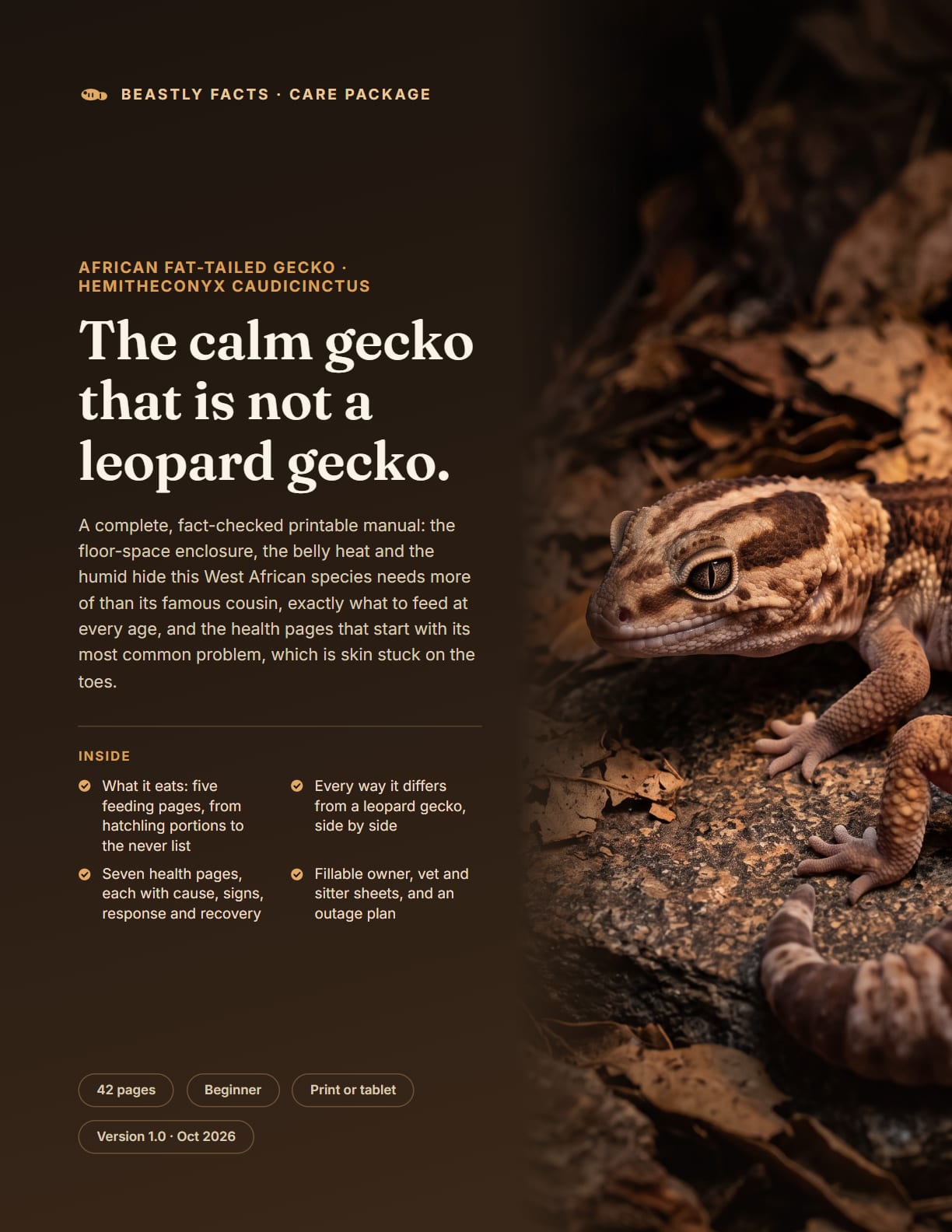
The African Fat-Tailed Gecko Care Package carries this setup as a checklist with the targets to hit, in a 45-page PDF you can keep by the enclosure, $8.99.
Frequently Asked Questions
What size enclosure does an African fat-tailed gecko need?
36x18x18 inches is the current minimum for one adult, past the old 20-gallon-long floor that many care sheets still print. A 36x18x16 inch 40-gallon breeder gives the same floor. Height buys little here: this is a terrestrial species, on the ground and under it.
Does an African fat-tailed gecko need a heat mat or a heat lamp?
A heat mat on a thermostat. Aim for 88 to 92°F on the warm side, 75 to 80°F on the cool side, and a night drop to 70 to 75°F. Heat rocks and strong overhead basking bulbs both carry real burn risk.
How humid should the enclosure be?
Higher than a leopard gecko needs, though the enclosure stays mostly dry. Ambient around 50 to 70% works, and a permanent humid hide at 70 to 80% is the piece that prevents shedding problems.
What substrate is best for African fat-tailed geckos?
For healthy adults, a naturalistic sandy-soil mix: roughly 70% topsoil to 30% play sand, or coconut fiber with reptile sand, at least 4 inches deep so the gecko can burrow. Quarantine animals and juveniles go on paper towel.
Does this species need UVB?
They are nocturnal, and a high-D3 calcium supplement can carry them without it, but low-output UVB in the 2 to 5% band is increasingly recommended. Either way, run a 10 to 12 hour photoperiod.
More on the African Fat-Tailed Gecko
African Fat-Tailed Gecko care guide
🦎 How Much Does an African Fat-Tailed Gecko Really Cost?
🦎 How to Handle an African Fat-Tailed Gecko
🦎 Common African Fat-Tailed Gecko Health Issues
🦎 African Fat-Tailed Gecko Feeding: Schedule, Diet, and Why They Stop Eating
🦎 African Fat-Tailed Gecko Enrichment: The Closest Cousin Was Studied
Recommended Gear
As an Amazon Associate I earn from qualifying purchases through the links above, at no extra cost to you.

Written by Michael Ryan
Mike keeps two rescued bearded dragons, Dex and Cera, and writes the care guides on BeastlyFacts from his own research and mistakes. He is not a veterinarian.
More about Michael Ryan →