Gut-Loading Feeder Insects: What to Feed Them, for How Long, and Whether It Replaces Dusting
On This Page▾

Almost every reptile care sheet tells you to gut-load feeder insects. Very few sources tell you what that actually means past the sentence, which is a problem, because the difference between gut-loading properly and going through the motions is the difference between a reptile that gets enough calcium and one that does not.
Here is the whole thing.
The Problem You Are Solving
Feeder insects are a poor calcium source. Not marginal. Genuinely bad.
What matters is not calcium alone but the ratio of calcium to phosphorus, because phosphorus competes with calcium for absorption in the gut. Feed an animal plenty of calcium alongside far more phosphorus and much of that calcium never gets used. The generally accepted target for insectivorous reptiles is roughly 2 parts calcium to 1 part phosphorus, or at minimum 1:1.
Feeder insects come nowhere close. Analyses by Mark Finke, who has done most of the compositional work on this, put unsupplemented crickets in the region of 1 part calcium to 9 parts phosphorus. Mealworms are worse, in the range of 1:14 or beyond. Dubia roaches sit somewhat better than crickets but still well on the wrong side of 1:1.
An animal fed nothing but plain feeder insects is running a calcium deficit every single meal. Sustained, that is the road to metabolic bone disease, which is the most common preventable illness in captive insectivorous reptiles and amphibians.
The one genuine exception is black soldier fly larvae, which carry substantial calcium in their exoskeleton and land close to or above 1:1 without help. They are the only common feeder that is not part of the problem.
Why Gut-Loading Works
An insect is a container. Whatever is in its digestive tract when your animal eats it gets eaten too.
So you feed the insect a high-calcium diet for a day or two, and the calcium sitting in its gut goes along for the ride. You are not changing the insect's body composition much, which is largely fixed. You are using the gut contents as a delivery mechanism.
This is a real, measured effect rather than a folk practice. Work by Klasing and colleagues showed that crickets fed a diet containing around 8 percent calcium for 48 hours had their whole-body calcium content raised substantially, enough to shift the calcium to phosphorus ratio into acceptable territory. Allen and Oftedal at the National Zoo did foundational work establishing that manipulating insect diet changes what the insect delivers.
The catch is that the diet has to actually be high in calcium. This is where most gut-loading fails.
Most Gut-Loading Is Not Gut-Loading
Tossing carrot and potato into the cricket tub is what a lot of people mean by gut-loading. It keeps the crickets alive and hydrated, which is worth doing, but as a calcium intervention it does close to nothing. Carrot and potato are not calcium sources.
For gut-loading to move the ratio, the diet has to be built for it. That means either a commercial gut-load formulated with a high calcium content, or fresh produce genuinely high in calcium and low in the things that block it.
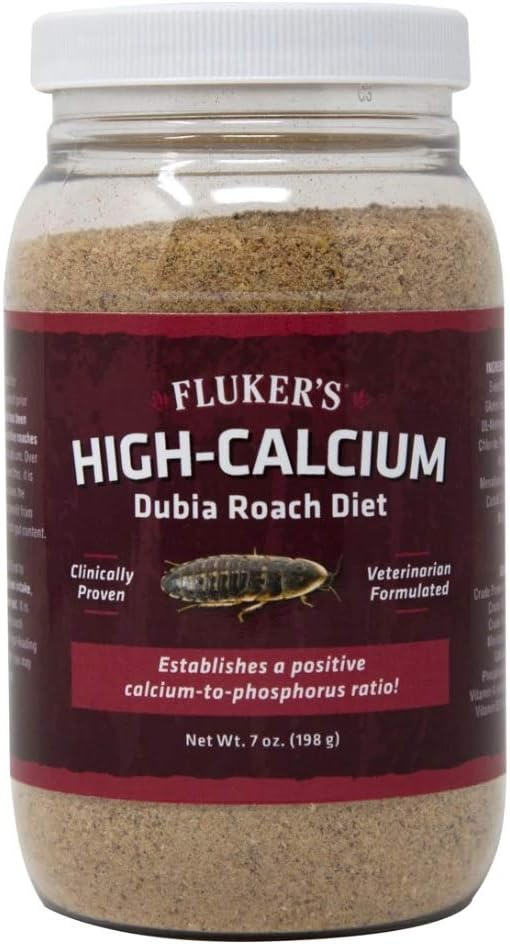
On the commercial side, look for a dry diet sold on its calcium content rather than one that just says gut-load on the front. Fluker's High Calcium Dubia Roach Diet is the usual example, and despite the name it works for crickets as readily as roaches.
Good fresh options are collard greens, mustard greens, turnip greens, dandelion greens, and butternut squash. These are calcium-dense and low in oxalates.
Avoid spinach, beet greens, and Swiss chard specifically. They read as healthy and they contain plenty of calcium, but they are also high in oxalic acid, which binds calcium into a form that cannot be absorbed. Feeding them as a gut-load is close to self-defeating.
Gut-loading only works if the diet is genuinely calcium-rich. Carrot, potato and apple keep insects alive but do not move the calcium to phosphorus ratio, which is the entire point of the exercise.
The Timing Window
Twenty four to seventy two hours before feeding, with 48 hours the most commonly cited figure. There are reasons at both ends.
Too short and the insect has not eaten enough of the diet for its gut contents to matter. Too long stops helping, because gut-loading is not cumulative: an insect is only carrying what is currently in its digestive tract.
The other end of the window matters more than people realize. Insects begin voiding their gut contents once removed from the food source, and a cricket left sitting in an empty container for a day has already lost much of what you paid for. Feed them out within a few hours of taking them off the gut-load diet. If you are keeping a standing colony, the practical approach is to keep the gut-load available continuously rather than treating it as a two-day event before each feeding.
Hydration Is Part of It
Insects need water and they drown easily in an open dish. That is why water gels and cubes exist rather than a bottle cap of water.
It also creates an opportunity. A calcium-fortified water source delivers hydration and calcium through the same route, and since insects will drink whether or not they feel like eating a dry diet, it tends to be more reliable than food alone. Fluker's Cricket Quencher Calcium Fortified is the standard product here and is worth using in place of the plain version, because you get the calcium for free on a thing you needed anyway.
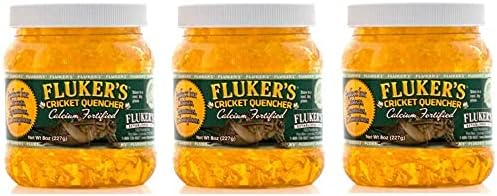
Do not rely on it as the only calcium source. Use it alongside a dry gut-load diet.
Does Gut-Loading Replace Dusting?
This is the question people actually want answered, and the honest answer has a shape to it.
In principle, a properly formulated high-calcium gut-load can get an insect to an acceptable calcium to phosphorus ratio on its own. That is what the Klasing work demonstrates. It is not a myth that gut-loading alone can be sufficient.
In practice, you should still dust, and here is why.
Commercial gut-load products vary enormously in actual calcium content, and the label does not always make this clear. Several products marketed as gut-loads contain nowhere near the calcium level used in the studies showing gut-loading works.
Insects also do not always cooperate. Very high calcium diets can be unpalatable, and an insect that eats less of it delivers less. You have limited insight into how much any individual cricket actually consumed.
And the timing is fragile in a way dusting is not. Gut contents void. Powder on the outside does not.
There is a separate reason dusting stays necessary regardless: vitamin D3. Most reptiles need D3 to use calcium at all, either from UVB exposure or from diet. Gut-loading is a poor delivery route for D3, so for species without adequate UVB, a D3-containing dust is doing a job gut-loading cannot.
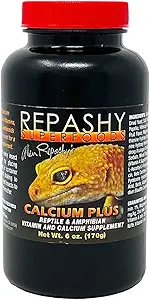
So the working answer: gut-load and dust, and treat them as separate jobs rather than redundant ones. Dusting is your insurance against gut-load variability. Gut-loading is what makes the underlying insect less bad in the first place. Common guidance is plain calcium on most feedings with a calcium plus D3 product a couple of times a week, though this varies by species and by whether you are running proper UVB, so check against your animal's specific requirements. Repashy Calcium Plus is a common pick for that second slot, since it carries D3 and a multivitamin in the same powder.
Practical Setup
Keep feeders in a ventilated container with the gut-load diet permanently available and a calcium-fortified water gel. Give them enough space that they are not crowded, since crowded crickets die fast and cannibalize.
Offer fresh produce in small amounts and remove it before it molds. Mold is a genuine risk in a warm feeder bin and it will kill a colony quickly.
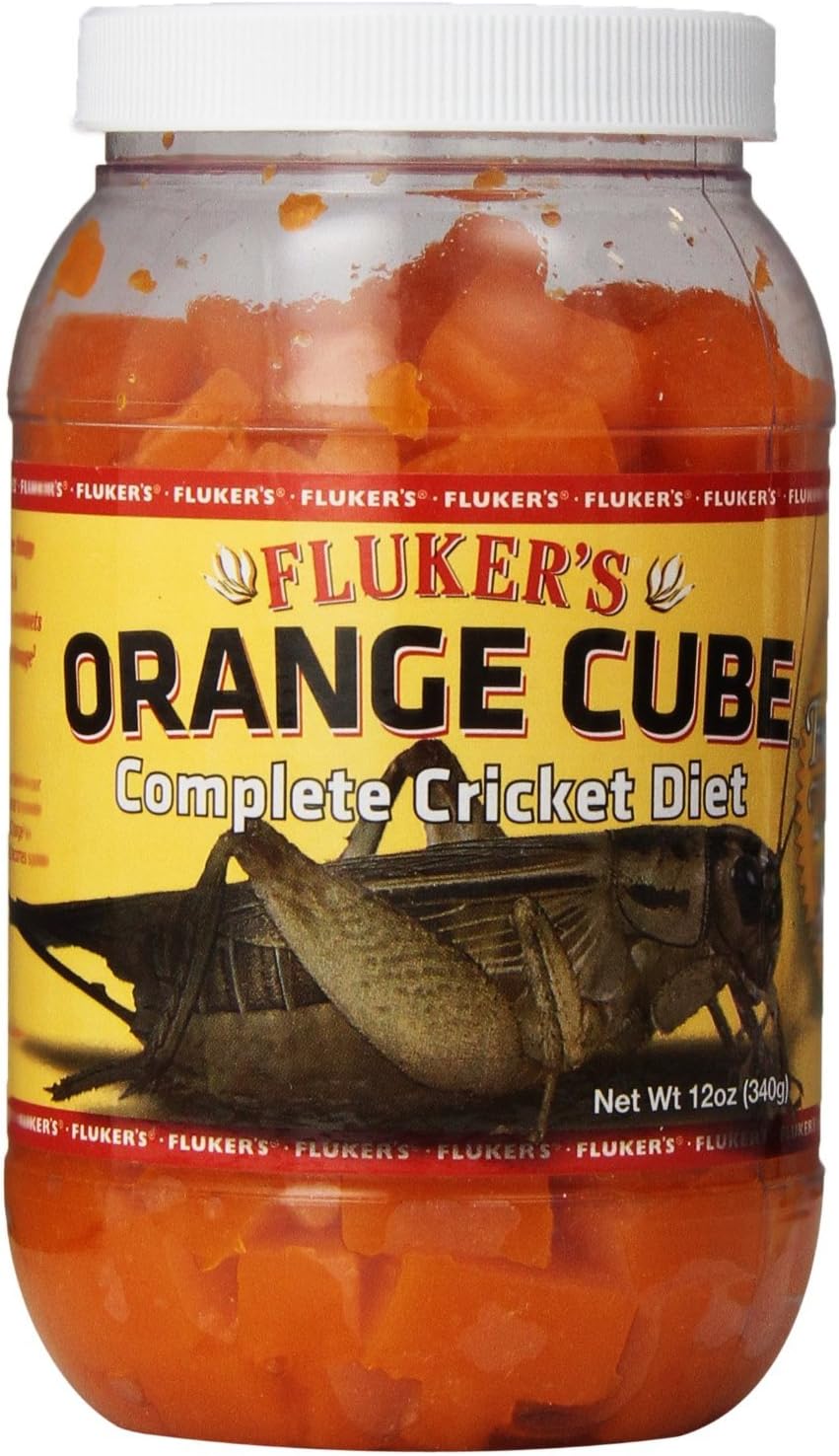
If you would rather not manage fresh produce at all, gel cubes such as Fluker's Orange Cube Complete Cricket Diet handle food and moisture in one item and will not rot the way greens do. Treat them as the thing that keeps the colony alive rather than as the calcium delivery, and run a high-calcium dry diet alongside.
Dust immediately before feeding, not in advance. Powder falls off, and an insect that has been sitting dusted in a container for an hour has groomed a good deal of it away.
One thing worth checking: if you are gut-loading properly and dusting properly and still seeing signs of calcium deficiency, the problem is usually UVB rather than calcium. A dragon or a chameleon without functional UVB cannot use calcium no matter how much of it you deliver, and UVB bulbs decline well before they stop emitting visible light.
Sources
- Finke, M. D. (2002). Complete nutrient composition of commercially raised invertebrates used as food for insectivores. Zoo Biology.
- Finke, M. D. (2013). Complete nutrient content of four species of feeder insects. Zoo Biology.
- Klasing, K. C., Thacker, P., Lopez, M. A. and Calvert, C. C. (2000). Increasing the calcium content of mealworms to improve their nutritional value for bone mineralization of growing chicks. Journal of Zoo and Wildlife Medicine.
- Allen, M. E. and Oftedal, O. T. (1989). Dietary manipulation of the calcium content of feed crickets. Journal of Zoo and Wildlife Medicine.
- Hunt-Coslik, A., Ward, A. M. and McClements, R. D. (2009). Gut loading as a method to effectively supplement crickets with calcium and vitamin E. Proceedings of the Nutrition Advisory Group.
Gut loading only pays off if the rest of the diet is right, and that varies by species. Our bearded dragon feeding guide covers how the insect half fits alongside greens.
📰 More on the White's Tree Frog
📘 White's Tree Frog care guide
🐸 How Much Does a White's Tree Frog Really Cost?
🐸 How to Handle a White's Tree Frog
🐸 Common White's Tree Frog Health Issues (Obesity Is the Signature Risk)
🐸 White's Tree Frog Tank Setup: What Your Frog Actually Needs
🐸 White's Tree Frog Enrichment: Plants Changed the Frogs, Not Just the Tank
🛒 Recommended Gear
As an Amazon Associate, we earn from qualifying purchases through the links above - at no extra cost to you.

Written by Michael Ryan
Mike keeps two rescued bearded dragons, Dex and Cera, and writes the care guides on BeastlyFacts from his own research and mistakes. He is not a veterinarian.
More about Michael Ryan →Comments
No comments yet - be the first!