Rummy-Nose Tetra Handling Comes Down to One Stressful Trip Home
On This Page▾

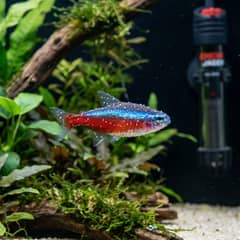
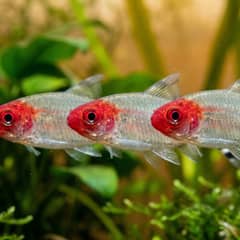
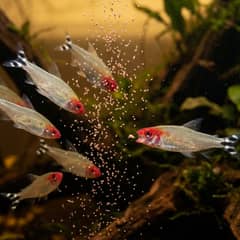
The rummy-nose tetra (Petitella bleheri, formerly Hemigrammus bleheri) is a silver South American schooling fish with a blood-red head, native to blackwater rivers of the Rio Negro and Rio Meta basins and grown to about 2 inches (5 cm). Nobody holds one. Its handling is a net, a bag and the hour it takes to move from shop water into tank water, and this is a fish that takes stress hard: its sensitivity is the reason many keepers steer beginners away from it. The red nose makes that stress visible, which turns every step of the move into something a keeper can read.
Choosing Fish From the Shop Tank
The red head is the first thing to read. A rummy-nose in poor condition loses much of that color, but a pale nose in a shop tank has two ordinary explanations as well: the fish arrived within the last couple of days, or someone just chased them around with a net. Wait half an hour, or come back another day. A tank where the noses are still washed out on the second look is the one to walk past. Healthy rummy-noses also hold together closely, so a group drifting apart around the tank deserves a second look.
Look over every fish for white spots before agreeing to a bag. New rummy-noses sometimes come home carrying ich. Ask the shop for its pH and hardness while there, since those two figures decide how the acclimation goes.
How Many to Bring Home
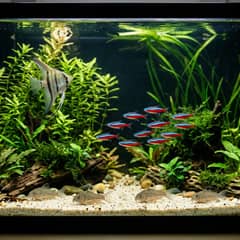
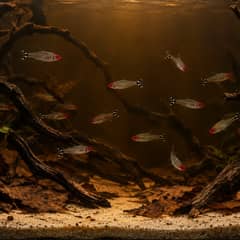
Ten or more. Rummy-noses are among the more tightly schooling small tetras, how the school moves and turns changes with the number of fish in it, and the species does poorly in small numbers.
A school of 10 needs a tank at least 36 inches (90 cm) long, a figure where the length matters more than the gallons on the label. The school goes into a tank that has finished its nitrogen cycle, since ten fish arriving in one trip add their waste all at once.
Netting Without the Chase
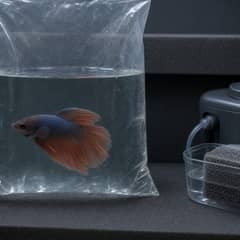
A net is the only thing that touches a rummy-nose, and the faded noses in a freshly netted shop tank show what a long chase costs. At home the keeper holds the net, so the method to use is the one that keeps the chase short and the bag in the water. Float a partly filled bag on the surface, open it there, and net the fish straight across into it. Skip the shop habit of having a second person hold a half-full bag open in the air while fish get tipped in from the net. A rummy-nose takes stress hard, and a transfer that goes wrong in midair is the kind it can do without.
The Drive Home
In the bag, one part water to three parts air is the ratio. The air is where the oxygen for the journey sits, so a bag that looks underfilled is filled correctly. For the ride, put the bag in a dark box, or wrap it in a towel or newspaper.
A rummy-nose lying still on its side in the bag is a common sight and not an emergency. The species often plays dead in transit, and once the bag is set down on a solid surface the fish right themselves.
Bag water gets worse by the hour. Waste raises the ammonia, and carbon dioxide building up pulls the pH down. Both are reasons that water never reaches the tank, and a long drive or a shipped order calls for the oxygen and insulation planning in moving fish over a longer trip.
Acclimation: Float, Drip or Straight In
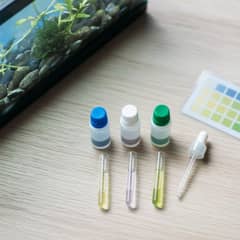
Rummy-noses want soft, acidic water: a pH of 5.5 to 7.0 and 2 to 12 dGH. Testing the tank's pH and hardness before the trip, and comparing them with the shop's figures, settles which method the day needs.
| Method | How long | When it fits a rummy-nose |
|---|---|---|
| Floating and mixing | 30 to 60 minutes | Shop water and tank water close in pH and hardness |
| Drip acclimation | A couple of hours, at 1 to 2 drips a second | The two far apart on pH or hardness; it is the slower method experienced keepers often use |
| Temperature match, then straight in | Only as long as the temperatures take to even out | A long shipment. Hours in a sealed bag load the water with ammonia, mostly kept in its less toxic form by a pH the fishes' carbon dioxide has dragged down; mixing in tank water lifts the pH and turns a growing share toxic, so every extra minute of mixing is a minute in worsening water. The other option is an ammonia detoxifier in the bag, then the usual mix |
The floating routine runs in four steps:
- Lights off. Fresh arrivals should sit in fairly dim conditions, so the tank lights stay off for the whole process.
- Mix water in slowly. Every few minutes, pour a little tank water into the bag. Stop once the bag holds more aquarium water than shop water.
- Net, do not pour. Lift the fish out with the net and let them go in the tank. The bag water carries the waste from the trip and stays out.
- Count the strays. Before the bag is thrown away, check it, the net and the floor for a fish that stuck or jumped.
Give the school an hour or two before the lights come back on. Do not expect the first meal on day one. New arrivals often take a day or two to start feeding; offer a little food and remove what is ignored. If they are still refusing after that, the fix is a different food, not more of the same.
Quarantine is the single most important step for every fish added, wherever it came from, and with a species that tends to arrive with ich it matters twice over. New rummy-noses belong in a separate hospital tank first, and the same routine applies when the bag goes into quarantine.
Rummies Go in First
Order matters with this fish. Rummy-noses react strongly to their surroundings, and a territorial fish already settled in the tank, an angelfish being the usual case, can send a new school into hiding and keep it there. Add the rummy-noses before the bigger fish. Let them settle, preferably with the lights off, and put the angelfish in about half an hour later.
Temperament: Very Peaceful, Easily Outcompeted
Rummy-nose tetras are very peaceful, and they do poorly against tankmates that are boisterous or much larger than they are. That one trait sets most of the stocking rules. A bullied school often shows it in the noses, which lose their red under stress, so a pale school in a community tank is a reason to test the water and then watch who is chasing whom.
Tankmates That Work
Peaceful fish of similar size are the rule, and the list is long:
- Other small tetras, including Hemigrammus and Hyphessobrycon species.
- Pencilfish.
- Corydoras and small loricariid catfish.
- Apistogramma and West African dwarf cichlids such as Pelvicachromis.
- In a general community, smaller rasboras, barbs and anabantoids.
Angelfish work when the rummy-noses are stocked first, as above. Discus are a classic pairing, and many discus keepers run a rummy-nose school in their show tanks. The catch is temperature: rummy-noses top out at 79°F, the bottom of the 79 to 86°F discus are kept at, so the two meet only at 79°F.
Telling Males From Females
Sexing rummy-noses is hard, and it only works on grown fish. Mature females are noticeably rounder in the body, most of all when full of eggs, and males run slightly slimmer. In a mixed school none of this matters; it only comes into play for a keeper setting up a breeding group.
Rummy-nose parents eat their own eggs given the chance, so breeders spawn a group of about six of each sex and lift the adults out once eggs or fry appear.
Source: Seriously Fish
Fish Tank Granuloma: Gloves Over Cuts
Floating the bag, netting the school and every water change after it put a keeper's hands in aquarium water, and that water can carry Mycobacterium marinum. The bacterium lives in aquarium tanks as well as fresh and salt water, and it reaches a person through broken skin. Aquarium keepers carry the higher risk, above all with a cut or scrape on the hand.
It tends to show 2 to 3 weeks after exposure as a reddish to purple bump on an elbow, a finger or the back of a hand, which slowly grows into a painful nodule and may open into a sore. Clearing it can take several months of more than one antibiotic, so a bump that will not heal is worth a doctor's visit, with the aquarium mentioned at the start.
Rubber gloves for tank work and a thorough scrub of the hands and arms afterward keep it out. A hand with an open cut does not go into the water bare.
First-Timer Mistakes
- Walking past pale fish on the first look. Wait and recheck; pass only if the noses stay pale.
- Chasing the school around with the net. Float the bag and keep the netting short.
- Pouring the bag into the tank. Net the fish across and send the water down the drain.
- Slow-mixing a long-shipped order. Match the temperature, then net them in or detoxify the ammonia first.
- Adding the angelfish first. Rummy-noses go in first and the territorial fish follows.
- Buying a handful. Ten or more.
- Hard, alkaline water. The red fades in it.
- A discus tank's heat. It runs past the rummy-nose's ceiling.
- Skipping quarantine. New fish sometimes arrive with ich.
- Bare hands over a cut. Gloves first.
A rummy-nose school that comes home with its noses still red, netted without a chase and eased into water it was matched to, is a school that has been handled well, and the same red keeps reporting on the tank from then on.
Sources & Further Reading
Last reviewed 31 Oct 2026 · 4 sources
- Petitella bleheri (Firehead Tetra), Seriously Fish
- Practical Fishkeeping: What can I do about this aggressive Angel?, Neale Monks; What you need to know about bagging fish, Nathan Hill
- Francis-Floyd R, Watson C, Petty D, Pouder DB. Ammonia in Aquatic Systems. UF/IFAS Extension FA16
- Mycobacterium marinum infection, MedlinePlus, US National Library of Medicine
Frequently Asked Questions
How do you acclimate rummy-nose tetras?
With the tank lights off, add small amounts of tank water to the bag every few minutes for 30 to 60 minutes, until the bag is mostly tank water. Net the fish into the tank and throw the bag water away.
How many rummy-nose tetras should be kept together?
Plan on a school of 10 or more. That many rummy-noses need a tank measuring 36 inches (90 cm) or more from end to end.
Can rummy-nose tetras live with angelfish?
Yes, if the tetras go in first. An angelfish that already holds the tank can bully a newly added school into hiding.
Can rummy-nose tetras live with discus?
Discus keepers often pair them, but rummy-noses top out at 79°F (26°C), the bottom of the 79 to 86°F discus range, so the two meet only at 79°F and the pairing leaves the rummy-noses no margin.
How do you tell male and female rummy-nose tetras apart?
Only by shape, and only in grown fish. An adult female has a fuller, rounder build, while a male stays a little slimmer.
Should you buy rummy-nose tetras with pale noses?
Not straight away, but do not write them off either. Fish that arrived in the last couple of days, or were just chased with a net, often look pale, so wait half an hour or come back another day. A tank that stays washed out is the one to pass on.
Why is my new rummy-nose tetra lying on its side in the bag?
Rummy-noses often play dead in a transport bag. Set the bag down on a solid surface and they right themselves.
More on the Rummy Nose Tetra

Written by Michael Ryan
Mike keeps two rescued bearded dragons, Dex and Cera, and writes the care guides on BeastlyFacts from his own research and mistakes. He is not a veterinarian.
More about Michael Ryan →You May Also Like
Subscribe - it's free
An occasional email when something new is worth your time. No spam.
Deep Dive
Health and More