How Much Does Guppy Ownership Really Cost?
On This Page▾

Guppies are one of the most affordable pets on this entire site, cheap to buy, cheap to maintain, and easy to get started with. The one cost people don't budget for isn't money, it's more guppies than they planned on.
The Fish: $2 to $20, More for Specialty Strains
Standard, wild-type guppies run $2 to $5 each. Fancy varieties with more elaborate color and fin patterns run $10 to $20 per pair. Rare selectively-bred strains, Purple Moscow, 24k Gold, Dragon, and Koi patterns, can run $25 and up, occasionally reaching hundreds of dollars from specialty breeders.
Underneath all that fancy coloring, a $200 Dragon guppy and a $3 wild-type guppy are the same species with the same basic needs. The twist is that the fancier, more expensive strains tend to be somewhat less resilient than plain wild-type guppies, so you're often paying a premium for looks, not hardiness.
Upfront Setup: Modest
| Item | Cost Range |
|---|---|
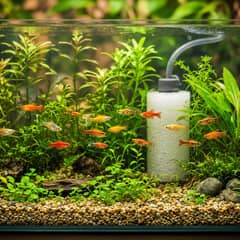
| 10+ gallon tank | $15 - $80 |
| Aquarium heater | $15 - $30 |
| Gentle filter | $5 - $25 |
| Dense live or silk plants | $15 - $25 |
| Tight-fitting glass lid (fits most standard 10 gallon tanks; measure your tank's opening) | $35 - $40 |
| Fine sand or smooth gravel (check the quantity against your tank's floor) | $10 - $20 |
| Liquid water test kit | $25 - $40 |
| Water conditioner that neutralizes chlorine and chloramine | $5 - $15 |
| First supply of guppy food | $5 - $10 |
| Setup total | $130 - $285 |
Typical price ranges across retailers.
A basic 10-gallon starter kit, tank, filter, heater, water conditioner, and substrate, commonly runs $30 to $100 depending on the brand and size you choose. A kit can land under the price of the bare tank in the table above, which is normal: kit pricing is set for the package as a whole.
Ongoing Costs: Low
| Item | Annual Cost |
|---|---|
| Flake/micro-pellet food + frozen brine shrimp | $35 - $60 |
| Water conditioner | $10 - $15 |
Typical price ranges across retailers.
Food, water conditioner, occasional filter media replacement, and a small amount of electricity for the heater and filter make up the entire monthly cost.
Vet Costs
Fish rarely see a vet in any traditional sense. Most health issues are managed with over-the-counter medications and water quality correction rather than a clinic visit. Dedicated aquatic vets exist but are uncommon and rarely necessary for guppies specifically.
Lifespan
2 to 3 years on average, up to 4 or 5 with excellent care. Female fertility drops off after around age 2. That short lifespan, combined with the low buy-in cost above, makes guppies about as far as you can get from the multi-decade commitment of a species like the sulcata tortoise, which routinely lives 70 to 100 or more years. Our Sulcata tortoise cost guide covers what a pet that outlives its owner actually costs over a lifetime, a useful contrast if you're weighing pets at opposite ends of the commitment spectrum.
The Cost to Plan For: More Guppies Than You Started With
This is the detail that catches new owners off guard. Guppies are livebearers, females give birth to live, free-swimming young rather than laying eggs, and they're genuinely prolific. A female can store sperm for 5 to 10 months after a single mating and produce multiple broods from it, up to around 8 separate broods, without ever encountering a male again. Put males and females in the same tank with no plan, and you'll have far more guppies within months than you started with, which means more tank space, more filtration, and more of every ongoing cost above.
Budgeting realistically for this species means budgeting for growth, not a fixed population.
The Guppy encyclopedia profile has more on the species.
The guppy also shows up next to the sulcata tortoise, hedgehog, and lovebird in Four Pets Decided Before You Ever Set Up the Tank.
Sources & Further Reading
Last reviewed 18 Jul 2026 · 2 sources
Frequently Asked Questions
How much does a guppy fish cost?
$2 to $5 each for standard wild-type fish, and $10 to $20 per pair for fancy varieties with more elaborate color and fin patterns. Rare selectively-bred strains such as Purple Moscow, 24k Gold, Dragon, and Koi can run $25 and up, occasionally reaching hundreds from specialty breeders.
What does a basic guppy tank setup cost?
$30 to $100 for a basic 10-gallon starter kit, depending on brand and size. That covers the tank, filter, heater, water conditioner, and substrate.
What are the ongoing costs of keeping guppies?
Low. The monthly total is food, water conditioner, occasional filter media, and a little electricity for the heater and filter. Vet visits are rare, most health issues get handled with over-the-counter medication and water quality correction.
How long do guppies live?
On average 2 to 3 years, and 4 or 5 with excellent care. Female fertility falls off after about age 2, which matters if you are planning a breeding population instead of a display tank.
What's the cost new guppy owners usually forget to plan for?
More guppies than they started with. A female guppy can store sperm from a single mating for 5 to 10 months and produce up to around 8 separate broods from it without a male present again. Put males and females in the same tank with no plan, and you'll have far more fish within months, which means more tank space, more filtration, and more of every cost above.
More on the Guppy
Guppy care guide
🐠 Guppies Aren't Handled, But They Do Need a Population Plan
🐠 Common Guppy Health Issues (Water Quality Is the Root of Almost Everything)
🐠 Guppy Tank Setup: Warm Water, Gentle Filtration, and a Plan for Fry
🐠 Guppy Feeding: Schedule, Diet, and Why They Stop Eating
🐠 Guppy Enrichment: The Sex Ratio Is a Welfare Decision
Recommended Gear
As an Amazon Associate I earn from qualifying purchases through the links above, at no extra cost to you.
Written by Michael Ryan
Mike keeps two rescued bearded dragons, Dex and Cera, and writes the care guides on BeastlyFacts from his own research and mistakes. He is not a veterinarian.
More about Michael Ryan →