Platy Tank Setup: A Real 10 Gallons, Hard Water, and a Plan for Fry
On This Page▾

Platies are one of the easier fish to house well. A real 10 gallons, water on the harder and more alkaline side than most tropical fish prefer, and a filter that won't shred fry covers most of what this species needs.
Tank Size
10 gallons is where most care sheets start, and it holds a small group of about five platies. Worth knowing before you buy the tank: the stricter figure is a minimum base footprint of 24 by 12 inches, and a standard 10 gallon is 20 by 10, so it does not meet that. A 20 gallon long does, at 30 by 12. Step up to a full 20 gallons for a group of six or more, or if you're letting the group breed, since a growing colony of fry adds to the bioload faster than a small starting group suggests. Go long and rectangular rather than tall, and use a lid, platies are capable jumpers.
A 10-gallon tank is a solid starting point for most first-time platy keepers, or size up to a 20-gallon long tank if you're starting with a bigger group or planning to breed.
Temperature
68 to 79°F, with the mid-70s the usual target. Stability matters more than hitting an exact number, avoid swings larger than about 2°F in a 24-hour period, since temperature instability is one of the more commonly cited triggers behind the livebearer "shimmy." Variatus-line platies tolerate the cooler end of that range better than most tropical fish, but a heater is still the safer default unless your room stays consistently warm year-round.
Water Chemistry
Platies do best with a pH of 7.0 to 8.2, and tolerate 6.8 to 8.5. They prefer medium-hard to hard water, roughly 10 to 30 dGH, and genuinely won't thrive in very soft, acidic conditions the way some other tropical fish will.
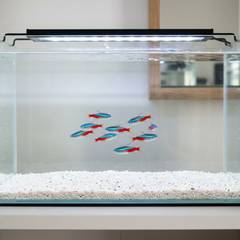
Platies are peaceful enough for almost any community of similar-sized fish: cory catfish, bristlenose plecos, rainbowfish, small rasboras, and snails. Water chemistry is what limits the list. A platy sharing a tank with mollies gives ground toward them, since mollies want pH 7.5 to 8.5 and hard water, so the shared tank runs at about 7.5 to 8.2, well inside what a platy handles. Soft-water fish such as neon and cardinal tetras pull the other way, and that is the compromise that costs the platy.
Platies evolved in warm springs, ditches, and slow-moving canals across their native range in Mexico and Central America, water that tends to run mineral-rich rather than soft. That history is a big part of why this species tolerates, and even prefers, harder tap water that would need active softening for many other popular aquarium fish.
If your tap water runs soft, a mineral supplement, crushed coral or a commercial buffering product, can bring it into range without much extra effort.
Filtration
A gentle sponge filter works well for most platy tanks. It provides enough biological filtration for a modest group while staying safe for fry, an important detail if you're not actively preventing breeding, since a stronger power filter can pull small fry into its intake. For a larger or intentionally non-breeding group, a hang-on-back filter handles a bigger bioload comfortably. Either way, platies don't need the aggressive turnover a larger or messier fish would require.
A sponge filter is the simpler, fry-safer default for most first-time setups.
Substrate
Fine gravel or sand both work well. Avoid sharp or coarse gravel, which can damage fins, and darker substrate tends to make platy coloring stand out more in the tank.
Lighting
A basic LED light on an 8 to 10 hour daily cycle is sufficient. It isn't strictly necessary for the fish's health, but it supports live plants and makes for better viewing.
The Two Non-Obvious Requirements
Cycle the tank before adding fish. Building the beneficial bacteria colony that processes waste takes 4 to 6 weeks with a fishless cycle, or somewhat less with a bottled bacteria product. Skipping this step is one of the most common beginner mistakes in the hobby generally, and it's a fast route to the ammonia-driven stress that shows up as shimmy. The fishless method doses pure ammonia to about 3 ppm and redoses as it drops, and it is done when a full dose reads zero within 24 hours, nitrite reads zero, and nitrate has started to build.
Always use a water conditioner on tap water before it goes in the tank, dechlorinating and neutralizing chloramine and heavy metals that are otherwise harmful to fish. A water test kit lets you confirm the cycle actually finished and catch drift afterward.
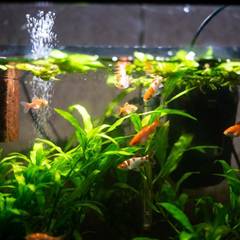
Dense live plants aren't just decoration in a platy tank either, they're a real population-control lever. Platy parents don't look after their fry, and adults will eat them given the chance. If you're allowing your platies to breed, dense live plants give fry somewhere to hide from adults, meaningfully improving survival odds. If you'd rather your population stay naturally controlled, skipping dense cover lets normal predation keep numbers in check instead, the same lever our Guppy tank setup guide and Molly tank setup guide cover for those two close relatives.
The Platy encyclopedia profile has more on the species itself.
Sources & Further Reading
Last reviewed 24 Sep 2026 · 4 sources
- SeriouslyFish: Seriously Fish: Xiphophorus maculatus; Seriously Fish: Xiphophorus variatus
- Aquarium Co-Op: Care Guide for Platy Fish
- Splashy Fish Store: Care Guide for Your Platy Fish
- Fishkeeping World: Platy Fish Care, Lifespan, Food & Tank Mates
Frequently Asked Questions
What size tank does a platy need?
10 gallons is where most care sheets start, and it holds about five. The stricter figure is a minimum base footprint of 24 by 12 inches, which a standard 10 gallon (20 by 10) does not meet and a 20 gallon long (30 by 12) does. Step up to 20 gallons for a fuller group of six or more, or if you're letting them breed.
What temperature do platies need?
68 to 79°F, with the mid-70s the usual target. Hold it steady rather than chasing a number: swings over about 2°F in a day are the problem. Variatus-line platies handle the cool end better than most tropical fish, though a heater is still the safer default unless the room stays warm all year.
What water chemistry do platies need?
7.0 to 8.2 is the ideal band, and platies tolerate 6.8 to 8.5. They prefer medium-hard to hard water, roughly 10 to 30 dGH, and won't do as well in very soft, acidic water. A mineral supplement like crushed coral or a commercial buffering product helps if your tap water runs soft.
What kind of filtration is best for a platy tank?
A gentle sponge filter works well for most platy tanks and is the safer choice if you're allowing breeding, since it won't pull small fry into strong current. A hang-on-back filter suits a larger or non-breeding group that needs more turnover capacity. Either way, avoid anything built for a much bigger, messier fish, platies don't need aggressive flow.
Do I need to cycle a platy tank before adding fish?
Yes. A fishless cycle takes 4 to 6 weeks to build the bacteria colony that processes waste, less with a bottled bacteria product. Skip it and ammonia stress follows, showing up as shimmy and other problems; it's among the most common beginner mistakes in the hobby.
More on the Platy
Platy care guide
🐠 How Much Does Platy Fish Ownership Really Cost?
🐠 Platies Aren't Handled Either, But They Do Need a Breeding Plan
🐠 Common Platy Health Issues (And the Truth About 'Platy Tumors')
🐠 Platy Feeding: Schedule, Diet, and Why Overfeeding Is the Real Risk
🐠 Platy Enrichment: Hardy Is Not the Same as Unaffected
Recommended Gear
As an Amazon Associate, we earn from qualifying purchases through the links above - at no extra cost to you.

Written by Michael Ryan
Mike keeps two rescued bearded dragons, Dex and Cera, and writes the care guides on BeastlyFacts from his own research and mistakes. He is not a veterinarian.
More about Michael Ryan →