Thanksgiving Pet Safety: The Table, the Kitchen and the Guests
On This Page▾

This article is for educational purposes only and is not veterinary advice. If your pet has eaten something it should not have, call your vet, the ASPCA Animal Poison Control Center (888-426-4435) or the Pet Poison Helpline (855-764-7661) before signs appear.
A dog does not know the difference between a scrap of plain turkey and a strip of skin dripping gravy. It knows the second one tastes better, and so does every guest who slips it a piece under the table. A cat walks the counter after the kitchen empties and finds the onion-soaked stuffing. A cockatiel in the next room breathes the air from the pan that just overheated. A rabbit in a house with twelve visitors hears every one as something arriving at the burrow. Thanksgiving is a meal, but the house it happens in is full of animals the meal was never meant for, and the hazards do not announce themselves the way a dropped chocolate bar does on Halloween.
The hard part is the delay. Most of what goes wrong on Thursday does not show until the weekend.
The rule that covers every hazard below: call before symptoms appear, and know where you are calling. Your regular clinic is closed on Thursday, so the nearest open emergency hospital and its number get written down before the guests arrive. Onion and garlic damage red blood cells on a three to five day delay. A fatty binge can turn into pancreatitis after the leftovers are gone. Grapes and raisins have no known safe amount. A pet that looks normal when the dishes are done has not been cleared. The ASPCA Animal Poison Control Center (888-426-4435) and the Pet Poison Helpline (855-764-7661) both answer 24 hours a day, both charge a consultation fee, and both want to know what was eaten, roughly how much, when, and what the animal weighs.
The Table
A Thanksgiving plate stacks five separate problems for a dog or cat, and only one of them is the bird.
Turkey skin, drippings and gravy
Plain turkey meat, cooked through, with the skin and bones removed, is fine in a small amount, and so is a spoon of plain pumpkin or sweet potato with a little chopped apple and a sprinkle of white meat, which is the whole of the plate a dog can have. Everything that makes turkey taste like Thanksgiving is the problem: the skin, the fat in the pan, the gravy made from it, the buttered stuffing and the drippings soaked into the bread. A plateful of that is a rich meal, and a rich meal can trigger pancreatitis, an inflammation of the organ that makes digestive enzymes. Eating what it should not is a common risk factor for pancreatitis in dogs, and a fatty meal is one of the known triggers.
The signs are vomiting, refusing food, weakness, a painful belly, diarrhea and dehydration. A dog in pain from it will sometimes stand with its front end down and its rear up, a stretch that looks like a bow, and will flinch when the belly is pressed. Mild cases are vaguer, just a dog that is off its food and flat. Miniature schnauzers are dramatically overrepresented in pancreatitis cases, and Yorkshire terriers, cocker spaniels, dachshunds and poodles turn up more than their share, so a household with one of those breeds has more reason than most to keep the plate out of reach.
Nuts are the same hazard in a smaller package. Almonds, pecans and walnuts are fatty enough to cause vomiting, diarrhea and potentially pancreatitis. Macadamia nuts do something else again in dogs: weakness, wobbling, depression, vomiting, tremors and a raised body temperature, usually within 12 hours, with recovery over 24 to 72 hours.
Bones
Cooked poultry bones are a choking hazard first, and a dog that gets one down is not out of trouble. A bone can injure or block the digestive tract on the way through, and a blockage is a surgery. Corn cobs, the twine that trussed the turkey and the foil that kept the dishes warm do the same job: none is poisonous, all can lodge in the gut, and all can need surgery to come out. Vomiting, refusing food, and straining or not passing stool in the days after are the signs. The carcass is the worst version of this, because it is bones and fat and skin together, and because it goes in the trash where a dog can reach it. Raw or undercooked turkey carries its own risk, salmonella, and so does cake batter made with raw egg.
The carcass goes into a sealed bag, inside a lidded can, behind a closed door or outside, as soon as the meat is off it.
Onion, garlic and the stuffing
Onion, garlic, chives, leeks and scallions are in the stuffing, the gravy, the green bean casserole, the mashed potatoes and the dry soup mix the dip was made from. All of them belong to the same plant group, and all of them carry sulfur compounds that are released when the plant is chopped, cooked or chewed. In a dog or cat those compounds damage red blood cells, and the damaged cells break down over the following days.
Cats are the most sensitive species, dogs next. For a cat the figure is about a twelfth of an ounce of raw onion per pound of body weight, three quarters of an ounce for a 9 pound cat, and less than a teaspoon of cooked onion has caused poisoning on its own. Dogs have shown signs at a quarter to half an ounce of raw onion per pound. The concentrated forms are the common cause of poisoning in both: dehydrated flakes, onion powder and dry onion soup mix pack far more into a spoonful than the fresh vegetable does, and they are in more dishes than anyone notices. Garlic is three to five times more toxic than onion, weight for weight.
The delay is the part that catches owners. Red cell damage begins within 24 hours, but the breakdown that produces signs usually starts three to five days after the meal: lethargy, refusing food, fast breathing, a fast heartbeat, weakness, pale or yellow gums, red-brown urine and collapse. A cat that cleaned a stuffing dish on Thursday night may look fine until Sunday. The call goes in on Thursday.
Raw dough
A bowl of roll dough rising under a towel on the counter can kill a dog in an evening. A warm, moist stomach is an incubator for yeast, so the dough keeps rising after it is swallowed, and the fermentation produces ethanol that is absorbed straight into the blood. The swelling stomach distends, its wall loses blood flow, and in a deep-chested breed the distention can set up the same twisted stomach that bloat does. The ethanol is what usually does the killing: a drunk, staggering, disoriented dog, then profound depression, weakness, low blood sugar, low body temperature, coma or seizures.
The early picture is a dog retching without bringing anything up, with a swollen belly, going quiet. That is a call to make while the dog is still standing. The dough is glutinous enough that vomiting often fails to clear it, cold water can slow the fermentation for a while, and the rare case needs surgery to remove the mass. Baked rolls are a different food. Only the rising dough does this.
Dessert
The pie table carries the Halloween hazards under different names. Chocolate in the pecan pie and the brownies is the same methylxanthine poisoning, with the same dose thresholds by chocolate type. Sugar-free desserts, "keto" pies and some whipped toppings carry xylitol, which drops a dog's blood sugar fast and can damage the liver within 12 to 24 hours. Raisins in the stuffing, the cranberry relish and the oatmeal cookies have no known safe amount for a dog: the suspected toxin is tartaric acid, and the dose varies so much between batches that one handful is survivable and the next is kidney failure.
Alcohol is the last of the dessert-table hazards. A dog does not need a glass. A knocked-over mulled wine or a rum-soaked cake does it. Vomiting, diarrhea, incoordination, depression, difficulty breathing, tremors, coma and death are the signs, and alcohol is absorbed fast enough that the call goes in straight away.
Ferrets get a line of their own here. A ferret with the run of the floor during dessert will steal and stash whatever it finds, and sweets are the worst thing it can find. Ferrets already carry a high rate of insulinoma, a tumor that drives blood sugar down, and a load of sugar is exactly what that condition cannot handle. Turkey skin and gravy are no better for a ferret than for a dog.
The Kitchen
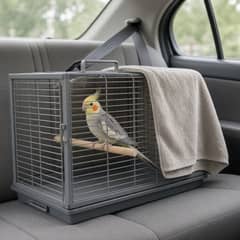
The kitchen is a bird's hazard long before the food reaches the table. A bird's respiratory system is efficient enough that it absorbs airborne particles a person never notices, and an overheated nonstick pan releases vapors that are toxic to birds, the same hazard as the scented candle, the plug-in freshener and the oven cleaner on an ordinary weekend. On a day with four burners going and the oven on for hours, the only safe place for a parrot or a cockatiel is a closed room at the far end of the house, in its cage, with the door shut before the first pan goes on. Boiling water and frying pans are a direct hazard to a bird loose in a kitchen, which is why the bird is caged before the cooking starts.
The bird's share of the food is nothing from the table. Salty snacks, caffeine, alcohol and rhubarb are all on the do-not-feed list, chocolate is never offered to a bird, and avocado can cause heart damage and death in birds and in rabbits, which rules out the guacamole for both. Sweets upset a bird's digestion. The one thing worth keeping steady on a day when nothing else is steady is the bird's routine: cover and lights at the usual hour, even with a house full of people.
Cats take the kitchen after it empties. The carved turkey, the gravy boat and the stuffing dish are all within reach of a cat that waited, which is the other reason the counter gets cleared before the football starts.
The Guests
For most of the afternoon the hazards are the people.
The front door opens for every arrival and every departure, and a dog or cat that slips past a leg is outside on a cold evening with a house too full for anyone to notice for an hour. Before the first knock, check that the collar has a tag with a current number and that the microchip registry has the same number, because a tag can come off and a chip cannot. Guests also bring bags, and a purse on the floor with a bottle of pills in it is one of the common and dangerous poisonings of the holiday. Bags go on a hook or in a closed room.
The second guest problem is the plate. Ask visitors, plainly, not to feed the pets. A guest sees a dog asking nicely and gives it the skin off the drumstick, and a second guest does the same, and the household pancreatitis case is built one kindness at a time. A bowl of the animal's own treats by the table gives people something to hand over instead.
A house full of strangers is a different hazard for a prey animal. A rabbit or a guinea pig does not hear a dozen voices as company. It hears something large arriving, over and over, and responds by freezing and going off its food. A rabbit that stops eating is on a clock: no food and no droppings for 8 to 12 hours is GI stasis territory, an emergency, and stress is one of the things that starts it. The rabbit's room is the one farthest from the door, with the hay topped up and a hide box, and someone checks that the hay is going down before bed. A guinea pig gets the same room. Neither of them gets a taste of anything from the table: the bread, the stuffing and the pie are all wrong for an animal built to eat hay, and avocado is a poison for a rabbit outright.
Dogs and cats need the same thing in a milder form. A quiet room with a bed, water, a closed door and something to chew, for the hours when the house is loudest, is what the ASPCA recommends for all but the most social animals. A dog that paces, pants or hides from the crowd is telling you it needs that room, and the behavior has a cause that distance fixes faster than a reprimand does. Visiting pets stay separated from the resident ones, and well away from a bird, whose cage looks like a lunchbox to a dog that has never seen one.
Two more from the sideboard. The centerpiece gets checked against the ASPCA toxic plant list before it goes on the table, and the bouillon cubes and salty snacks beside it carry enough sodium to cause stomach upset and, in a large enough dose, seizures.
What To Do First
If a pet eats something from any list above, the order is the same every time.
- Take the food away and clear what is left so no second animal gets it.
- Note what the dish was and what was in it. Onion powder in the gravy, raisins in the stuffing and xylitol in the whipped topping each change the call.
- Estimate how much is missing, roughly. Compare what was on the plate with what is left.
- Note the time and the animal's weight. Both decide what dose it took and how long the window is.
- Call now, before signs. Your vet, the ASPCA Animal Poison Control Center at 888-426-4435, or the Pet Poison Helpline at 855-764-7661. The two lines are open 24 hours a day, every day, and both charge a consultation fee.
- Do not make the animal vomit unless the person on the line or your vet tells you to.
The delays are the reason this list exists. Onion shows in three to five days, pancreatitis after the leftovers are gone, xylitol's liver damage within a day, and raisins whenever the kidneys give out. By the time any of them is visible, the easy treatment window has closed. A phone call on Thursday night, while the dog is asleep by the fire looking perfectly content, is the whole difference.
Sources & Further Reading
Last reviewed 28 Oct 2026 · 7 sources
- ASPCA: Thanksgiving Safety Tips
- ASPCA: People Foods to Avoid Feeding Your Pets
- Merck Veterinary Manual: Allium spp Toxicosis in Animals
- Merck Veterinary Manual: Bread Dough Toxicosis in Animals
- Merck Veterinary Manual: Pancreatitis in Dogs and Cats
- Lafeber: Top Ten Holiday Hazards for Your Pet Bird
- VCA Animal Hospitals: Top Safety Tips to Avoid a Pet Emergency This Thanksgiving
Frequently Asked Questions
Can my dog have some turkey on Thanksgiving?
Plain turkey meat, cooked through, with the skin and bones off, in a small amount, or a spoon of plain pumpkin or sweet potato with a little chopped apple and white meat on top. The skin, the drippings, the gravy and the stuffing are where the trouble is. Fat that rich can set off pancreatitis, and the onion and garlic in the stuffing and gravy damage red blood cells with a delay of several days. A cooked poultry bone can choke a dog or splinter and cut the gut. Raw or undercooked turkey can carry salmonella.
My dog ate the roll dough that was rising on the counter. Is that an emergency?
Yes. Call now, before any sign. A warm stomach is an incubator: the yeast keeps working, the dough swells, and the fermentation produces ethanol that the dog absorbs. Early signs are unproductive retching, a swollen belly and lethargy, then a drunk, staggering dog, then weakness, low body temperature and coma. In a deep-chested breed the swelling can also set up a twisted stomach. Cooked rolls are not the problem. Raw rising dough is.
My dog swallowed a turkey bone. What do I do?
Call your vet or a poison line now, and do not make the dog vomit at home unless they tell you to, since a bone coming back up can do as much damage as one going down. A cooked poultry bone can choke a dog, cut the mouth or gut, or lodge and block it, and a blockage is a surgery. Watch over the next days for vomiting, refusing food, a painful belly, and straining or not passing stool, and go in the same day if any of them show.
Can cats have turkey?
Plain, cooked, boneless turkey meat, a little of it. Nothing from the pan: no skin, no drippings, no gravy, and nothing that touched the stuffing, because cats are the species most sensitive to onion and garlic, and the amount that matters is less than a teaspoon of cooked onion. A cat that walks the counter after dinner finds exactly those dishes, which is why the counter is cleared before anyone sits down to the game.
Written by Michael Ryan
Mike keeps two rescued bearded dragons, Dex and Cera, and writes the care guides on BeastlyFacts from his own research and mistakes. He is not a veterinarian.
More about Michael Ryan →