Grooming, Nails, and Molting in Small Mammals
On This Page▾

Molting, nail trims, and a scent gland that needs a wipe now and then look like the tidiness end of small mammal care, the stuff that affects how the cage smells rather than whether the animal is healthy. For rabbits in particular, that framing is wrong. A rabbit cannot vomit, so every strand of fur it swallows while grooming through a heavy molt has exactly one way to leave the body, and when that route slows down, the result is not a hairball, it is gastrointestinal stasis, a genuine emergency. Nails, glands, and coat care for guinea pigs, chinchillas, hamsters, gerbils, rats, mice, degus, and hedgehogs matter too, just for lower-stakes reasons: comfort, mobility, and avoiding the specific mistakes, like a wet chinchilla coat, that turn routine care into a health problem.
Molting: What's Normal and What Isn't
Rabbits molt roughly every three months, and the timing and length of each shed vary from rabbit to rabbit, so one molt can pass almost unnoticed while the next fills the brush every day. A thorough brushing session at least weekly is the baseline, stepped up to daily once a molt is visibly underway. That daily brushing is the direct link between routine grooming and the gut problem covered below: every hair on the brush is one the rabbit did not swallow.
Coat length changes the workload more than species does. Long-coated animals, angora rabbits and Peruvian, Silkie, or Texel guinea pigs, need daily attention year round, covered further down under matting. Guinea pigs do not go through the same dramatic seasonal molt a rabbit does. Their shedding runs lower and more continuously, so a steady trickle of loose fur is the normal baseline, not a signal that something has changed.
Normal shedding, in any of these species, is diffuse: fur comes out gradually across the body and the coat underneath looks even once the loose layer is brushed out. Fur loss that is not a molt looks different: a bald patch that does not fill back in, redness or scabbing under the missing fur, or hair coming out in clumps when gently tugged well outside of a known shedding window. Any of those is a reason to check in with a vet rather than assume it will pass with more brushing.
Cecotropes aside, a rabbit's fur is doing something similar to its digestion: everything that goes into the system on the front end is designed to keep moving through and out, never back up and out the mouth. Grooming during a molt is the one moment that design gets tested hardest.
The Rabbit Hairball Problem: Why Molting Is a Real Health Event
This is the piece that separates rabbits from almost every other pet on this list. A cat coughs up a hairball on the rug. A rabbit cannot vomit, so a true hairball or a swallowed foreign object that lodges in its GI tract may need surgery before it tears or ruptures the gut wall. Fur it swallows during grooming has to travel the entire length of the digestive tract and come out the other end in the droppings, which is the normal, unremarkable way it usually works.
The problem starts when gut motility slows down for any reason, low fiber intake, dehydration, stress, dental pain, and a heavy load of freshly molted fur meets a gut that is not moving it through fast enough. Gastrointestinal stasis used to be called "hairballs" because so many rabbits that died of it were found with hair in their stomachs, even though true blockages are uncommon and stasis usually has a separate underlying trigger. That history is why molt season deserves real attention rather than a shrug: it is the one time of year when the fur side of grooming and the gut side of health are directly connected, and a rabbit that stops eating or produces noticeably fewer droppings during a heavy shed needs the same urgency as at any other time.
The warning signs of rabbit GI stasis and what a same-day vet visit for it looks like are a separate subject. The job here is narrower: keep the molt itself from becoming the trigger, through the brushing schedule above, unlimited hay to keep the gut moving, and fresh water at all times.
Nail Trimming: Interval, Technique, and the Quick
Overgrown nails are uncomfortable to walk on and, past a certain length, curl back into the pad. Rabbits and guinea pigs both need routine trims roughly every 6 to 8 weeks, a recurring job rather than a weekly chore.
The quick is the blood vessel that runs through the center of the nail, visible as a pink line on light-colored nails and much harder to spot on dark ones. Holding a flashlight behind a dark nail shows where the quick ends before you cut. Keep styptic powder within reach before starting, not after a nick happens. If the quick does get nicked, the nail bleeds, sometimes more than the size of the cut suggests, but pressing styptic powder against it for a few seconds is normally enough to stop it. That is a normal part of learning to trim nails at home, not a reason to panic or to stop trimming going forward.
| Tool | Best for | Notes |
|---|---|---|
| Manual nail clippers | Rabbits, guinea pigs, and most small mammals | Standard choice, works fine once you can see or estimate the quick |
| Electric nail grinder | Pets that startle at the clip sound | Gradually rounds the tip instead of one cut, some animals tolerate it better |
| Styptic powder | Any nail trim session | Keep it out and open before you start, not after a nick happens |
A rabbit or guinea pig that fights every trim usually needs to be wrapped snugly in a towel with one foot worked free at a time, and doing one or two nails per sitting rather than all of them at once keeps a nervous animal from associating the whole process with a long, stressful ordeal. Hamsters, gerbils, rats, and degus wear their nails down naturally through digging and running far more than rabbits or guinea pigs do, and generally only need a check for overgrowth in older or less active animals rather than a fixed trim schedule.
Hedgehogs, Mice, and Chinchillas
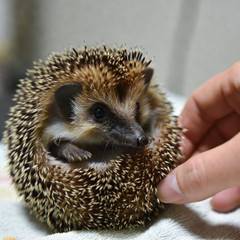
Hedgehogs need the most attention of the three. Check the toes for overgrown nails and for fibers wrapped around a digit: a loose thread from a fleece liner can wind around a toe and tighten. Nails that have grown long get the same tip-only trim described above, in good light, one or two nails a session if the hedgehog balls up. A hedgehog that will not uncurl at all gets its trim at the vet, since a full exam of one usually needs a light anesthetic anyway.
Mice wear their nails down on their own and rarely need a trim. The exception is a mouse scratching itself raw: open sores from mites or an itchy skin condition get worse every time the hind claws rake across them, and vets treat that by trimming the hind nails regularly alongside the skin treatment. Nails that tiny are best trimmed by the vet, or with the vet showing you how the first time.
Chinchillas get a foot check rather than a trim schedule. Foot problems in this species show up mostly on the hind feet, so look those over when you handle one for red or thickened skin or an open sore on the sole, and let the vet deal with any of it.
Scent Glands: Rabbits, Guinea Pigs, and Gerbils
Three of these species carry a gland that needs occasional attention beyond brushing. A rabbit has scent glands on either side of the anus that need periodic cleaning. Have a vet or a rabbit-savvy groomer handle it, or learn the technique directly from one, since the area is sensitive and easy to irritate with the wrong cleaning method.
Guinea pigs carry a different gland in a different spot: an active grease gland at the base of the spine, just above the anus, especially prominent in males, that can get greasy, matted, and noticeably smelly. A guinea pig with a mildly greasy patch there is not sick, that gland is doing what it normally does, but once buildup sets in, a butt bath or a gentle clean with a cotton swab and a mild cleaning agent is better than leaving it to accumulate indefinitely.
Gerbils carry a large scent gland in the middle of the belly, an oval patch that looks like a bare, slightly oily spot. The gland is hormone driven, bigger and earlier to develop in males, and gerbils rub it on objects to mark territory, and it needs no cleaning. What it does need is a look. Carcinomas of this gland in males, together with ovarian tumors in females, account for about 80% of tumors in gerbils over three years old, and a gland tumor can spread to the lymph nodes and lungs. Turn the gerbil over once a week, in the same session as a health check, and book a vet visit for any lump, scab, swelling, or sore on the gland that was not there last week.
Neither the rabbit's nor the guinea pig's gland needs daily attention. Checking both during the same routine as a nail trim, every 6 to 8 weeks or so, is enough to catch buildup before it turns into matting or odor that is harder to manage.
Why You Never Bathe a Rabbit or a Guinea Pig
Both species are built to skip the bath entirely. Rabbits take care of their own coats through grooming, baths usually are not needed, and getting a rabbit completely wet is something to avoid. A guinea pig rarely needs more than a spot clean, and the one routine exception is the shallow butt bath for a greasy gland described above, in shallow water with the animal dried thoroughly afterward.
The reasoning is less about vanity and more about what a soaked coat does to a small body. Wet fur close to the skin holds moisture and cold for far longer than it looks like it should, small mammals lose heat fast relative to their size, and the process of forcing a rabbit or guinea pig into water in the first place is stressful for an animal that has no natural instinct to tolerate it. A dirty patch of fur, most of the time, is better handled with a damp cloth on just that spot and a thorough dry, not a full-body bath.
The Hamster Carve-Out: Sand, Not Dust
A hamster does not belong in the same row as a rat. Hamsters don't need grooming beyond their own, apart from occasional access to a sand bath, and that last part is what owners miss, because everything else about hamster grooming is hands-off. A shallow dish of dust-free, non-clumping sand, heavy enough that the hamster cannot tip it and deep enough to roll in, is what the species asks for, and it is also where most hamsters choose to toilet, which does more for enclosure hygiene than any amount of bedding changes.
The material matters as much as the dish. Sand, not dust. Chinchilla bathing dust is a far finer powder, made to penetrate a coat with dozens of hairs per follicle, and too much of it irritates the eyes and airways even in chinchillas. A hamster has neither that coat nor a reason to be breathing it. Anything labeled clumping is out too, for the obvious reason. Sift the sand when you spot-clean and replace it when it clumps or smells.
Long-coated hamsters are the one place brushing enters the picture, the same as with the long-coated guinea pigs below: some long-haired varieties need weekly brushing to take out mats, bedding and debris. A short-coated Syrian or a dwarf needs the sand and nothing else.
The Chinchilla Exception: Dust, Never Water
Chinchillas break the "occasional bath if truly dirty" rule that applies to rabbits and guinea pigs, because for this species, water is not a fallback option at all. Dust stands in for what water does for almost every other mammal, and the reason water does not work the same way here comes down to how the coat handles moisture: chinchillas kept in a warm, humid room above 80°F develop matted fur, the same excess-moisture problem a soaked coat would produce on a faster and more concentrated timeline.
Offer a dust bath 2 to 3 times a week, for up to 15 minutes at a time, in a container filled with about an inch of dust. Some chinchillas need it slightly more or less often depending on the climate, but the direction is consistent: frequent, brief dust exposure, never water. Dust bathing too often irritates the eyes and, in excess, the airways, so a dust bath left in the enclosure around the clock is its own mistake, not a safer default.
| Species | Bathing approach | Why |
|---|---|---|
| Rabbit | No routine baths, spot-clean only | Rabbits self-groom; a soaked coat causes stress and heat loss |
| Guinea pig | Spot-clean, or a shallow butt bath for a greasy gland | Rarely needed and easy to over-stress the animal |
| Chinchilla | Dust bath 2-3x per week, never water | Dense coat traps moisture and mats in humid or wet conditions |
| Degu | Dust bath 2-3x per week, never water | Cleans itself in fine dust like its chinchilla relatives |
| Hamster | Self-grooming, plus occasional access to a sand bath | A sand dish, not dust |
| Gerbil | Self-grooming, plus a sand bath | Without sand to roll in, the coat turns oily |
| Rat, mouse | Self-grooming, no routine bathing | These species keep their own coats clean without owner intervention |
The skin and coat problems that do need a vet, fur chewing and fungal patches among them, are the ones listed for chinchilla health.
Matting: Long-Coated Guinea Pigs and Angora Rabbits
Standard short-haired rabbits and guinea pigs rarely mat badly. The animals that need real attention here are the long-coated breeds: angora rabbits and Peruvian, Silkie, or Texel guinea pigs, whose coats grow continuously rather than staying at a fixed length.
Short-haired guinea pigs need brushing at least every few days and long-haired breeds need it daily. Once matting has set in badly, trimming the fur short enough that it no longer drags on the floor is a reasonable fallback rather than fighting every mat out by hand. Angora rabbits sit at the same end of the range: a coat that never stops growing gets brushed every day, not on the weekly routine that suits a short-haired rabbit outside a molt.
Left unmanaged, matting in a long-coated animal is not just cosmetic. Mats that drag on the ground pick up bedding, urine, and feces, which is both an odor and a skin-irritation problem, and mats around the hindquarters can restrict a guinea pig's own ability to clean its grease gland or a rabbit's ability to reach its scent glands, compounding both problems at once. A metal comb, run through in short sections rather than as one long pull-through, catches loose undercoat before it has the chance to felt into a mat in the first place.
Bringing It Together
None of this is complicated on its own: brush more during a molt, trim nails every month or two, wipe a scent gland during that same routine, turn a gerbil over to look at its belly gland, and never give any of these animals a water bath: dust for chinchillas and degus and sand for hamsters and gerbils are the only baths they take. What makes it worth doing consistently is the one exception that carries real risk. A rabbit that skips its brushing during a heavy molt is not just going to look shaggier, it is loading fur into a gut that has to move every strand of it through on its own, with no way to bring any of it back up if that system slows down. Grooming a rabbit well during molt season is gut health maintenance, not a tidiness habit.
Sources & Further Reading
Last reviewed 3 Oct 2026 · 4 sources
- VCA Animal Hospitals: Health Problems in Rabbits
- Lafeber Co.: Tips for Grooming Your Rabbit; Tips for Grooming Your Guinea Pig
- Merck Veterinary Manual: Chinchillas (Exotic and Laboratory Animals); Management of Hedgehogs; Gerbils; Mice and Rats as Pets
- RSPCA: Hamster Health and Welfare, for the sand bath and the long-coat brushing interval
Frequently Asked Questions
How often do rabbits and guinea pigs molt?
Rabbits molt roughly every three months, and shedding times and durations vary from one rabbit to the next. Brush thoroughly at least weekly and step up to daily while a molt is underway. Guinea pigs shed more continuously in smaller amounts rather than in one dramatic seasonal event, so a steady low-level increase in loose fur is normal and does not call for the same daily-brushing response a rabbit's molt does.
Why can't rabbits just cough up a hairball like a cat does?
Because rabbits cannot vomit at all. A rabbit with a true hairball or a foreign object stuck in its GI tract may need surgery to prevent a life-threatening tear or rupture. Any fur a rabbit swallows during grooming has to keep moving through the gut in one direction, out the other end. Rabbits normally have some hair in their stomachs, and a stasis case generally has a separate underlying problem driving it. Fur is not usually the cause. It is the thing that compounds a gut which has already slowed for some other reason, which is why a heavy molt is a period to watch closely rather than a shedding inconvenience.
How often should I trim my rabbit's or guinea pig's nails, and what if I cut the quick?
Routine trims run about every 6 to 8 weeks for both species. The quick is the blood vessel running through the center of the nail, harder to spot on dark nails unless you hold a flashlight behind them. Keep styptic powder on hand before you start: a small nick bleeds but is not an emergency once the powder is pressed against it for a few seconds.
Can I bathe my rabbit or guinea pig?
Routine bathing is not recommended for either species. Rabbits groom themselves, baths usually are not needed, and getting a rabbit completely wet is something to avoid. A guinea pig with a greasy or soiled rear end gets a shallow butt bath or a spot clean, never a full submersion.
Why can't chinchillas take water baths like other small mammals?
A chinchilla's coat is dense enough that dust, not water, is the grooming method that works on it. A dust bath 2 to 3 times a week for up to 15 minutes at a time keeps the coat clean. Water does the opposite: a coat that dense holds moisture, and even warm, humid air above 80°F is enough to mat it, so a soaking would do the same damage far faster.
🐭 How Much Does a Chinchilla Really Cost?
🐿️ How Much Does Degu Ownership Really Cost?
🦡 How Much Does a Ferret Really Cost?
🐹 How Much Does Gerbil Ownership Really Cost?
🐹 How Much Does a Guinea Pig Really Cost?
🌰 How Much Does a Hamster Really Cost?
🦔 How Much Does a Hedgehog Really Cost?
🐰 How Much Does a Rabbit Really Cost?
🐀 How Much Does a Pet Rat Really Cost?
🐿️ How Much Does Sugar Glider Ownership Really Cost?
🐭 How to Handle a Chinchilla (And What Fur Slip Actually Means)
🐿️ How to Handle a Degu (And Why It Needs a Friend)
🦡 How to Handle a Ferret
Recommended Gear
As an Amazon Associate I earn from qualifying purchases through the links above, at no extra cost to you.

Written by Michael Ryan
Mike keeps two rescued bearded dragons, Dex and Cera, and writes the care guides on BeastlyFacts from his own research and mistakes. He is not a veterinarian.
More about Michael Ryan →