Getting a Small Mammal to the Vet: Carriers, Car Travel, and Anesthesia
On This Page▾

A dog gets carsick and a cat yowls the whole way there, but neither one is put at serious physical risk just by the trip itself. A rabbit or guinea pig is different. These are prey species built to hide illness and stress until they can't anymore, and their digestion depends on a gut that keeps moving on a near-constant schedule. Get the carrier, the car ride, or the anesthesia plan wrong and the fallout isn't just a bad afternoon, it's the kind of gut slowdown that turns a routine checkup into an emergency. The trip itself is where most of that risk sits: the carrier, the drive, whether a cage mate comes along, and what's different about anesthesia in these species compared with a dog or cat.
The Carrier: Why Hard-Sided Beats Wire
A wire cage might be what the animal lives in at home, but it's a poor choice for a car trip. A travel carrier needs to be sturdy and rigid, well ventilated, and secure enough that the animal cannot chew through it or escape, with room to lie down and turn around. A wire cage fails several of those tests at once: the bars flex and shift under braking, and the open sides let the animal see every passing car and person, which for a prey species is closer to a stream of predators walking past than a view. Rabbits frighten easily, and a frightened prey animal needs somewhere to hide.
That's the case for a solid-sided carrier with a hide spot built in, not just a hole to see out of. A towel-covered hard-sided carrier, or one with a cardboard box or small tunnel tucked inside, gives the animal somewhere to retreat rather than somewhere to watch from. A toy or a handful of clean bedding from the home enclosure does double duty: familiar smells calm the animal, and it's one less variable changing all at once on an already stressful day. A layer of hay across the bottom serves the same purpose while giving a hindgut fermenter something to nibble on the whole way there, which matters more than it sounds like it should, covered in the next section.
| Feature | Hard-sided carrier | Wire cage |
|---|---|---|
| Holds shape under braking | Yes, rigid sides stay put | Flexes and shifts |
| Escape and chew risk | Low, with a secure latch | Higher, especially for rabbits |
| Lets the animal hide | Yes, with a towel or hide box added | No, fully visible from every side |
| Secures with a seatbelt or in a footwell | Straightforward | Awkward, no flat base to strap |
A ventilated hard-sided small-animal carrier sized for a rabbit, guinea pig, or similar small mammal is worth having ready before a trip is ever needed, not bought in a hurry the morning of an appointment. Hard sides, a ventilated shell, and room for hay and a hide spot are the three things to check.
Car Travel: Securing the Carrier and Keeping Food in Front of Them
Once the animal is in the carrier, strap the carrier in with a seatbelt or wedge it into the footwell behind a seat, turned so its side faces the direction of travel. That way a hard brake pushes the animal against a side wall instead of throwing it face first into the door. A carrier sliding loose on a seat turns into a projectile in a hard stop, and every turn and lane change gets transmitted straight to the animal instead of absorbed by the car's frame.
Temperature is the other half of the equation. Keep the car cool and well ventilated, never put the carrier in direct sun, and never put it in a closed trunk, which gets no light and almost no airflow. A carrier sitting in a sunbeam through the window heats up long before the cabin air does. Run the air conditioning, and if the trip falls during the hottest part of the day, shift it earlier or later when that's an option. Never leave the animal in a parked car while you run an errand or step inside first, even briefly. These species have essentially no functional sweat glands, and a closed car crosses into heat stress territory well before it feels uncomfortably warm to a person standing outside it.
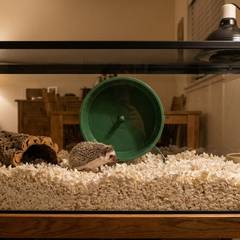
A hedgehog needs the opposite precaution. An African pygmy hedgehog is kept at 72 to 90°F, with 75 to 85°F as the optimal band, and one that gets too cool can slip into torpor, a sluggish, hibernation-like state that suppresses its immune system. A winter drive or an air-conditioned car can take it there. Pre-warm the car, pack the carrier with fleece or a snuggle sack it can burrow into, and cover the carrier with a towel against drafts. A hedgehog that feels cool to the touch or will not uncurl at the clinic needs the vet to know before anything else happens.
Food is not optional cargo for this trip, it's part of managing the animal's physiology. Hay in the carrier and fresh water on offer are the travel basics for a rabbit. A hindgut fermenter's gut is built to keep material moving through it more or less continuously, and a long stretch with nothing to chew on is a real risk factor for rabbit GI stasis, stacked on top of the stress of the trip itself. A layer of good timothy hay lining the carrier solves this without any extra planning.
A supply of timothy hay kept specifically for the carrier, separate from the everyday hay pile, means there's always fresh hay ready to load in rather than scrambling for a handful on the way out the door.
Finally, keep the trip itself short where you have a choice. Picking a vet close to home rather than the highly rated clinic forty-five minutes away is a legitimate factor to weigh once you're dealing with a species that finds the car stressful under the best of circumstances, and a shorter trip means less time for a bumpy ride, a warm afternoon, or an empty carrier floor to compound into a real problem.
Bring the Cage Mate (Social Species Only)
This is the single easiest thing to get wrong, because it looks like doing the animal a favor by sparing its companion the stress of a vet visit. For a bonded pair of a social species, the opposite is usually true. A rabbit that normally lives with a companion or a group should travel with that companion, because a familiar rabbit alongside helps it stay calm. A prey animal separated from its bonded companion in an unfamiliar place, surrounded by unfamiliar smells and a waiting room full of dogs, is carrying two stresses instead of one.
The same logic holds after the appointment, and it's arguably more important there. A hospitalized guinea pig can benefit greatly from a bonded cage mate staying alongside it, and the medical reason is appetite: guinea pigs tend to stop eating when stressed, so food intake has to be watched closely during any hospital stay. A pig recovering alone in a strange cage, in a strange room, is a pig with one more reason to skip a meal, and for a species whose digestive system runs on nearly constant food intake, a skipped meal is not a small thing. If your clinic can accommodate a cage mate during an overnight stay or a recovery period, ask.
The rule is for animals that already live in a bonded pair or group. It does not cover a Syrian hamster, which lives alone as an adult and would fight a companion shut into a small carrier with it, or a hedgehog, which is solitary in the wild and housed alone as a pet. Those two travel alone, with bedding from their own enclosure standing in for the familiar smell a cage mate would bring.
The reasoning behind the carrier, the car, and the cage mate is the same reasoning that runs through anesthesia below: these species are built around continuous eating, and anything that interrupts it for too long, whether stress, an empty carrier floor, or a long recovery alone, becomes the real risk, more than the procedure itself usually is.
Anesthesia and Surgery: What's Different From a Dog or Cat
This is where owners most often carry over the wrong instinct from a dog or cat, and it runs in the opposite direction from what most people expect. Withholding food before anesthesia is standard for a dog or cat because an animal that can vomit under sedation risks inhaling that vomit. Guinea pigs and rabbits cannot vomit at all. In guinea pigs the diaphragm is weakly muscled and the stomach's shape keeps food from coming back up, and rabbits are built the same one-way.
Because that risk doesn't exist, a rabbit does not need a fast longer than three hours, and one isn't recommended. A rabbit's stomach is never empty even after a long fast, so an extended fast doesn't even accomplish an empty stomach, it just leaves a hindgut fermenter's digestive tract sitting idle for no benefit. What vets do ask for in rabbits and guinea pigs is a short fast, a couple of hours at most, for a much narrower reason than emptying the stomach: the brief window makes sure the mouth is clear of food before a mask or tube goes in. There's no case for an extended, dog-or-cat-style fast in either species.
The flip side of not fasting is that eating again afterward isn't a nice-to-have, it's the metric that matters. After surgery a rabbit should be offered hay, vegetables, and water as soon as possible. If it has not eaten within two to three hours, the pain control plan gets reevaluated, and hand or syringe feeding starts if the animal still won't eat on its own. That's a strikingly different priority list from a dog or cat recovery, where the concern after surgery is usually keeping the animal calm and quiet, not getting food into it on a clock.
Ferrets, Hedgehogs, Rats and Mice
The no-long-fast rule holds across the group, but the reasons differ by species.
- Ferrets can vomit, which sets them apart from the rest of this guide; vomiting is one of the signs of the intestinal blockages in the ferret health guide. So a ferret does get a short pre-op fast, a couple of hours at most. The ceiling matters more than the fast: small mammals risk low blood sugar when food is withheld, and ferrets are very prone to insulinomas, pancreatic tumors that drive blood sugar down on their own. Follow the clinic's hour exactly and tell them if the ferret has ever had a low-sugar episode.
- Hedgehogs get a fast of about four hours before anesthesia, set by the vet. A full exam usually needs a light gas anesthetic anyway, because a hedgehog handled awake rolls into a ball. Keep the carrier warm on the way home as well as on the way in.
- Rats and mice are not fasted: like other small rodents they resist vomiting, and a fast only risks low blood sugar. Their bigger anesthetic risk is cold. A small body with a large surface area loses heat very fast under anesthesia, so the clinic should keep the animal on heat support from premedication through recovery, and at home it goes back into a warm, draft-free enclosure. Mention any sneezing or noisy breathing before the day of the procedure, so the vet can check for rat respiratory disease before putting one under.
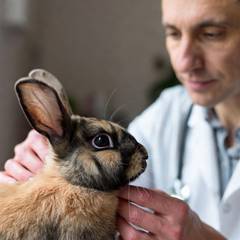
If your regular vet mostly treats dogs and cats and only occasionally sees an exotic patient, this is exactly the gap worth asking about before agreeing to a procedure. Ask whether they follow a short mouth-clearing fast rather than a standard overnight fast, and ask what their specific plan is if the animal isn't eating within a couple of hours of waking up: hand feeding, a change in pain control, or a referral to a vet who sees these species more regularly. A vet who has an immediate, concrete answer to that second question is one who understands that appetite, not just a clean anesthesia recovery, is the finish line for a guinea pig or rabbit. The warning signs worth watching in the days after any procedure are the same appetite and droppings changes listed for guinea pig health problems.
A rabbit's or guinea pig's gut motility is why the standard "nothing after midnight" rule owners know from their own pre-surgery instructions, or from a dog's, doesn't just fail to help these species, it actively works against the thing their body needs most going into a procedure.
Finding an Exotics Vet Before You Need One
None of the advice above matters much if the nearest vet on a Saturday morning has never anesthetized a guinea pig. Rabbits, guinea pigs, and other small mammals are exotic patients in most general practices, and the fasting rules, drug choices, and recovery priorities above are specific enough to species that a vet who mostly sees dogs and cats can get them backwards without meaning to. Find a vet with real small-mammal experience while everything is calm, not while you're already holding a carrier. Ask a prospective clinic directly how many rabbit or guinea pig procedures they handle in a typical month, and use the fasting-and-recovery questions from the section above as a screening question. A vet who answers confidently and specifically is telling you something useful before you're ever in an emergency.
An emergency in these species rarely looks dramatic at first. A guinea pig or rabbit that stops eating, produces smaller or no droppings, sits hunched and still, or grinds its teeth is telling you something is wrong well before it looks like the animal is in obvious distress, and all of those signs warrant a same-day call rather than a wait-and-see. Keep the contact information for your chosen exotics vet, and a backup 24-hour emergency option, somewhere you'll find it at 11 p.m., not buried in a search you have to do from scratch when the animal is already refusing food.
Sources & Further Reading
Last reviewed 25 Sep 2026 · 4 sources
- Bonnie D. Wright, DVM, DACVAA: Anesthesia/Analgesia in Small Mammals (WSAVA 2017 Congress)
- Merck Veterinary Manual: Management of Rabbits; Management of Hedgehogs; Emergencies of Ferrets; Noninfectious Diseases of Guinea Pigs
- LafeberVet: Behavior Essentials, Clinical Approach to the Guinea Pig
- RSPCA: Transporting Your Rabbits
Frequently Asked Questions
Should I feed my rabbit or guinea pig before taking it to the vet?
Yes, don't withhold food the way you would for a dog or cat going under anesthesia. Rabbits cannot vomit, so a fast longer than three hours is neither needed nor recommended, and a rabbit's stomach is never truly empty even after a long fast. Most exotics vets ask for only a short, one to two hour fast immediately before a procedure to clear food from the mouth, not a skipped meal the night before.
Why can't guinea pigs and rabbits vomit?
It comes down to anatomy. A guinea pig's diaphragm is weakly muscled and its stomach is shaped in a way that keeps food from coming back up, and rabbits and most other rodents share the same one-way design. That single fact is why the fasting rules for these species look almost backwards compared to a dog or cat. Ferrets are the exception in the small mammal group: they can vomit, and their vet will set a short fast of its own.
Should I bring my guinea pig's or rabbit's cage mate to the vet?
For a bonded pair, yes, when the visit or recovery allows it. A hospitalized guinea pig does noticeably better with a bonded cage mate beside it, and guinea pigs tend to stop eating under stress, so appetite has to be watched closely. A familiar companion also helps a rabbit stay calm on a car trip. The rule is for social species only: a Syrian hamster lives alone and travels alone.
What kind of carrier should I use for a rabbit or guinea pig?
A hard-sided, chew-proof carrier that closes securely, not a wire cage or a cardboard box. It should be sturdy, well ventilated, and roomy enough for the animal to lie down and turn around in, strapped into the vehicle with a seatbelt or wedged into a footwell rather than left loose on a seat.
Is it safe to leave a rabbit or guinea pig in the car while I run into the vet's office?
No. These species have no functional sweat glands and overheat well before a car cabin feels dangerously hot to a person waiting inside it. Treat a parked car the way you would any room that crosses into the 80°F range, as a genuine emergency risk, and take the animal inside with you instead.
What should I ask a vet who mostly treats dogs and cats before letting them anesthetize my guinea pig?
Ask directly whether they follow exotic-species fasting protocols rather than a standard dog or cat fast, and what their plan is for getting the animal eating again immediately after the procedure. For rabbits, a pain control plan is reevaluated if the rabbit hasn't eaten within two to three hours of surgery, which is a reasonable bar to ask any vet to meet for a guinea pig too.
🐭 How Much Does a Chinchilla Really Cost?
🐿️ How Much Does Degu Ownership Really Cost?
🦡 How Much Does a Ferret Really Cost?
🐹 How Much Does Gerbil Ownership Really Cost?
🐹 How Much Does a Guinea Pig Really Cost?
🌰 How Much Does a Hamster Really Cost?
🦔 How Much Does a Hedgehog Really Cost?
🐰 How Much Does a Rabbit Really Cost?
🐀 How Much Does a Pet Rat Really Cost?
🐿️ How Much Does Sugar Glider Ownership Really Cost?
🐭 How to Handle a Chinchilla (And What Fur Slip Actually Means)
🐿️ How to Handle a Degu (And Why It Needs a Friend)
🦡 How to Handle a Ferret
Recommended Gear
As an Amazon Associate I earn from qualifying purchases through the links above, at no extra cost to you.

Written by Michael Ryan
Mike keeps two rescued bearded dragons, Dex and Cera, and writes the care guides on BeastlyFacts from his own research and mistakes. He is not a veterinarian.
More about Michael Ryan →