New Year's Eve Pet Safety: The Fireworks, the Door and the Morning After
On This Page▾

This article is for educational purposes only and is not veterinary advice. If your pet has eaten something it should not have, call your vet, the ASPCA Animal Poison Control Center (888-426-4435) or the Pet Poison Helpline (855-764-7661) before signs appear. A dog with a severe noise phobia needs a vet appointment before the night.
A dog hears the first firework with no way of knowing the display ends at 12:15. In a study of 13,700 Finnish pet dogs, noise sensitivity was the most common anxiety trait of all, at 32 percent, and fear of fireworks the most common form of it, at 26 percent. A Swiss owner survey that counted every dog whose welfare was impaired by the noise put the figure at 52 percent. Cats are no better off: in a Dutch survey of 622 cat owners, 77 percent said their cat showed fear during fireworks, and three quarters of those cats hid. New Year's Eve and July 4th are the two nights a year when every animal in the house is subjected to the same thing at the same time, and on this one the house is also full of strangers, open doors and drinks at floor level.
The fireworks are the headline, but the door is what loses the dog.
Three things decide how the night goes. The quiet room is ready before dark: interior, curtains drawn, a radio or television on, water, a bed, the cat's hiding box and the rabbit's hay already in place. The door is handled at midnight: every pet is behind a closed door before the countdown, wearing a collar and tag, with the microchip registry showing a current phone number. And the morning is a sweep before it is a walk: spent fireworks, abandoned cups and ice melt are all on the sidewalk on January 1st. For anything eaten, the ASPCA Animal Poison Control Center (888-426-4435) and the Pet Poison Helpline (855-764-7661) answer 24 hours a day, for a fee.
The Noise
Fear of fireworks is not rare, not a character flaw and not something a dog grows out of. It is the most common fear dogs have.
What it looks like
The Dutch survey of 3,009 dog owners found the same picture most owners already know. During the bangs, 74 percent of fearful dogs sought their owner's eyes, 69 percent moved close, 63 percent pressed against them, 64 percent trembled and 60 percent panted. Cats did the opposite: 76 percent hid, 65 percent fled, and 43 percent froze. A cat that vanishes at 9 pm and reappears at breakfast has had a bad night, even though nobody saw it.
In the Finnish study, 53 percent of dogs afraid of one noise were afraid of several, and noise sensitivity rose with age, so a dog that coped at three may not at nine. Mixed-breed dogs, Lagotti Romagnoli and wheaten terriers were the most noise sensitive in that sample, miniature schnauzers and Staffordshire bull terriers the least, but the breed figures are averages and the individual in front of you is the one that matters.
What helps on the night
An online survey of 1,225 dog owners asked what they had tried and what worked. Two things stood out. Giving the dog something it loves straight after each bang, a high-value treat or a favorite game, was rated effective in more than two thirds of cases. So was cueing a relaxation the dog had already been taught. Both work on the same principle: the noise starts to predict something good, and the dog's body learns the bang is not the beginning of a disaster. That means the owner is in the room, calm, with the treats in hand, for the whole display.
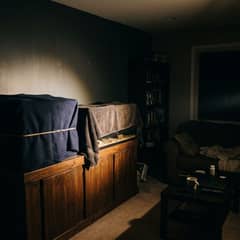
The rest of the plan is management, and it is the same for every species. The quiet room is interior, with the curtains drawn so the flashes do not show, and something steady playing to blur the bangs: a radio, a fan, the television. The dog's bed goes in it, and so does the owner. A cat gets what Dutch cat owners most often provided, a hiding place, a covered bed or a box in a closet, and is left alone in it. Nobody drags a hiding cat out for comfort. The animal that wants contact will come and get it.
What does not help is most of what is sold for the purpose. The same survey found pheromone diffusers, nutraceuticals, herbal and homeopathic products and essential oils no more effective than placebo. Dutch cat owners reported a lasting benefit from pheromone products in 6 percent of cats. No measure Dutch owners tried left more than 30 percent of their animals less afraid the following year, and the one with the best record, 29 percent, was leaving: a night somewhere quieter. Relief on the night is a different thing, and that is what the treats and the quiet room buy. For a dog with a true phobia, the one that drools, shakes, claws at doors and will not eat, the answer is a prescription, and the vet appointment for it belongs in December.
If it is already the 30th and none of this is in place, most of it still can be. The quiet room takes ten minutes to set up. The treats work tonight, with no training behind them. A same-day call to the vet can still get a short-term prescription for a dog with a known phobia. And the dog is not left alone with the fireworks, because what fearful dogs in the Dutch survey did most, before anything else, was look for their owner.
The animals in the other rooms
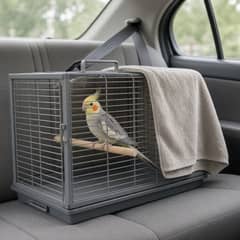
The bangs also reach the animals that sleep through most things. A cockatiel is a light sleeper built to watch for predators, and a bang in the dark, a light switched on during its sleep hours or someone walking into its room can send it into a night fright, a blind panic in which the bird throws itself around the cage and can hurt itself on the bars. The bird's room is closed, dark and off limits from its usual bedtime, with a night light on so a startled bird can find the perch again instead of the bars, and the cage well away from any window the flashes reach. The same list of household hazards that applies on any evening applies twice over on this one: no scented candles, no smoke, no party fog in a room a bird shares.
Rabbits and guinea pigs freeze at a loud noise, and fireworks are a loud noise repeated for hours. They freeze, and a frozen rabbit stops eating, and a rabbit that stops eating is on the clock for GI stasis. The hutch or pen moves to the quietest interior room in the afternoon, with the hay piled high and the hide box in place, a blanket over the top to cut the flashes, and someone checking before bed that the hay is going down. An outdoor hutch comes inside for the night. A ferret gets the same closed room so the party does not reach the cage.
What helps for next year
The most useful finding in that survey is about timing. Forty-five percent of owners said the fear began before the dog was a year old, and without intervention it tends to stay or get worse: a third of fearful dogs were unchanged over time, and 27 percent got worse. Dogs that had been trained as puppies to associate the noise with something good scored a median of 1 on the fear scale. Dogs trained as adults before any fear scored 2. Untrained dogs scored 4. The cheapest New Year's Eve plan is the one that starts in January, with a puppy, a recording of fireworks at low volume, and a handful of chicken.
The Door
The second hazard of the night is a door that opens at midnight onto a street full of bangs.
Guests arrive and leave in waves, the last of them in the loudest half hour of the year, and a dog that bolts at that moment is outside in the dark, in the cold, in a panic. More dogs are lost during the winter than during any other season, a dog on snow or ice can lose its own scent trail, and a dog never goes off leash in it. The fixes are the same ones that work for every holiday. Every animal is behind a closed door before the countdown. The collar carries a tag with a number someone will answer at 1 am. The microchip registry has that number too, checked that week, because a collar comes off in a hedge and a chip does not. Cats stay indoors from dusk on the 31st to the morning of the 1st, with the litter box in the quiet room.
The last walk of the year happens before dark, on a leash, and the first walk of the new one waits for daylight.
The Party
Four things from the party itself reach the pets.
Party poppers, noisemakers and the confetti strings they throw frighten animals and scatter string. A thrown confetti string is one more thing a cat can swallow, and inside a cat a string behaves the way tinsel does, anchoring at one end while the gut bunches along the rest, which is an abdominal surgery. The strings go in the trash with the paper hats before any animal is let back into the room.
Drinks get left at floor level and on low tables all night. Alcohol is absorbed fast and brings on vomiting, incoordination, depression and, at the far end, coma, the same as a knocked-over glass at Thanksgiving, and a champagne flute at the edge of a coffee table is at the height of a cat's nose and a rabbit's. Glow sticks and glow jewelry are a cat problem: the bitter liquid inside makes a cat drool and foam, which looks worse than it is, as it does on Halloween. Guests' bags carry medication, and medication, yours and theirs, goes in a closed cabinet, never left in a bag or a coat on a chair.
The Morning After
January 1st is a different hazard, and it is on the sidewalk.
Spent fireworks lie everywhere on the morning walk: casings, cardboard, unexploded pieces, half-burnt sparklers. A dog that eats one is poisoned by whatever the firework was made of, and the effects run from stomach upset to injury to the kidneys, liver or bone marrow, and seizures. A recently lit firework burns a nose that investigates it. The morning walk is a short one on a leash, on a route that was quiet the night before, and anything a dog picks up comes out of its mouth.
The cold adds two more. Antifreeze is lethal to dogs and cats, and a spilled puddle in a driveway after a night of visitors' cars is exactly where a dog puts its tongue. Ice melt and road salt get licked off bare paws on the way home, and the chemicals in them are dangerous swallowed. Feet and belly get washed and dried at the door, and the dog that walked through the party's aftermath gets checked between the toes for anything lodged there.
What To Do First
For anything eaten, the order is the same as every holiday.
- Take it away and clear what is left so no second animal gets it.
- Keep the packaging, the casing or a photo. The poison lines assess by product.
- Estimate how much, roughly.
- Note the time and the animal's weight.
- Call now, before signs. Your vet, the ASPCA Animal Poison Control Center at 888-426-4435, or the Pet Poison Helpline at 855-764-7661. Both are open 24 hours a day, every day, and both charge a consultation fee.
- Do not make the animal vomit unless the person on the line or your vet tells you to.
For a dog that has gone through the door, the order is different: the street and the route of its walks first, with its name and the treat bag, then the neighbors, then the microchip registry to confirm the number is live, then the local shelter and animal control, and a lost-pet post with a photo in the neighborhood groups before bed.
The fear itself is the one thing here that can be fixed for good, and that work starts on the first quiet day in January.
Sources & Further Reading
Last reviewed 28 Oct 2026 · 8 sources
- ASPCA: Holiday Safety Tips
- ASPCA: Cold Weather Safety Tips
- Salonen et al. 2020, Prevalence, comorbidity, and breed differences in canine anxiety in 13,700 Finnish pet dogs, Scientific Reports
- Riemer 2019, Not a one-way road: severity, progression and prevention of firework fears in dogs, PLoS One
- van Herwijnen et al. 2024, Firework aversion in cats and dogs as reported by Dutch animal owners, Veterinary and Animal Science
- Pet Poison Helpline: Fireworks
- Lafeber: Cockatiel Personality, Food and Care
- Lafeber: 5 Ways You Freak Your Pet Bird Out
Frequently Asked Questions
Should I comfort my dog during fireworks, or does that reward the fear?
Comfort it. In an owner survey of over 1,200 dogs, giving the dog something it loves straight after each bang, a treat or a game, was rated effective in more than two thirds of cases, and so was cueing a relaxation the dog had already been taught. Sit with the dog in the quiet room, keep your own voice flat, and hand over the good stuff as the noise lands.
Do calming collars, supplements and pheromones work for fireworks?
Mostly no. In the same survey, pheromones, nutraceuticals, herbal and homeopathic products and essential oils were no more effective than placebo. Dutch owners reported a lasting effect from pheromone products in 6 percent of cats. A dog with a real phobia, one that drools, shakes and tries to dig out of the house, needs a vet appointment in December and a prescription. A collar bought on the 31st will not do it.
Can I leave my dog home alone on New Year's Eve?
Not if the dog is afraid of fireworks, and most owners do not know until the first year. In the Dutch survey of 3,000 dog owners, the most common thing a fearful dog did during the bangs was seek its owner: eye contact in 74 percent, moving close in 69 percent, pressing against them in 63 percent. A dog alone has none of that, and a dog that panics alone can hurt itself trying to get out. If someone has to go out, the dog goes to a house with a person in it, or the person stays.
My dog ran away on New Year's Eve. What do I do?
Go out now, on foot, along the route of its usual walks, calling its name with the treat bag in hand, and send someone to the neighbors. Then the microchip registry, to confirm the number on file is yours, then the local shelter and animal control, then a photo posted to the neighborhood groups before bed. In the morning, the shelter again. A frightened dog is often found by someone at dawn, which is why the tag and the chip were checked the week before.
Written by Michael Ryan
Mike keeps two rescued bearded dragons, Dex and Cera, and writes the care guides on BeastlyFacts from his own research and mistakes. He is not a veterinarian.
More about Michael Ryan →