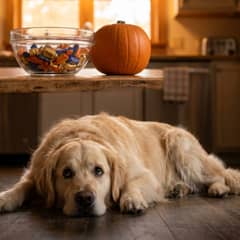
Thanksgiving With Exotic Pets: Birds, Reptiles, Small Mammals and Fish
On This Page▾

This article is for educational purposes only and is not veterinary advice. If your bird, reptile, amphibian, small mammal or fish has eaten or breathed something it should not have, or stops eating, call a veterinarian who treats that animal.
Some parrots love a full house on Thanksgiving, and some would rather watch the crowd from a safe distance. The rabbit in the back room, the bearded dragon under its basking lamp and the fish tank glowing in the corner each meet the day in their own way, and the day brings them the same things: a kitchen running from early morning, a table of food built for people, a warm and busy house, and a lot of hands that want to say hello. None of that has to keep anyone from the holiday. Most of what keeps an exotic pet comfortable on Thursday gets settled on Wednesday night, with a closed door, a checked thermometer and a word with the guests.
Four moves cover most of this guide. The bird spends the cooking hours caged in a closed room far from the kitchen, and the scented candles stay unlit. Reptiles, amphibians, small mammals and everything they live in stay out of the kitchen and away from anywhere food is served, and anyone who handles them washes with soap and running water afterward. Every heated enclosure and every tank gets its thermometer checked once the house warms up. A rabbit that stops eating needs a vet without delay, holiday or not.
Birds
The kitchen air
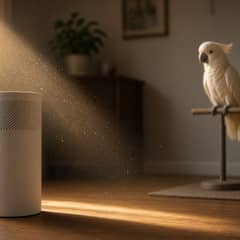
A bird breathes in airborne irritants more easily than a mammal does, and its airway is very sensitive to chemical fumes. That is why a bird's Thanksgiving hazards start in the kitchen, long before anything reaches the plate. When a nonstick pan coated with PTFE overheats, at around 536 F, it gives off a gas that poisons birds, and the poisoning is common in birds kept in or near a kitchen. Often the only sign is sudden death. A small bird can die after very little exposure, and a larger one may wheeze, struggle to breathe, wobble or have a seizure.
Pans are not the only source. Some self-cleaning ovens release the same gas, so the self-clean cycle that gets the oven ready for the turkey counts. So do irons and ironing board covers, which matters when the tablecloth gets pressed, and some heat lamps. Oven cleaner, bleach and ammonia are on the list of household fumes that harm birds as well, so the deep clean the day before happens with the bird already settled in its quiet room.
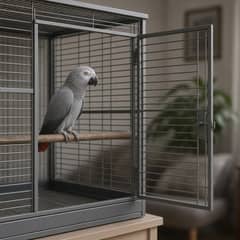
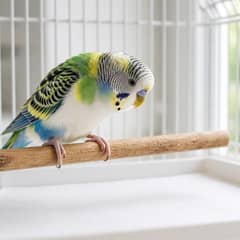
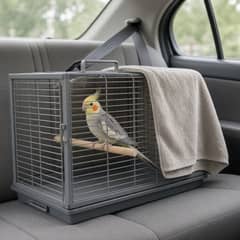
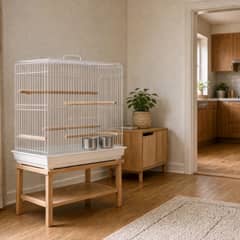
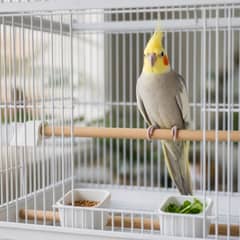
That room is the plan for the whole cooking day: the bird in its cage, in a closed room at the far end of the house from the kitchen, with the door shut before the first pan heats. A bird loose near the stove can fly into an open pot of liquid or into a burner flame, and it can drown in a sink full of soaking dishes. Out-of-cage time waits until the stove is cold and the sink is empty, and a lit fireplace is an open flame too.
Candles, potpourri and the smell of the holiday
A cinnamon candle on the table, a bowl of potpourri on the sideboard and a plug-in freshener in the hallway are what make a house smell like Thanksgiving, and all three are on the do-not-expose list for pet birds. Strong scents and sprays, perfume included, can irritate a bird's airway or do worse. In a bird household the table glow comes from battery candles, and the scent comes from the food.
Nothing from the plate
The bird's dish gets nothing from the table. Salty snacks, anything with caffeine, alcohol and rhubarb are all off the list, chocolate is never offered, and many other human foods can make a bird seriously ill. Avocado is toxic to birds, and caged birds appear more sensitive to it than other animals, which rules out the guacamole.
The guests, and the guests' dogs
Some birds enjoy the noise of a full house, and some find it stressful. A shy bird does better watching from a distance than being passed around. Ask guests not to bring their dogs or other pets, since a visiting animal may treat the bird as prey. Ribbon on a centerpiece or a gift is worth keeping out of reach too, because a bird that chews and swallows it can end up with a blocked gut. The one thing worth keeping steady on a day when nothing else is steady is the bird's routine: cover and lights at the usual hour, even with a house full of people.
Reptiles and Amphibians
Salmonella and the kitchen
Reptiles and amphibians often carry Salmonella in their digestive tracts, even when they are perfectly healthy. The animals and everything they use, from the water bowl to the tank decor, stay out of the kitchen and away from anywhere food is prepared, stored, served or eaten. Habitat cleaning never happens in a food prep area, and the kitchen sink counts as one. On Thanksgiving the kitchen, the dining table and the sideboard are all food areas, so the tank chores happen somewhere else for the week.
Feeder rodents follow the same rule. Frozen mice and rats never thaw in the kitchen sink or on a food prep counter, so in the week the turkey thaws in the kitchen, the snake's dinner thaws in another room. Children under 5, adults 65 and older and anyone pregnant should leave feeder rodents to someone else.
Guests and small hands
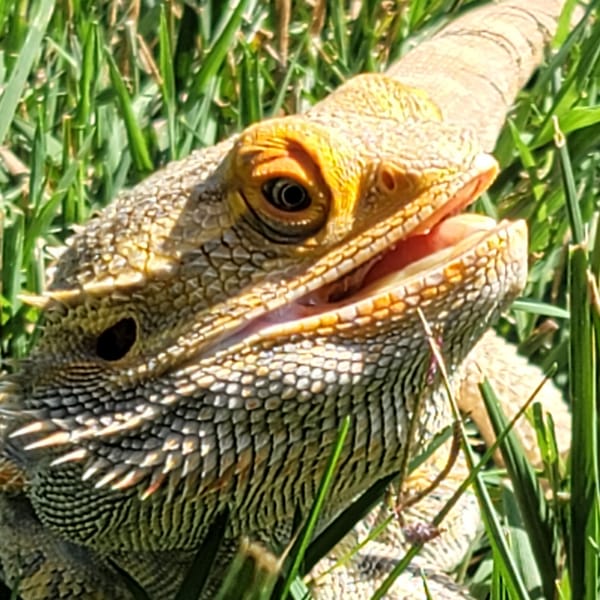
Cousins love a bearded dragon, and the dragon can still meet the family. Children under 5 should not handle reptiles or amphibians or touch their enclosures, so the youngest guests watch from the other side of the glass. Everyone else washes with soap and running water after touching the animal, its food or its tank, and again before eating. Hand sanitizer with at least 60% alcohol is the fallback only when soap and water are not available.
Amphibians are a different kind of handling. A frog or salamander breathes partly through its skin, which has to stay moist and is easily damaged, so it should be handled as little as possible, and some species release irritating toxins from the skin. Guests watch the frog through the glass. Whoever does need to handle it wears powder-free disposable gloves moistened with water from its enclosure or with chlorine-free water.
The thermostat in a warm house
A reptile's feeding and digestion run on the temperature of its enclosure, and the margin at the top is small: going only 10 F past a species' upper limit can kill some reptiles. Every enclosure should carry at least two thermometers, one at the cool end and one at the warm end nearest the heat source, and every heat source should run on a thermostat. On a day when the house runs warmer and busier than usual, read both thermometers in the afternoon and again in the evening.
Small Mammals
Out of the kitchen, away from faces
Rabbits, guinea pigs, hamsters, rats and the rest can carry germs that make people sick, and their food, equipment and habitats can carry Salmonella. Like reptiles, they and their gear stay out of the kitchen and anywhere food is prepared or served, and their cages are never cleaned in a food prep area. Guests do not kiss them, snuggle them or hold them up to their faces, and an adult supervises children's handwashing afterward, since children younger than 5 are more likely to get seriously ill. A pregnant guest should avoid handling pet rodents where she can.
Rabbits and guinea pigs: the quiet room
A house full of strangers is a different hazard for a prey animal. A rabbit or a guinea pig does not hear a dozen voices as company. It hears something large arriving, over and over, and responds by freezing and going off its food. A rabbit often stops eating when it is stressed or overheated, and one that is not eating can go from feeling poorly to a life-threatening illness in a matter of hours. That makes a warm, loud holiday worth planning around. The rabbit spends it in a low-stress room away from the front door and the kitchen heat, with unlimited hay and its usual hide. Someone checks before bed that the hay is going down. A rabbit that has stopped eating is showing a warning sign of GI stasis and needs a vet without delay.
Nothing from the table goes in the rabbit's bowl either. A diet heavy in treats, carrots, fruit and other carbohydrates and light on hay upsets a rabbit's gut, and avocado is toxic to rabbits and to guinea pigs.
A guinea pig gets the same quiet room and the same empty plate. Its gut is not built for foods high in fat or sugar, so bread, stuffing, cereals, oats, seeds and nuts are all off the list. Guinea pigs also adapt poorly to new foods, and a sudden change can make one refuse to eat, so the holiday is not the day to try a new vegetable. A guest who wants to offer a treat can hand over a small piece of cucumber or bell pepper, if the guinea pig already eats them. Stress is one of the things that changes how much vitamin C a guinea pig needs, which runs 10 to 50 mg a day, so its usual vitamin C source stays on schedule.
Chinchillas and the heat
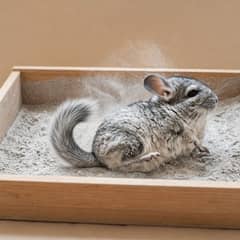
A chinchilla handles a warm house badly. It does best at 55 to 68 F and should be kept below 80 F. Above that, especially in humid air, it can develop heat stroke, which can be fatal, and it handles humidity poorly. The signs are panting, open-mouthed breathing, a high body temperature and reluctance to move. Overheating and other stress can also set off GI stasis in a chinchilla. Its room for the day is the coolest one in the house, far from the kitchen's heat and steam. Chinchillas also prefer to be left alone and to run around the cage instead of being held, so guests admire this one from the doorway.
Hamsters and rats
Hamsters are not heat tolerant, so the cage stays in a cool room away from the kitchen. A hamster startles easily, so a guest who wants to say hello wakes it gently first, and the cage door stays shut to curious visitors, since hamsters, mice and rats are great escape artists.
Rats have a very sensitive respiratory system and breathe only through their noses. Scented candles, plug-ins, room sprays, diffusers, incense and heavily scented cleaners are all problematic for them, and so are perfume and scented lotion on the hands of whoever picks them up. The rats' room stays unscented, the strong cleaners stay out of it, and if the house gets a disinfecting spray before the guests arrive, the rats wait in another room until the fumes clear.
Treats for a pet rodent are offered once or twice a week, and on those days they make up no more than 5 to 10% of what it eats. Seeds and nuts are not recommended for guinea pigs, rats or chinchillas. The nut bowl on the coffee table belongs to the people.
Ferrets
A ferret is an obligate carnivore that needs high-protein, low-carbohydrate food, available at all times, because ferrets can develop low blood sugar. A small piece of plain cooked meat or cooked egg white makes a good treat, which means a ferret can share a little plain turkey. The skin and gravy stay off its plate, for the same richness that makes turkey skin a problem for dogs. Treats of every kind stay under about a teaspoon a day.
The stuffing, the rolls and the pie are another story. A ferret with the run of the floor during dessert will steal and stash whatever it finds, and sweets are the last thing it needs. Grains and sugar-coated treats are on a ferret's avoid list, and high-sugar foods such as raisins, fruit and yogurt treats are discouraged for older ferrets in particular. Any link between a sugary diet and insulinoma, a common tumor in pet ferrets, is still hypothetical, but the case against dessert does not depend on it.
Hedgehogs
A hedgehog thrives at 70 to 85 F. It is susceptible to heatstroke, and hypothermia can be life-threatening, so if its cage moves to a spare room for the day, that room has to sit inside that range: no cold back bedroom, and no spot beside the oven. A frightened hedgehog rolls into a ball and may thrust its spines at a hand, so the one asleep in the afternoon is left to sleep.
Fish
A tank's Thanksgiving is all about holding steady. A sudden change in water temperature of even a few degrees can weaken a fish's immune defenses, and when fish are handled or moved, the change is generally held to about 1 F an hour. The heater stays plugged in all day, even when its outlet would suit the slow cooker. Most home fish emergencies are not medical at all: they are leaks and electrical problems with a heater or pump, and most can be prevented by planning ahead and testing the water. A look at the heater, the pump and the water on Wednesday night covers it.
Feeding stays with one person, at the usual amount. Overfeeding is one of the common causes of rising ammonia, and ammonia at high enough levels is lethal to many fish. If a test the day after shows ammonia climbing, feeding stops or drops sharply until the problem is corrected.
Wednesday Night, a Closed Door and a Checked Thermometer
Every animal in this guide is kept safe by the same few decisions, and they are all easiest to make before the first guest arrives. Give the bird its far room, take the tank chores and the feeder mice out of the kitchen, check the thermometers, and tell the guests which animals they can greet and which they can only admire. After that the day belongs to the people at the table, and the animals spend it the way they would spend any other.

Its photo, microchip number and markings, all in one place, so a poster takes minutes if it ever slips out the door. The Universal Pet Kit has it, among 19 forms for any pet that you can type into or print.
Sources & Further Reading
Last reviewed 12 Nov 2026 · 6 sources
- Centers for Disease Control and Prevention: Healthy Pets pages on Reptiles and Amphibians, and on Small Mammals
- Merck Veterinary Manual: Toxicoses of Pet Birds; Household Hazards for Pet Birds; Food Hazards; Providing a Home for a Reptile; Special Considerations for Amphibians (MSD edition); Digestive Disorders of Rabbits; Environmental Diseases in Aquatic Systems; Emergencies of Fish
- VCA Animal Hospitals: Gastrointestinal Stasis in Rabbits; Chinchillas: Health Conditions; Owning a Rodent; Feeding Rodents; Feeding Guinea Pigs; Hedgehogs: Owning
- Lafeber: Top Ten Holiday Hazards for Your Pet Bird; Home Environment: Rats and the Air
- NC State Veterinary Hospital: Caring for Your Pet Guinea Pig; Caring for Your Pet Ferret
- Bixler H, Ellis C. Ferret Care and Husbandry. Veterinary Clinics of North America: Exotic Animal Practice, 2005
Frequently Asked Questions
Can my parrot have a little Thanksgiving food?
Keep the table food on the table. Salty snacks, caffeine, alcohol, rhubarb and chocolate are on the do-not-feed list for birds, avocado is toxic to them, and many other human foods can make a bird seriously ill. The bird's holiday meal is its usual food, in its own room.
Is it safe to cook with nonstick pans when I have a bird?
The danger comes when a PTFE-coated pan overheats, at about 536 F, and gives off a gas that can kill a bird, often with no warning sign first. Cook with the bird caged in a closed room far from the kitchen, and treat a self-cleaning oven cycle, an iron or a coated heat lamp as the same hazard.
Can the kids hold our bearded dragon when the cousins visit?
Not the youngest ones. Children under 5 should not handle reptiles or amphibians or touch their enclosures, because these animals often carry Salmonella even when they are healthy. Anyone older who holds the dragon washes with soap and running water afterward and before going back to the table.
Where should I thaw my snake's frozen mice during Thanksgiving week?
Anywhere but the kitchen. Frozen feeder rodents never thaw in the kitchen sink or on a counter where food is prepared, and children under 5, adults 65 and older and anyone pregnant leave the handling of them to someone else.
My rabbit stopped eating after the guests arrived. Is that an emergency?
Treat it as one. A crowd or a hot room is enough to put a rabbit off its food, and once it stops eating, a few hours can turn a mild problem into a serious one. Call the vet the same day, holiday or not.
Can my ferret have some turkey?
A small piece of plain cooked meat is a suitable ferret treat, and all treats together stay under about a teaspoon a day. The stuffing, rolls and pie are the wrong food for an obligate carnivore, since grains and sugary treats are on the avoid list.
Can I unplug the aquarium heater for a few hours to free an outlet?
Leave it plugged in. A sudden change in water temperature of only a few degrees can weaken a fish's immune defenses, and even when fish are handled or moved, the change is generally held to about 1 F an hour. The slow cooker can find another outlet.
Written by Michael Ryan
Mike keeps two rescued bearded dragons, Dex and Cera, and writes the care guides on BeastlyFacts from his own research and mistakes. He is not a veterinarian.
More about Michael Ryan →You May Also Like
Subscribe - it's free
An occasional email when something new is worth your time. No spam.
Health and More