How Much Does a Quaker Parakeet Really Cost?
On This Page▾

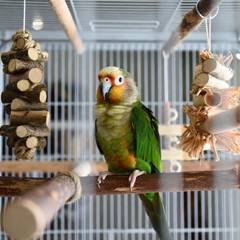
Quaker parakeets sit in the middle of the pet-bird price range, and one detail has to be settled before you buy at all: whether it's even legal where you live.
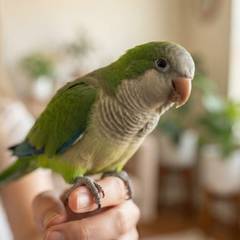
The bird: $250 to $500
A well-socialized Quaker from a reputable breeder typically runs in this range, with color mutations, age, and sex affecting the exact price.
Upfront setup: $260 to $560
| Item | Cost Range |
|---|---|
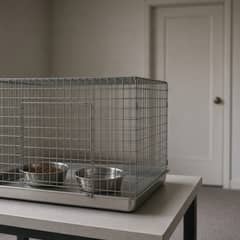
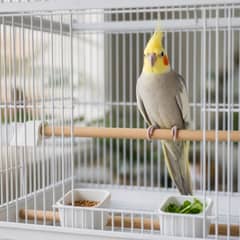
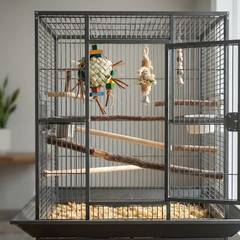
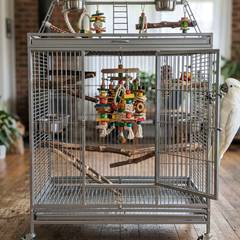
| Cage at least 24 by 24 by 36 inches, wider preferred, heavy-gauge bars 1/2 to 5/8 inch apart (check the dimensions and bar spacing before you buy) | $150 - $300 |
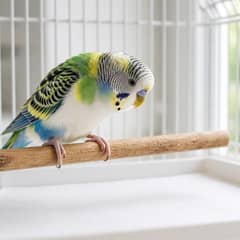
| Natural wood perches, three or four, in varied diameters | $10 - $70 |
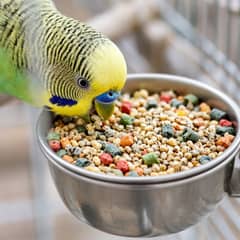
| Stainless food and water cups | $10 - $20 |
| First bag of formulated pellets | $10 - $15 |
| Foraging and shreddable toys, four or five to start | $10 - $75 |
| Cuttlebone | about $5 |
| Breathable cage cover for 10 to 12 hours of dark (check it fits your cage) | about $40 |
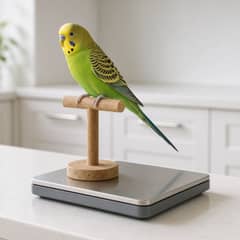
| Gram scale | $10 - $15 |
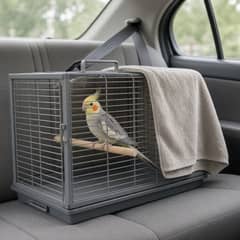
| Travel carrier sized for a Quaker, for vet visits | $15 - $20 |
| Setup total | $260 - $560 |
Typical price ranges across retailers.
The cage is the line to shop carefully. Read the depth before you buy: many flight cages sold for small and medium parrots are only 20 to 23 inches deep, shallower than the 24 inch minimum this species wants, and they buy the room back in width and height rather than floor depth. Toys are the one row that never stops: whatever you buy on day one gets shredded, and replacing them belongs in the monthly budget below. The first avian exam comes on top of the table, and a new-client exam costs more than a repeat one, as the vet table further down shows.
Ongoing costs: roughly $40 to $110 a month
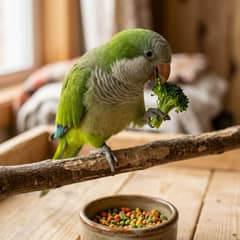
Pellets, fresh produce, cage liners, and a steady rotation of toys make up the monthly total, and that last item deserves emphasis, Quakers are natural nest-builders and shred and destroy toys quickly, budget for genuinely frequent replacement, not an occasional purchase.
Vet costs
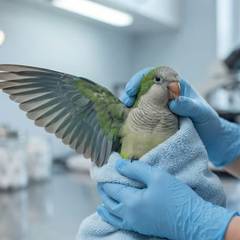
An annual avian exam runs $85 and up, plus periodic nail and wing grooming. Avian vets are specialized, and given how long this species lives, covered below, you're looking at decades of these costs, not a handful of years.
Vet costs, line by line
| Item | Cost Range |
|---|---|
| Wellness exam, established client | $78 - $115 |
| First exam, new client | $128 |
| Basic bloodwork (CBC and chemistry) | $158 |
| Fecal parasite test | $58 |
| Fecal gram stain | $90 |
| Nail, wing, or beak trim | $35 each |
| Urgent or after-hours emergency exam | $185 - $320 |
These come from published exotic and avian price lists, one in Denver, one a mobile service in North Carolina, and one in-home practice's lab menu, so your clinic will land somewhere near them and not on them. A routine year with one wellness exam and a gram stain is roughly $170 to $205, and bloodwork adds $158 in the years it is due. Grooming is $35 a service if you do not learn to do it yourself. The emergency line is the one to hold in reserve: an after-hours exam at the Denver practice is $200 plus a $120 emergency fee before any treatment starts.
Lifespan: 20 to 30 years, sometimes longer
This is a long-lived bird, outliving most small species by decades, though not matching the largest parrots, despite being considerably smaller and more affordable to acquire. Treat this as the real headline number when deciding whether this species fits your life, not the purchase price.
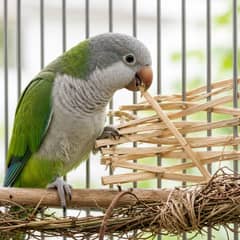
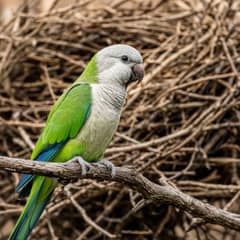
The Quaker is the only parrot species that builds its own nest rather than nesting in a tree cavity, and in the wild these twig-woven nests can become massive multi-chambered structures shared by many pairs. A pet Quaker keeps that instinct fully intact, which is exactly why its toy budget runs higher than a similarly-sized parrot that isn't compelled to shred and weave everything in reach.
Before any of this: check your state's laws
This is worth stating as its own line item, since it affects whether you can legally buy this species at all. Quaker parakeets are banned or restricted in a meaningful number of US states, tied to concerns about escaped birds establishing invasive wild colonies that damage crops and build large stick nests on power infrastructure. Those are invasive-species rules rather than dangerous-animal ones, and they run state by state. Verify current rules with your state wildlife or agriculture agency before you shop, not after you've found a breeder.
Sources & Further Reading
Last reviewed 15 Sep 2026 · 5 sources

Put these numbers in a budget you can fill in. The Universal Pet Kit has it, among 19 forms for any pet that you can type into or print.
Frequently Asked Questions
How much does a Quaker parakeet cost?
$250 to $500 from a reputable breeder for a well-socialized bird. Color mutations, age, and gender affect the exact price.
What does a starter Quaker setup cost?
$260 to $560: a cage at least 24 by 24 by 36 inches, three or four perches, two cups, a first bag of pellets, a few toys, a cuttlebone, a cage cover, a gram scale and a carrier. The first avian exam comes on top.
What are the ongoing monthly costs for a Quaker parakeet?
Roughly $40 to $110 a month, covering pellets, fresh produce, and cage liners. The toy budget is the part people underestimate. Quakers are nest-builders that shred and destroy toys quickly, so plan on frequent replacement.
How long do Quaker parakeets live, and why does that matter for cost?
20 to 30 years, sometimes longer. That is far longer than most small birds, though short of the largest parrots, and it comes in a bird that is smaller and more affordable to acquire. Weigh that span, not the purchase price, when deciding whether the species fits your life.
What should I check before spending any money on a Quaker parakeet?
Your state's laws come first. Quaker parakeets are restricted or banned in a meaningful number of US states, over concerns about escaped birds forming invasive wild colonies. Verify current rules with your state wildlife agency before you shop for a bird.
More on the Quaker Parakeet
Recommended Gear
As an Amazon Associate I earn from qualifying purchases through the links above, at no extra cost to you.
Written by Michael Ryan
Mike keeps two rescued bearded dragons, Dex and Cera, and writes the care guides on BeastlyFacts from his own research and mistakes. He is not a veterinarian.
More about Michael Ryan →You May Also Like

Subscribe - it's free
An occasional email when something new is worth your time. No spam.
Deep Dive
Health and More