Cockatoo Cage Setup: Size, Material, and Daily Enrichment That Actually Matters
On This Page▾

A cockatoo's cage needs to support a large, powerful, intelligent, and emotionally demanding bird, and getting the size, material, and daily enrichment right matters as much as anything else in this species' care.
Cage Size
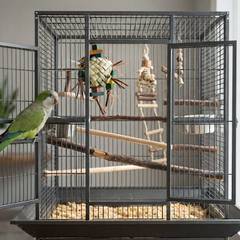
36 inches wide by 24 inches deep by 48 inches tall is a commonly cited minimum, with many avian vets recommending closer to 48 by 48 by 60 inches as a comfortable size. Bigger is always better with this species. A cage top that opens up to connect with a play stand is an ideal setup, giving your bird more usable space throughout the day.
Bar Spacing and Security
Three-quarters of an inch to 1 inch bar spacing for large cockatoos. Secure, escape-proof locks matter more here than with most birds: cockatoos are notorious escape artists with the intelligence and strength to work out standard latches.
Material: Stainless Steel Is Worth the Investment
For a large, destructive cockatoo, stainless steel is the gold standard: rust-proof, non-toxic, and capable of withstanding a beak this powerful for decades. An extra-large stainless steel cage with 8-gauge bars 1 inch apart is built for exactly this, for the large species. A Goffin's cockatoo or a galah needs bars 3/4 inch apart, so check the spacing before you buy. A heavy-gauge powder-coated steel cage with the right spacing is an acceptable, more affordable alternative. Avoid galvanized or zinc-coated cages entirely, a cockatoo that chews on the bars, and they will, risks metal toxicity from that coating.
Lighting
Full-spectrum or UV lighting is commonly recommended for indoor parrots. Just as important: 10 to 12 hours of true darkness and quiet for sleep every night. Sleep deprivation in this species measurably worsens screaming and other behavioral issues, this isn't a minor detail to skip.
Enormous Daily Enrichment and Interaction
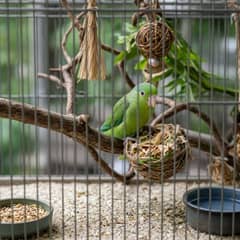
This is worth stating plainly, since it's the defining fact about keeping this species well. Cockatoos need daily out-of-cage time and a steady rotation of destructible foraging toys, wood, cardboard, palm fiber, like a large-parrot rated foraging toy set. It is a welfare requirement, and skimping on it is directly linked to feather-destructive behavior and severe screaming. An air purifier is also worth having, this species produces significant feather dust, enough that bird dust and indoor air quality is a real consideration for the people in the room.
Cockatoos have a habit of chewing and swallowing things that are not food, wires, furniture and paint above all. That is why a cockatoo outside its cage is always a supervised cockatoo, and why every chewed toy gets checked for loose pieces during cleaning.
Cleaning, Every Day
A cockatoo cage gets dirty fast: shredded wood, flung food and a steady fall of powder down. The daily routine:
- Change the cage paper. A removable metal grate over paper or paper-based bedding keeps the bird off its droppings, and the paper under it is replaced every day.
- Wash every food and water dish thoroughly with soap and water.
- Take out fresh fruit and vegetables within a couple of hours, sooner in a warm room, before they spoil.
- Check the toys. Pull out anything splintered, frayed or chewed down to a hardware fitting.
Around the cage, a vacuum with a high-efficiency filter keeps the dust from building up, and hands get washed after handling the bird. The deeper scrub of the cage, grate and perches is where product choice matters: which disinfectants are safe to use around a bird, and which fumes are not, is set out in the bird household hazards guide. Do it with the cockatoo out of the room.
Bathing
A cockatoo sheds powder down every day, and bathing is what keeps it on the bird. Offer a bath daily, in the morning so the feathers are dry by night: lukewarm water from a plant mister as a gentle rain, or the bird on a suction-cup perch at the back of the shower. A daily mist or shower is the step that stops powder from spreading through the house, which matters for the people breathing it as much as for the bird, and the rest of the feather dust routine builds on it. A cockatoo that will not bathe on its own still gets a gentle spritz once or twice a week.
Diet
Base the diet on formulated pellets, roughly 75 to 80% of intake, with fresh vegetables making up most of the rest and fruit and seeds kept to a smaller share, seeds specifically should stay under about 10%. Any formulated parrot pellet from an established avian brand does the job; the ratio matters more than the label.
Sources & Further Reading
Last reviewed 26 Jul 2026 · 2 sources
- PetMD: Cockatoo Bird Species, Types, Lifespan, and Care
- LafeberVet: Basic Information Sheet, Cockatoo
- VCA Animal Hospitals: Bathing Birds; Cockatoos, Feeding
The Cockatoo Care Package carries this setup as a checklist with the targets to hit, in a 49-page PDF you can keep by the cage, $8.99.
Frequently Asked Questions
What size cage does a cockatoo need?
36 by 24 by 48 inches is the commonly cited minimum, and many avian vets recommend closer to 48 by 48 by 60 as a comfortable size. Bigger is always better with this species.
What bar spacing is safe for a cockatoo cage?
Three-quarters of an inch to 1 inch for large cockatoos. Escape-proof locks matter more than they do for most birds, since this is a notorious escape artist with the intelligence and strength to work a standard latch open.
Should a cockatoo cage be stainless steel or powder-coated?
Stainless steel if the budget allows: it does not rust, carries no coating to chew off, and lasts as long as the bird. Heavy-gauge powder-coated steel is the cheaper option that still works. Galvanized or zinc-coated cages are out, because bar chewing turns the coating into metal poisoning.
How much daily enrichment does a cockatoo need?
More than most owners expect. Time out of the cage every day, supervised, and a supply of wood, cardboard and palm fiber to shred that is replaced as fast as it is destroyed. A cockatoo short on either tends toward plucking and screaming.
What should a cockatoo's diet be based on?
Formulated pellets, roughly 75 to 80% of intake. Fresh vegetables make up most of the remainder, with fruit and seeds smaller still, and seeds under about 10%.
Does lighting and sleep matter for cockatoos?
Yes. Full-spectrum or UV lighting is commonly recommended for indoor parrots, and sleep counts just as much: 10 to 12 hours of dark and quiet for sleep every night. Sleep deprivation measurably worsens screaming and other behavioral issues.
Recommended Gear
As an Amazon Associate I earn from qualifying purchases through the links above, at no extra cost to you.

Written by Michael Ryan
Mike has looked after a neighbor’s cockatoo on and off for years.
Mike keeps two rescued bearded dragons, Dex and Cera, and writes the care guides on BeastlyFacts from his own research and mistakes. He is not a veterinarian.
More about Michael Ryan →