Green Cheek Conure Cage Setup: What Your Bird Actually Needs
On This Page▾

A conure's cage needs to support an active, intelligent bird, not just contain one.
Cage Size
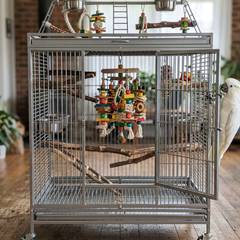
24x24x30 inches is the minimum most sources list for a single adult, but treat that as a floor, not a target. Bigger is always better: give the largest cage you can, or a genuine flight cage if you can manage it. Your bird should be able to fully stretch and flap its wings without touching the sides.
Bar spacing should be 1/2 to 5/8 inch maximum to prevent head entrapment or escape. Horizontal space for climbing and play matters more than extreme height, a wide flight-style cage is worth the extra footprint over a tall, narrow one.
Temperature
Normal household temperatures of 65 to 80°F work well. Avoid drafts, direct air-conditioning vents, and sudden temperature swings. No supplemental heating is needed in a typical indoor environment.
Humidity
Average household humidity is generally fine. Extremely dry air, common in winter when heating runs constantly, can contribute to dry skin or respiratory irritation, a room humidifier helps if your air runs very dry. This species doesn't have the specialized high-humidity needs some tropical reptiles do, the Red-Eared Slider tank setup guide is a good example of just how different those needs can be by comparison.
Cage Bottom and Substrate
Most keepers use a grate with paper, newspaper, or a cage liner underneath for easy daily cleaning. Avoid loose substrates like corn cob or wood chips, both can be ingested or harbor mold. Clean droppings and food debris daily, this is a small habit that prevents a lot of downstream health issues.
Lighting
Full-spectrum UV lighting made for birds (UVB 5.0 or a similar avian-specific bulb) runs 10 to 12 hours daily, supporting vitamin D synthesis, especially important for indoor birds with limited natural sunlight. Maintain a consistent day and night photoperiod, covering the cage at night gives 10 to 12 hours of real darkness.
Supervised outdoor time in an escape-proof carrier or cage is a nice addition when weather allows, never leave a bird outside unattended, and avoid direct midday sun.
A "Pineapple" green cheek conure gets its name from a genuine genetic combination, the Yellow-Sided and Cinnamon mutations together, producing a mostly yellow-olive body with an orange face instead of the wild type green and red. It's the same species and the same cage setup needs as a normal green conure, the difference is purely cosmetic.
Furnishings and Daily Needs
Varied perches, multiple diameters and textures, natural branches, rope, and a concrete or grooming perch, exercise the feet and help prevent pressure sores. Skip sandpaper-covered perches entirely.
Foraging and destruction opportunities matter just as much: this species needs to chew and work for food, so rotate foraging toys and general toys frequently, and provide safe wood, cardboard, paper, and foraging puzzles. Our conure enrichment guide sets out how often that rotation has to happen and what to put in it. A snuggle pouch or bird tent gives your conure somewhere secure to burrow, something this species genuinely loves.
Out-of-cage time, several hours of supervised free time daily, isn't optional, it's essential for both physical and mental health. Social needs matter too, strong daily human interaction, or a compatible companion bird, keeps a conure well adjusted, isolation reliably leads to behavioral problems.
Safety: never use non-stick or Teflon cookware near the bird, the fumes are highly toxic. Avoid running ceiling fans during free-flight time, secure windows and doors, and stick to bird-safe plants and household items. For placement, a family living area helps the bird feel like part of the flock, but keep one side of the cage against a wall for security, and stay well away from the kitchen, both the fumes and the heat are risks there.
Whether a conure stays flighted in that room or has its flight feathers trimmed is the keeper's call. A correct wing trim cuts only mature primaries, still leaves the bird a controlled downward glide, and grows out at the next molt, so a clipped conure still needs the fans off and the doors watched.
Sources & Further Reading
Last reviewed 29 Jul 2026 · 1 source
Frequently Asked Questions
What size cage does a green cheek conure need?
24x24x30 inches is the common minimum for one adult, and it is a floor rather than a target: go as large as you can. Bar spacing tops out at 1/2 to 5/8 inch, to prevent head entrapment or escape.
Does a green cheek conure need UV lighting?
Full-spectrum UV lighting made for birds, a UVB 5.0 or similar avian-specific bulb, is recommended by multiple care sources for 10 to 12 hours daily. It supports vitamin D synthesis, which matters especially for indoor birds with limited natural sunlight.
What temperature and humidity does a conure's cage need?
Normal household temperatures of 65 to 80°F work well with no supplemental heating needed indoors. Average household humidity is generally fine too, though very dry winter air can contribute to dry skin or respiratory irritation, a room humidifier helps if your air runs very dry.
What substrate should go in a conure's cage?
A grate over paper, newspaper, or a cage liner, cleaned daily. Skip loose substrates like corn cob or wood chips, which can be ingested or harbor mold, and clear droppings and food debris every day.
What's the biggest safety hazard in a conure's cage setup?
Non-stick or Teflon cookware fumes, which are highly toxic to birds even from another room. Also avoid running ceiling fans during free-flight time, secure windows and doors, and keep the cage well away from the kitchen, both the fumes and the heat are risks there.
Recommended Gear
As an Amazon Associate I earn from qualifying purchases through the links above, at no extra cost to you.
Written by Michael Ryan
Mike keeps two rescued bearded dragons, Dex and Cera, and writes the care guides on BeastlyFacts from his own research and mistakes. He is not a veterinarian.
More about Michael Ryan →