Quaker Parakeet Cage Setup
On This Page▾

A Quaker's cage needs to support an intelligent, assertive, chew-happy bird with a strong instinct to build, and getting the size, bar spacing, and enrichment right matters more than it might for a quieter species.
Cage Size
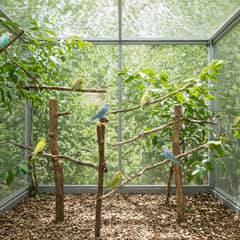
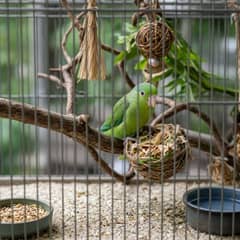
A reasonable minimum is 24 by 24 by 36 inches, though a wider flight-style cage in the 30 to 36 inch range is a better real-world target for this active bird. Use 1/2 to 5/8 inch bar spacing, don't exceed 3/4 inch, and choose heavy-gauge bars, because this species chews hard.
Temperature and Room Air
Normal comfortable room temperature works well. Avoid drafts and temperature extremes, and never leave a Quaker outdoors once temperatures climb toward 90°F. Normal household humidity is fine, with nothing to add.
The Cage Floor
Plain cage liner or newspaper is all this species needs on the cage floor. Loose particulate bedding is unnecessary, and paper shows the droppings, which are worth reading every day.
Cleaning, With the Bird Out
The daily routine is short: empty and wash every food and water dish with soap and water, rinse, and refill, and change the paper. Uneaten fresh food comes out after a couple of hours, sooner in a warm room, before it spoils. A full scrub of the cage, perches and toys adds a disinfectant, the right contact time and a thorough rinse, and which products are safe around a bird and which fumes are not is laid out in the bird household hazards guide.
The Quaker-specific part is timing. Quakers can be strongly protective of their cage, and a hand reaching in to change dishes or scrape the floor is exactly when a territorial bird bites. Clean while the bird is out on a play stand or in another room, never with it sitting inside watching. A second set of dishes makes the daily swap quicker: clean bowls go in, dirty ones come out to be washed.
Chewed wood, frayed rope and cracked plastic toys get checked during the clean and replaced. Heavy metal toxicity is on the list of common Quaker health problems, and a bird that chews its cage this hard will find zinc or lead in galvanized wire, old paint or cheap hardware if it is there.
Lighting
Full-spectrum lighting is optional rather than required, and most pet birds do fine without any. If you run a standard full-spectrum bulb, up to about 4 hours a day is the conservative figure, and there is no controlled study behind bird lighting recommendations to sharpen that with. Provide a cuttlebone as an additional calcium source.
A Quaker only about eleven inches long uses every inch of a cage this size, stocky, busy, and territorial in a way that makes floor space and bar strength matter more than the bird's own dimensions would suggest.
Diet Basics
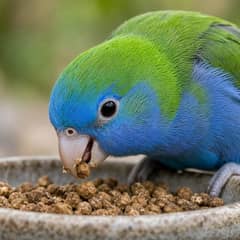
Pellets are the base, and the figure to hold to is a minimum of 70 percent of the diet. Fruits, vegetables and greens make up the rest, up to 30 percent of daily intake, with fruit the smallest share of that because of its water and sugar content. Seed belongs in the diet only as a very small part of it, never as the whole thing: a seed-based diet is what drives the fatty liver disease this species is prone to.
Dark leafy greens, broccoli, carrot, squash, peppers and sweet potato all work. A small amount of lean cooked meat, fish, cooked egg or a little cheese is fine occasionally. Pull fresh food after a couple of hours, sooner in a warm room, before it spoils. Avocado and onion are potentially toxic and never go in, and neither do chocolate, caffeine in any form, or alcohol.
The Non-Obvious Requirement: Manage the Nest-Building Instinct Deliberately
This is the detail that separates a well-adjusted pet Quaker from a hormonal, territorial one. The Quaker is the only parrot that builds its own nest, and it needs an outlet for that: plenty of shreddable wood and foraging toys to weave and tear. A pet Quaker never gets a nest box. A nest site, together with a long day length, is on the standard list of reproductive triggers, and in this species it brings on breeding-style hormonal aggression.
Offer varied perch diameters to support foot health, and plan for several hours of supervised out-of-cage time daily. This is too intelligent and social a bird to thrive on cage time alone.
Sources & Further Reading
❓ Frequently Asked Questions
What size cage does a Quaker parakeet need?
24 by 24 by 36 inches is a reasonable minimum, though a wider flight-style cage at 30 to 36 inches is the better real-world target for an active bird. Bar spacing 1/2 to 5/8 inch, never past 3/4, on heavy-gauge bars, since this species chews hard.
What temperature does a Quaker parakeet's cage need?
Ordinary room temperature. Keep the cage off drafts and away from extremes, and never leave a Quaker outdoors as temperatures climb toward 90°F.
Does a Quaker parakeet need special lighting?
No, it is optional, and plenty of pet birds live their whole lives without it. Four hours a day is the cautious ceiling on a standard bulb. Keep a cuttlebone available for calcium regardless.
How often should a Quaker parakeet's cage be cleaned?
Food and water dishes are washed every day, and the paper on the cage floor is changed daily. Do it with the bird out of the cage: Quakers are protective of their cage, and a hand working inside it is the classic moment for a bite.
How much out-of-cage time does a Quaker parakeet need?
Several hours of supervised time daily. This is too intelligent and social a bird to thrive on cage time alone, and out-of-cage time paired with varied perch diameters supports both foot health and mental wellbeing.
📰 More on the Quaker Parakeet
📘 Quaker Parakeet care guide
🦜 How Much Does a Quaker Parakeet Really Cost?
🦜 Is It Legal to Own a Quaker Parakeet? And How to Handle One
🦜 Common Quaker Parakeet Health Issues
🦜 Quaker Parakeet Feeding: Seventy Percent Pellets, a Small Handful a Day, and the Seed Diet Behind the Fatty Liver
🦜 Quaker Parakeet Enrichment: The Only Parrot That Builds a House
🛒 Recommended Gear
As an Amazon Associate, we earn from qualifying purchases through the links above - at no extra cost to you.
Written by Michael Ryan
Mike keeps two rescued bearded dragons, Dex and Cera, and writes the care guides on BeastlyFacts from his own research and mistakes. He is not a veterinarian.
More about Michael Ryan →