How to Handle a Western Hognose Snake (And Why the Drama Is Mostly Bluff)
On This Page▾

Western hognose snakes have built their reputation on a dramatic defensive display that looks alarming and means almost the opposite of what it appears to. Understanding that display is really the whole key to handling this species well.
Meet the "Puff Adder" Act
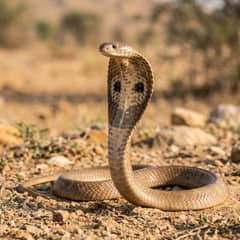
When a hognose feels threatened, it puts on a genuine show: inflating its body, flattening its neck into a cobra-like hood (the source of its "puff adder" nickname), hissing loudly, and making closed-mouth mock strikes that never make contact. If that doesn't work, some hognoses escalate further, playing dead entirely, rolling onto their back, mouth open, tongue out, sometimes releasing musk. Flip one back over mid-performance and it will often roll itself belly-up again, as if it hasn't noticed.
This is all bluff. A hognose putting on this full display is doing everything possible to avoid biting you. Genuine aggression in this species is close to unheard of. What looks dramatic is a small, harmless animal trying to look bigger and scarier than it actually is.
A hognose that decides hissing and hooding isn't working will sometimes commit fully to playing dead, rolling belly up, mouth gaping open, tongue lolling out, and occasionally releasing musk for good measure. Flip it right side up mid-act and it will often flop itself back over onto its back. It's a hardwired sequence, not a choice it's second-guessing, and it's one of the most memorable things about owning this species.
Other beginner-friendly exotics put on their own version of this same bluff. A stressed veiled chameleon puffs up and flashes a dark, gaping-mouth display, and a startled ferret can deliver a quick nip during play, and in both cases the visible drama is worse than the actual risk, much like a hognose's hood-and-hiss. The veiled chameleon handling guide and the ferret handling guide cover those species' versions of the same idea.
The Venom Question
Western hognoses are rear-fanged and mildly venomous. Bites are uncommon and their effects stay local, but a snake that holds on can do more than a pinprick. Weinstein and Keyler's 2009 case report describes a keeper bitten while offering a mouse to a snake that kept its grip for several minutes: marked swelling, bruising and mild cellulitis, no systemic effects, and a full recovery in about five months. The paper reviews several other documented Heterodon bites alongside it. A 2026 survey by Damm and colleagues collected 63 usable bite reports from keepers. Most of those bites came from a hungry snake or while moving one into a feeding container, and swelling was the most common symptom. More than a third of quick bite-and-release cases caused no symptoms at all, while a snake that held on or chewed caused symptoms in about 80% of cases. None caused systemic envenoming. Both papers conclude the species should not be considered dangerous, just handled thoughtfully, especially around feeding time. Rare allergic reactions are possible, as with any bite. None of that puts this species in the category state venomous-reptile laws are written for, and a bite that breaks skin is still worth showing to a doctor.
Actual Bite Risk
Real bites are rare and typically tied to a feeding response, the snake mistaking a hand for food, rather than defense. Wash your hands before handling to remove any prey scent, and leave the snake alone for 48 hours after it eats.
How to Pick One Up
Give a new hognose about two weeks to settle before the first session. After that:
- Signal that this is not food. Lift the snake out of the substrate with a small tool such as a snake hook, then move it onto your hands.
- Come in from the side. A hand or tool dropping from above looks like a predator and sets off the hood-and-hiss.
- Support as much of the body as you can. Let the snake rest along your palms and forearm with most of its length held. Never grab the tail and never restrain the head.
- Let it move. Keep your hands under it as it crawls, moving one hand ahead of the other.
The first sessions last no more than 5 minutes, and they end on a calm snake, so don't put it back mid-display. Build up to 10 minutes, then to as much as half an hour, and never past an hour. Once or twice a week is plenty, and never more than once a day. Skip a session when the snake has eaten in the last 48 hours.
If a feeding-response bite does happen and the snake hangs on, don't pull it off, which can injure both of you. Pour cool water over its face, and it will usually let go on its own.
First-Timer Mistakes
- Panicking at the hood-and-hiss display and handling roughly or dropping the snake, when calm, steady handling actually works better
- Handling within 48 hours of a meal
- Not washing hands beforehand, raising the odds of a feeding-response bite
How They Compare to Other Beginner Snakes
Hognoses get compared most often to corn snakes and ball pythons. Care-wise, they're closer to a corn snake, active and suited to a dry, arid setup, than to a ball python. Corn snakes are generally the most reliable eaters of the three; hognoses and ball pythons can both go through finicky feeding phases. Temperament-wise, a stressed ball python curls into a tight ball, while a stressed hognose puts on the hood-and-hiss show instead, different strategies, similarly harmless.
A hognose that hoods and hisses at every routine interaction is usually reporting something about its enclosure, since those displays are anti-predator responses and not fixed personality, and deep substrate and cover at both ends of the gradient reduce how often the snake feels it needs them, which the hognose enrichment guide works through in detail.
Sources & Further Reading
Last reviewed 9 Sep 2026 · 5 sources
- Weinstein, S.A., & Keyler, D.E. (2009). "Local envenoming by the Western hognose snake (Heterodon nasicus): a case report and review of medically significant Heterodon bites." Toxicon, 54(3), 354-360
- Damm, M., Vilcinskas, A., Kreuels, B., & Lüddecke, T. (2026). "34 reports of snakebite envenoming by the Western Hognose snake (Heterodon nasicus): a retrospective online survey." Frontiers in Amphibian and Reptile Science
- ReptiFiles: Hognose Snake Handling and Body Language
- Furry Critter Network: Western Hognose Behavior
- Wildlife Nomads: Hognose Snake Types and Behavior
Frequently Asked Questions
Why does my hognose snake flatten its neck and hiss at me?
The puff adder act. It inflates, flattens its neck into a cobra-like hood, hisses, and throws closed-mouth mock strikes that never land. A snake going to that much trouble is working hard not to bite you.
Is it true that hognose snakes play dead?
Yes. When hooding and hissing don't work, some hognoses roll belly up with the mouth open and the tongue out, sometimes musking. Flip one back over and it will often roll itself again. It's hardwired, not illness.
Are Western hognose snakes dangerous to handle?
Not dangerous, but not harmless either. Bites are documented and uncommon, mostly from a hungry snake around feeding time, and the effects stay local. A quick bite often does nothing; a snake that holds on or chews can cause marked swelling and bruising. In the best-known case a keeper had swelling, bruising and mild cellulitis, no systemic effects, and a recovery that ran about five months.
What causes a hognose snake to bite?
A feeding response, typically: the snake reads a hand as food. Bites of any kind are rare. Wash prey scent off your hands before handling, and leave the snake alone right after a meal.
How does hognose temperament compare to a corn snake or ball python?
Care-wise it sits nearer the corn snake, active and suited to a dry, arid setup. Temperament shows the difference under stress: a ball python balls up, a hognose puts on the hood-and-hiss show. Both are harmless.
More on the Hognose Snake
Hognose Snake care guide
🐍 How Much Does a Western Hognose Snake Really Cost?
🐍 Common Western Hognose Snake Health Issues
🐍 Western Hognose Snake Enclosure Setup: Dry, Deep, and Built for Burrowing
🐍 Hognose Snake Feeding: Prey Size, Schedules, and the Picky Hatchling
🐍 Hognose Enrichment: They Were Asked, and They Chose

Written by Michael Ryan
Mike keeps two rescued bearded dragons, Dex and Cera, and writes the care guides on BeastlyFacts from his own research and mistakes. He is not a veterinarian.
More about Michael Ryan →