Common Western Hognose Snake Health Issues
On This Page▾

Western hognoses are hardy snakes, and most of what shows up on this list traces back to substrate, humidity, or feeding habits, all fully within an owner's control.
Respiratory Infection
One of the most common issues in this species. Watch for open-mouth breathing, wheezing, drooling or visible mucus, and lethargy. This comes from humidity running too high, temperatures too cool, or poor ventilation, this species genuinely prefers a dry setup, and dampness is more of a problem here than it is for many other snakes. Always see a vet, this needs antibiotics and won't resolve on its own.
A digital thermometer and hygrometer is the single best tool for catching this early, since it lets you confirm the enclosure is running dry and warm rather than guessing.
Impaction
Hognoses are enthusiastic, somewhat messy eaters, and they're prone to swallowing substrate along with their food. Watch for a failure to pass waste, bloating, and lethargy. Feeding in a separate container away from the loose, diggable substrate this species needs, using a set of feeding tongs to keep prey scent off your hands in the process, is the single most effective prevention, worth doing as standard practice rather than only after a problem shows up. There is no fixed number of days to wait: how soon a snake passes waste depends on meal size and temperature, so learn your snake's usual gap after a meal. A missed stool past that gap is the early sign, since an impacted snake usually stops passing waste before it stops eating. A missed stool together with bloating, lethargy, refused food or regurgitation needs a reptile vet, not more waiting, and severe cases can require surgery.
Obesity and Fatty Liver
A quieter but genuinely serious risk in captivity, where snakes get less activity than they would in the wild and are sometimes fed too much or too often for their enclosure size. This is a real contributor to shortened lifespans in this species. It's manageable at home by matching feeding frequency and portion size to your snake's actual activity level and adult size, rather than defaulting to a schedule that suited it as a fast-growing juvenile.
Scale Rot (Blister Disease)
Caused by damp, dirty substrate, discolored or blistered belly scales are the sign to watch for. Prevention is straightforward: keep the substrate dry and clean, which lines up directly with what this species needs anyway. See a vet if it progresses beyond mild discoloration.
Mites and Internal Parasites
Both are treatable. Periodic fecal checks, especially for a newly acquired snake, catch parasites before they become a bigger issue. Isolating a new arrival for 3 to 6 months keeps mites off the animals already in the room, which is the point of a reptile quarantine period.
Regurgitation
A hognose that brings up a meal undigested or half digested is telling you something went wrong in the days around feeding. The usual triggers are handling within 48 hours of a meal, an enclosure running too cool, stress, a meal that was too big, dehydration, a dirty enclosure, intestinal parasites, contaminated prey, or sharing the enclosure with another snake.
What to do next is mostly nothing. Leave the snake completely alone, with no handling and no feeding, and check the temperatures. After two weeks of steady improvement, offer a small meal, a quarter to half the usual size, then rest it again until the next feeding. A snake that looks worse after regurgitating, or that brings up that small meal too, goes to a reptile vet.
Shedding Problems
Young hognoses shed most often. A shed is coming when the colors fade, the eyes turn cloudy blue, and the snake eats less, hides more and turns more defensive, so leave it alone for that stretch. In a dry setup like this one, a snake that is struggling to shed usually needs more moisture in one spot while the rest of the enclosure stays dry. Mix water into the substrate in the humid hide to help it start or finish. Once the shed is off, check that both eye caps and the tail tip came away with it. A retained eye cap or tail tip that extra moisture does not loosen needs a vet, and the general method for stuck shed on any reptile applies here.
Weigh It Weekly
A hognose that is getting sick often shows it on the scale before it shows it anywhere else. Weigh once a week on a gram scale and keep a simple record of weight, meals, sheds and behavior. A sudden drop is the first thing to show a vet.
Two of the most common problems on this list, respiratory infection and scale rot, both trace back to the exact same root cause: humidity or dampness running too high. That's really the throughline of hognose care. This species wants dry, not damp, and getting that one variable right prevents most of what shows up on a vet's exam table.
The Husbandry Pattern Worth Remembering
Humidity or dampness that runs too high causes both respiratory infection and scale rot, two of the more common problems on this list. Feeding on loose substrate causes impaction, easily avoided by feeding in a separate container. And overfeeding relative to activity level contributes to obesity over time. Get the dry setup and feeding habits right, and this is a genuinely low-maintenance snake to keep healthy.
Sources & Further Reading
Last reviewed 14 Jul 2026 · 2 sources
- Chicago Exotics Animal Hospital: reptile impaction prevention guidance
- ReptiFiles: Western Hognose Snake Care; Hognose Snake Diseases and General Health; Regurgitation in Snakes; Hognose Snake Shedding
- Divers, S.J. (1996). Snake constipation and impaction, Proceedings of the Association of Reptilian and Amphibian Veterinarians
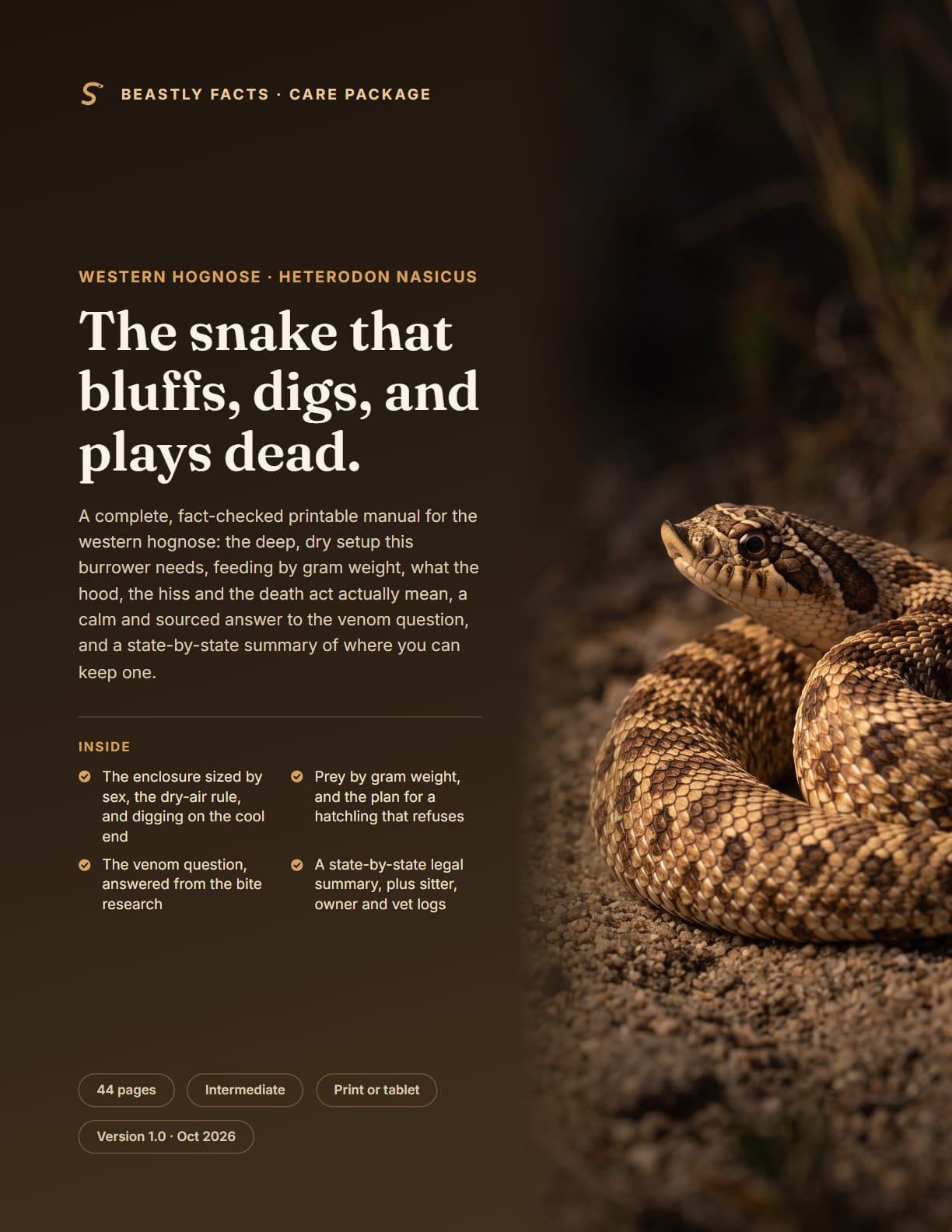
A sick hognose snake is no time to be scrolling. The Hognose Snake Care Package puts these red flags, a symptom quick reference and an emergency card on paper, in a 47-page PDF, $8.99.
Frequently Asked Questions
What are the signs of a respiratory infection in a hognose snake?
Open-mouth breathing, wheezing, drooling or visible mucus, and lethargy. It comes from humidity too high, temperatures too cool, or poor ventilation, since this species prefers a dry setup and dampness is more of a problem here than for many other snakes. Always see a vet: it needs antibiotics and won't resolve on its own.
Why are hognose snakes prone to impaction?
Hognoses are enthusiastic, somewhat messy eaters, and they're prone to swallowing substrate along with their food. Feeding in a separate container away from the loose substrate is the single most effective prevention. Learn your snake's usual gap between a meal and its stool. A missed stool past that gap, with bloating, lethargy or refused food, needs a vet, not more waiting.
Can a hognose snake become obese?
Yes. In captivity they get less activity than in the wild, and they're sometimes fed too much or too often for their enclosure size, and it's a real contributor to shortened lifespans in this species. Match feeding frequency and portion size to your snake's activity level and adult size, not the schedule that suited it as a fast-growing juvenile.
What is scale rot and what causes it in hognose snakes?
Also called blister disease. Damp, dirty substrate causes it, and the sign is discolored or blistered belly scales. Keeping the substrate dry and clean prevents it, which is what this species wants anyway. See a vet if it moves past mild discoloration.
Do hognose snakes get mites or internal parasites?
Both happen, and both are treatable. Run periodic fecal checks, especially on a newly acquired snake, to catch parasites early.
More on the Hognose Snake
Hognose Snake care guide
🐍 How Much Does a Western Hognose Snake Really Cost?
🐍 How to Handle a Western Hognose Snake (And Why the Drama Is Mostly Bluff)
🐍 Western Hognose Snake Enclosure Setup: Dry, Deep, and Built for Burrowing
🐍 Hognose Snake Feeding: Prey Size, Schedules, and the Picky Hatchling
🐍 Hognose Enrichment: They Were Asked, and They Chose
Recommended Gear
As an Amazon Associate I earn from qualifying purchases through the links above, at no extra cost to you.

Written by Michael Ryan
Mike keeps two rescued bearded dragons, Dex and Cera, and writes the care guides on BeastlyFacts from his own research and mistakes. He is not a veterinarian.
More about Michael Ryan →