How to Handle a Ball Python: Timing Matters More Than Technique
On This Page▾

Ball pythons have a reputation for being defensive as babies and mellow as adults, and that's generally accurate. Most of what makes handling go well isn't about grip or technique. It's about timing.
Give It Time to Settle First
Don't handle a newly acquired ball python for the first one to two weeks, and don't start until it's eating regularly on a normal schedule. A snake that's still adjusting to a new enclosure and hasn't established a feeding rhythm is not a snake that's ready to be picked up yet.
Juveniles are often more defensive and high-strung than adults. This is close to universal, and it almost always settles down as the snake matures. Patience early pays off later.
How Often
Once your snake is settled, 2 to 3 sessions a week is a reasonable baseline, up to 3 to 5 for a snake that handles well, keeping each session to 15 to 30 minutes at most. Overhandling causes real stress in this species and is a common cause of feeding refusal, so more isn't automatically better here.
Two Timing Rules: Feeding and Shed
These aren't guidelines. They're the two things most likely to cause a problem if ignored:
Wait 48 to 72 hours after feeding before handling. Handling too soon after a meal is one of the most common causes of regurgitation in pet snakes, and regurgitation is hard on a snake's digestive system and can take time to recover from.
Don't handle during shed. You'll know your snake is heading into a shed cycle when its eyes turn cloudy or blue, this means it's functionally blind for a few days. The rest of the cycle runs on a predictable timetable, so the wait has a rough end date you can plan around. A snake that can't see clearly is more defensive and more likely to bite out of startlement, not aggression. Wait until the shed is complete and the eyes are clear again.
The Correct Way to Hold One
Approach from the side, never straight down from above, which reads as predatory. Support the snake's full body weight with both hands or along your forearms, lifting from the middle of the body rather than near the head or tail. Let it move across your hands at its own pace with gentle, steady control instead of restraining it.
Stay seated for the early sessions, and with any snake that is still nervous. A seated handler keeps the snake low, over a lap, a sofa or a bed, so a sudden squirm ends on something soft. Standing over a hard floor is where a drop does damage.
Signs It's Stressed or Wants to Be Put Back
- Balling up tightly with its head tucked away, this is a fear response, not aggression
- Rapid or heavy breathing
- Hiding its head against your hand or arm
- Trying to actively move away or escape
- Musking (see below)
- Refusing its next meal
Balling up defensively, tucking the head into the center of a tight coil, is exactly where the name "ball python" comes from. It's the same behavior whether the trigger is genuine fear in the wild or mild stress on your couch, so treat it as a request for space either way.
A Few Species-Specific Things to Know
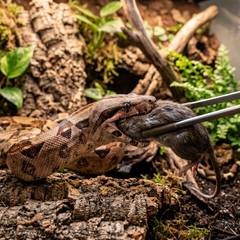
Biting is rare, and it's usually not aggression. When it happens, it's typically a feeding response (the snake smells food on your hands) or a startled defensive reaction, not a temperament issue. Bites are minor, generally just a small skin break, and are treated with soap and water. Use tongs when feeding, and avoid handling right after you've handled rodents.
Musking is a clear stress signal. If your ball python releases a foul-smelling secretion from its cloaca, it feels seriously threatened. End the session.
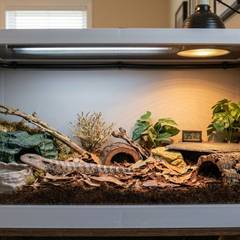
They're skilled escape artists. Always use a secure, locking, front-opening enclosure, and check the lock after every session.
If It Gets Out
Stay calm about the timeline: a snake can stay alive loose in a house for a long while, even if the search takes a week. The search has an order to it.
- Secure other pets. Cats and dogs get shut away, especially overnight, when the snake is most likely to move.
- Start at the enclosure. Look behind, under and around it first, then outward along the walls and baseboards, since snakes travel along edges instead of across open floor.
- Clear one room at a time. When a room is searched, close the door and push a towel into the gap underneath so the snake cannot move into it.
- Check warm, tight places. Inside and under couch cushions, beds and box springs, bookcases and dressers, and behind and under the fridge, stove and dishwasher. Snakes have been found around oven heating elements, so check the oven before turning it on.
- Search at night with a flashlight. That is when a loose snake is most likely to be moving.
- Leave the enclosure open with its heat on. Some snakes return on their own. A shoebox with a snake-sized hole and a shipping heat pack inside, with the room kept around 68°F, gives it a warm hide to choose. Crumpled plastic bags along the baseboards rustle when a snake crosses them.
Once it is back, check it over before anything else. A snake that has been loose for days may be dehydrated, hungry or injured. Look for cuts and stuck debris, offer water, feed it once it has settled if it missed a meal, and watch for wheezing or mouth discharge over the following weeks, the signs of a respiratory infection. See a reptile vet if anything looks wrong. Then find the gap it used and close it before the snake goes back in.
Ball pythons also carry Salmonella like most reptiles, so wash your hands before and after handling, and supervise children around the snake at all times. Where the enclosure gets cleaned matters as much as the hand washing does. The species away from its care sheet is in 10 Surprising Ball Python Facts.
Sources & Further Reading
Last reviewed 7 Jul 2026 · 5 sources
- Reptile Direct: Ball Python Care
- ReptiFiles: How to Find a Lost Snake
- PetMD: Snake Handling and How To Pick Up a Snake Safely (reviewed by Melissa Witherell, DVM)
- North Hampton Animal Hospital: What to Do if Your Snake Escapes
- Wisconsin Herpetological Association: How to Find an Escaped Snake (or Other Reptile)
Frequently Asked Questions
How long should I wait before handling a new ball python?
One to two weeks, and don't start until it's eating regularly on a normal schedule. A snake still adjusting to a new enclosure and without an established feeding rhythm isn't ready to be picked up yet.
How long should I wait to handle after feeding?
48 to 72 hours. Picking a snake up on a full stomach is one of the most common ways keepers cause a regurgitation, and that is hard on the digestive system and slow to recover from.
Can I handle my ball python while it's shedding?
No. Cloudy or blue eyes mean a shed is starting and the snake is functionally blind for a few days. A snake that can't see is quicker to bite, so wait for the shed to finish and the eyes to clear.
Is ball python biting usually aggression?
Rarely. Most bites are either a feeding response to the smell of rodent on your hands or a startle reflex, and the wound is usually a small skin break that soap and water handles. Feed with tongs and wash up first.
More on the Ball Python

Written by Michael Ryan
Mike keeps two rescued bearded dragons, Dex and Cera, and writes the care guides on BeastlyFacts from his own research and mistakes. He is not a veterinarian.
More about Michael Ryan →