How to Handle a Veiled Chameleon (Carefully, and Not Often)
On This Page▾

Veiled chameleons are solitary, territorial display animals, and one of the less handleable pet reptiles. Understanding that upfront saves a lot of frustration for both you and the chameleon.
Why They Don't Tolerate Handling Well
Exotic vets are direct about this: veiled chameleons are solitary and territorial, and they generally don't tolerate handling well, sudden changes to their environment cause real stress. This isn't a species that warms up to frequent handling the way a bearded dragon or blue-tongued skink might. Many are "cage aggressive," meaning they'll display defensively when you reach into their enclosure even if they're calmer once actually out.
Reading the Defensive Signals
Hissing, gaping (mouth held open), puffing out the throat, inflating or flattening the body, and darkening color are all stress and defense signals, and biting happens when a chameleon feels genuinely provoked. A darkened, gaping chameleon isn't necessarily "aggressive" in the way that word implies, it's frightened, and treating the display as a warning to back off, not a challenge, gets better results.
If a bite does break the skin, press on it to stop the bleeding, check that no tooth is left in the wound, and wash it under warm running water for five minutes. Redness, warmth, swelling, pus or fever over the next few days, or a tetanus shot more than five years old, is a reason to see a doctor.
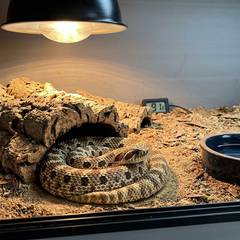
Veiled chameleons aren't the only animal in this lineup with a bark worse than its bite. Ferrets nip when startled and hognose snakes will flatten their necks into a cobra-like hood and hiss dramatically, and in all three species that visible drama isn't the risk to worry about. A ferret and a hognose snake each put on a display that reads as aggression and means something closer to fright.
Getting It Right When Handling Is Necessary
Approach slowly from below with your palm open and let the chameleon choose to climb onto your hand rather than grabbing from above, which reads as a predator attack. Never grab a chameleon out of its enclosure. Once it is on you, support its whole body and let it walk from one hand to the other instead of holding it still. Keep sessions infrequent, since chronic stress from over-handling can contribute to real illness in this species.
A Taming Ladder That Works With the Species
A new chameleon gets 1 to 2 weeks alone to settle before any of this starts. After that, each step waits until the one before it is routine:
- Food from tongs. Offer feeders from feeding tongs until the chameleon takes them readily when you are standing at the enclosure.
- Food from your hand. Move the same offer to your fingers or open palm.
- Come to you. Hold the food a little farther away so the chameleon has to walk toward it, still inside the enclosure.
- Step out onto something. With the door open, set an artificial tree or a branch in front of the enclosure and let the chameleon walk out onto it on its own.
- Step onto you. Only then offer a hand or arm as the next branch.
Tie each session to something the chameleon wants: a feeder insect, a climb in a plant by a sunny window, or supervised time outside in warm weather. Handling is stressful for this species, and the reward is what makes it tolerable. A chameleon that stays at an early step is still a normal display animal.
The tarsal spur settles the sex question at hatching. A small bump above the heel on each hind foot means male, and no spur means a female with a different lifespan and vet picture ahead.
First-Timer Mistakes
- Grabbing from above instead of offering a hand from below or the side
- Handling frequently because a chameleon looks interesting to hold, when it should be reserved for genuine need
- Misreading a stressed, gaping animal as angry when it's scared
- Missing early illness signs: chameleons mask sickness well, so subtle changes in color, grip, or appetite matter
- Reaching in to grab a new chameleon before it has had its 1 to 2 weeks to settle
Telling Males From Females
Check the back of the hind feet. Males have a tarsal spur, a small raised bump just above the heel, and it's visible from the day they hatch, while females don't have one. By around 4 to 5 months old the difference is obvious at a glance too, males pull ahead in size, grow a taller and more ornately shaped casque, and develop noticeably brighter coloration than females. This matters for more than curiosity: a female's lifespan and vet-cost picture look markedly different from a male's.
How They Compare to Other Chameleons
Veiled chameleons are widely considered more territorial and defensive than panther or Jackson's chameleons, both of which keepers describe as somewhat more tolerant of occasional handling. That said, veileds are also one of the hardiest, most beginner-friendly chameleon species on the husbandry side, the tradeoff is a display-only relationship, and not a lack of overall suitability for a first-time chameleon keeper.
Sources & Further Reading
Frequently Asked Questions
Do veiled chameleons like to be handled?
Generally, no. Veiled chameleons are solitary and territorial, and exotic vets are direct that they don't tolerate handling well, sudden changes to their environment cause real stress. Many are cage aggressive, displaying defensively when you reach into the enclosure even if they calm down once they are out.
What do hissing and gaping mean?
Fear, not anger. A hiss, a gaping mouth, an inflated or flattened body, and darkening color are defensive signals from a frightened animal. Read the display as a warning to back off and the session ends better.
What's the correct way to handle a veiled chameleon?
Palm open, from below, and let the chameleon decide to step on. Reaching down from above reads as a predator attack. Hand-feeding builds tolerance over time, and sessions stay infrequent either way.
Are veiled chameleons more defensive than other pet chameleons?
Yes. Veiled chameleons are widely considered more territorial and defensive than panther or Jackson's chameleons, which keepers describe as somewhat more tolerant of occasional handling. Veileds make up for it by being one of the hardiest, most beginner-friendly chameleon species on the husbandry side.
What's the most common first-timer mistake?
Grabbing from above instead of offering a hand from below or the side, handling frequently just because the chameleon looks interesting to hold, and misreading a stressed, gaping animal as angry rather than scared. Chameleons are prey animals that mask sickness well, so subtle changes matter.
How can you tell if a veiled chameleon is male or female?
Check the back of the hind feet. Males have a tarsal spur, a small raised bump just above the heel, visible from the day they hatch, and females don't have one. By around 4 to 5 months old, males also pull ahead in size and grow a taller, more ornate casque, with noticeably brighter coloration than females.
More on the Veiled Chameleon
Veiled Chameleon care guide
🦎 How Much Does a Veiled Chameleon Really Cost?
🦎 Common Veiled Chameleon Health Issues and What Causes Them
🦎 Veiled Chameleon Enclosure Setup: The Dripper Isn't Optional
🦎 Veiled Chameleon Feeding: Schedule, Diet, and the Supplement Schedule That Actually Matters
🦎 Veiled Chameleon Enrichment: The First Two Months Change the Animal
Written by Michael Ryan
Mike keeps two rescued bearded dragons, Dex and Cera, and writes the care guides on BeastlyFacts from his own research and mistakes. He is not a veterinarian.
More about Michael Ryan →