Canary Cage Setup: Width Matters More Than Height
On This Page▾

Canary cage setup is simple, and the one detail that trips up first-time owners is choosing a tall, narrow parrot-style cage when this species needs the opposite shape entirely.
Cage Size and Shape
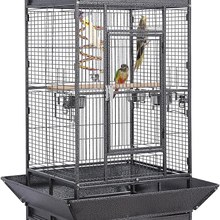
24 inches long by 18 inches wide by 18 inches tall is a reasonable minimum, but the shape matters more than the raw dimensions. Canaries fly horizontally rather than climbing the way parrots do, so prioritize width over height, a genuine flight cage, wide and long, suits this species far better than a tall, narrow cage built with a climbing bird in mind.
Bar Spacing
Half an inch or less, this prevents both head entrapment and escape.
Temperature
Normal household temperature, 65 to 80°F, works well, with 65 to 75°F frequently cited as ideal. Keep the cage away from drafts, air conditioning vents, and radiators. No supplemental heat is needed indoors.
Humidity
No special humidity requirement for this species. Provide a shallow bird bath, canaries genuinely enjoy bathing and it supports healthy feather condition.

Substrate and Cage Lining
A paper liner on the cage floor, spot-cleaned daily and fully changed weekly, is the standard, low-maintenance approach. Avoid galvanized metal or lead-painted cage components entirely, powder-coated steel is the safe standard.
Lighting
Bright, indirect natural or artificial light with a consistent day and night cycle supports normal behavior and, in males, healthy singing. Avoid placing the cage in direct sun where it could overheat.
The Non-Obvious Requirement: Genuine Air Quality Sensitivity
This is worth taking seriously. Canaries are extremely sensitive to airborne toxins, non-stick cookware fumes, aerosols, and smoke can all be genuinely dangerous, keep the cage well away from the kitchen and any source of fumes or sprays. Provide perches of varied diameter and texture too, this supports foot health and helps prevent pressure-related foot problems over time.

If you're comparing setup demands across a broader batch of beginner pets, see how the canary's cage needs stack up against a Jackson's chameleon, a giant millipede, and a Corydoras catfish in Jackson's Chameleon, Canary, Giant Millipede & Corydoras Catfish compared.
❓ Frequently Asked Questions
What size and shape cage does a canary need?
24 by 18 by 18 inches is a reasonable minimum, but the shape counts for more than the dimensions. Canaries fly horizontally rather than climbing, so a wide, long flight cage suits them far better than a tall, narrow one built for a climbing bird.
How wide can the bar spacing be on a canary cage?
Half an inch or less, which blocks both escape and head entrapment.
What temperature does a canary need?
Room temperature, 65 to 80°F, with 65 to 75°F often cited as ideal. Nothing supplemental is needed indoors, though the cage should sit away from drafts, AC vents, and radiators.
Do canaries need a bird bath?
There's no special humidity requirement for this species, but a shallow bird bath is worth providing. Canaries enjoy bathing and it supports healthy feather condition.
What should line the bottom of a canary cage?
A paper liner, spot-cleaned daily and swapped out weekly. Skip galvanized metal and lead-painted components; powder-coated steel is the safe standard.
Why does air quality matter so much for canaries?
Canaries are extremely sensitive to airborne toxins. Fumes from non-stick cookware, aerosols, and smoke can all be dangerous, so keep the cage well away from the kitchen and from any sprays.
🛒 Recommended Gear
As an Amazon Associate, we earn from qualifying purchases through the links above - at no extra cost to you.

Written by Michael Ryan
Mike keeps two rescued bearded dragons, Dex and Cera, and writes the care guides on BeastlyFacts from his own research and mistakes. He is not a veterinarian.
More about Michael Ryan →Comments
No comments yet - be the first!