Canary Feeding: A Teaspoon or Two a Day, Mostly Pellets, and the Seed Diet That Runs Short
On This Page▾

A canary is a seed eater by nature and a small one, and both facts shape its feeding. The seed it wants is not a complete diet, and the bird is small enough that a day without food is a crisis. Here is what goes in the dish, how much, what changes through the molt, and how to read a canary that stops.
How Much, and How Often
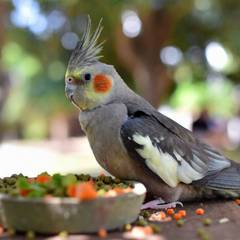
Most canaries do well on one to two teaspoons per bird per day of a pelleted diet combined with a small amount of seed, put out fresh each morning, with produce alongside. Daily intake runs up to about 30 percent of body weight, which for a 12 to 30 gram bird is a small, measured amount rather than a permanently heaped dish. Fresh water is always available, changed daily.
| Component | Share of the diet | Notes |
|---|---|---|
| Pellets formulated for canaries | Most of it: at least 60 to 70 percent, up to 75 to 80 | Nutritionally complete; the seed bird moves over gradually |
| Seed | A small part, never the whole | Fat for condition, short on nearly everything else |
| Fresh vegetables, greens and fruit | About 20 to 25 percent | Chopped small, uneaten pieces out within the day |
| Egg food, cooked egg, or insects | Two or three times a week through molt and breeding | The protein a growing feather needs |
| Cuttlebone | Always in the cage | Calcium and trace minerals |
The pellet share is where the veterinary figures split: one gives at least 60 to 70 percent, another 75 to 80. Either way it is most of the diet, and the practical target is about three quarters. A bird on that much pellet generally needs no vitamin supplement at all.
What Canaries Eat
Pellets, as the base. A nutritionally complete pellet formulated for canaries is the only food in the cage that is balanced on its own. Everything else is a supplement to it.
Seed, as a small part. Seeds should be a small part of the diet and never its only component. An all-seed diet is deficient in vitamins, minerals and protein, and the bird manual is specific about which: all-seed diets are deficient in vitamin A, seed-based diets carry a calcium-to-phosphorus imbalance and amino acid deficiencies, and sunflower seed in particular is low in calcium, short on essential amino acids and high in fat. Seed does carry the fat a bird uses for condition and for the hormone changes of the breeding season, which is why it stays in the dish in small amounts rather than leaving it. A seed-fed canary moves onto pellets by gradual substitution, with the bird weighed through the change, never by taking the seed away.
Produce, about a quarter. Bell peppers, leafy greens, carrots, squash, sweet potato, pumpkin, green beans and small amounts of fruit, washed, chopped into tiny pieces, and removed within the day, since one sheet gives 10 hours and the other 24 before it spoils.
Egg food through the molt. A molting canary is building a whole coat of feathers from protein, and a breeding pair is doing the same with eggs. A commercial egg food, small amounts of cooked egg, or live or freeze-dried insects such as crickets, mealworms and waxworms go in two or three times a week through those periods, and matter most for a bird that is not on a full pellet diet. The feather loss and molt guide covers what a normal molt looks like against the plucking and disease that mimic it.
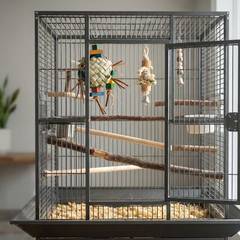
Cuttlebone, and no grit. A cuttlebone in the cage covers calcium and trace minerals. Grit and gravel should not be offered: a canary removes the hull from a seed before eating it, so it has nothing to grind, and grit it swallows anyway can pack the gut.
Weigh the bird. Obesity in a pet bird is defined as 20 percent over ideal weight, and an obese bird is prone to fatty liver disease and heart disease. A canary on a seed-heavy diet gets there without looking fat under its feathers, and a gram scale is the only way to see it.
Foods to Avoid
Avocado, which is toxic to birds. Chocolate, caffeine and alcohol, all of which can kill a bird this size. Fruit pits and seeds from apples, cherries and the like. Cheese, cookies, candy and processed food. Grit. And an all-seed diet, which is not a poison but is the deficiency behind most of what an avian vet sees in a canary.
Why Canaries Stop Eating
The molt. A molting canary is tired, quiet and sometimes off its food, and the answer is more protein in the dish, not a reduced diet. A hard molt in a bird on seed alone is the vitamin A deficiency showing.
A new food. A canary raised on seed may not recognize a pellet as food and will go hungry beside a full dish. That is the reason every conversion is gradual and weighed.
It is sick. A canary that sits fluffed and low, sleeps by day, or breathes with its tail bobbing has stopped eating because it is ill, and the canary health guide has the same-day signs. Birds hide illness until it is advanced, and a canary that is visibly unwell has been unwell for a while.
It is stressed. A new cage, a new room, a cat, a draft, or a bird that cannot sleep because the lights stay on. The photoperiod and sleep guide covers the light schedule that governs a canary's hormones and appetite.
It is hot. A canary pants and stops eating in a room over about 85°F, and moves the cage before anything else.
When to Worry
Within the day. A canary weighs less than an ounce and burns through its reserve in hours, so a bird that has not eaten since morning, or that is sitting fluffed and still beside its dish, sees an avian vet the same day rather than being watched overnight. The bird emergency plan guide covers keeping a small bird warm and fed on the way.
A teaspoon or two of mostly pellets, a little seed, a chopped vegetable, a cuttlebone, and egg food when the feathers are coming in. It is a small diet for a small bird, and the discipline is in the pellet share.
Sources & Further Reading
❓ Frequently Asked Questions
How much should a canary eat a day?
About one to two teaspoons per bird per day of a pelleted diet with a small amount of seed, plus a little fresh produce. For a bird that weighs 12 to 30 grams, that is a measured amount put out each morning, not a permanently heaped dish.
Should a canary eat seed or pellets?
Mostly pellets. The veterinary figures run from at least 60 to 70 percent pellets up to 75 to 80, with seed a small part and never the whole diet. An all-seed diet is short on vitamins, minerals, protein and calcium, and vitamin A deficiency is the disease that follows it. Move a seed bird over gradually, never by pulling the seed.
Does a canary need grit?
No. Canaries hull their seeds before eating them, so they do not need grit to grind them, and grit should not be offered. A cuttlebone is the mineral a canary does need, for calcium and trace minerals.
Why has my canary stopped eating?
A canary that stops eating is an emergency within a day, because a bird this small has no reserve. The molt costs appetite and needs extra protein rather than less food, a new pellet may not be recognized as food, and a fluffed, quiet bird sitting low is sick. Any canary off food for a day sees an avian vet.
Written by Michael Ryan
Mike keeps two rescued bearded dragons, Dex and Cera, and writes the care guides on BeastlyFacts from his own research and mistakes. He is not a veterinarian.
More about Michael Ryan →Comments
No comments yet - be the first!