Common Cockatoo Health Issues and What Causes Them
On This Page▾

Cockatoo health problems split fairly evenly between physical and behavioral, and the behavioral issue is common enough to belong right alongside the medical ones.
Feather-Destructive Behavior (Feather Plucking)
Particularly prevalent in this species specifically, more so than in most other parrots. Watch for over-preening to bare skin, and in serious cases, self-mutilation. Causes include stress, boredom, loneliness, separation anxiety, and poor early socialization, though medical triggers like giardia, PBFD, or a bacterial or yeast infection of the skin can also cause feather loss and need to be ruled out first.
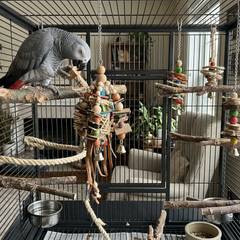
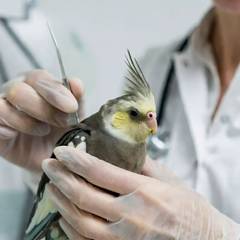
Always start with an avian vet visit to rule out a medical cause before assuming it's purely behavioral. Once medical causes are excluded, behavioral cases are managed through consistent enrichment, routine, and addressing the underlying social and emotional needs, not just treating the symptom. A steady rotation of destructible foraging toys is part of that enrichment picture, not a luxury add-on. The psychology behind cockatoo screaming and feather plucking is what makes the behavioral cases so hard to shift.
Psittacine Beak and Feather Disease (PBFD)
A circovirus first described in Australian cockatoos, and white cockatoo species specifically are noted for beak malformations from this disease. Watch for abnormal or clubbed feathers, loss of the normal powder-down coating (a glossy-looking beak is a sign), and beak deformity.
This is incurable, often fatal, and highly contagious. It strikes mainly young birds, with few clinical cases past three years old. Screening by PCR has greatly cut how often the virus turns up in captive-bred cockatoos, which is the case for testing every new bird before purchase and quarantining it before it meets an established one.
A shiny beak is a warning sign in a cockatoo. A healthy bird keeps its beak dusted with powder down, and a beak that has gone glossy has lost the coating that PBFD takes away.
Lipomas and Obesity-Related Fatty Tumors
Common in overweight cockatoos, tied directly to high-fat, seed-heavy diets. Managed through vet guidance and genuine diet correction, a diet built around formulated pellets like Harrison's rather than seeds goes a long way toward prevention.
Rose-breasted cockatoos (galahs) are the species most prone to lipomas, because they tend to become obese.
Hepatic Lipidosis (Fatty Liver Disease)
Also from seed-heavy overfeeding. Watch for an enlarged liver and changes in beak or nail keratin. Needs veterinary management.
Cloacal Prolapse
In a cloacal prolapse, the inner tissue of the cloaca pushes out through the vent, sometimes exposing the intestine or the oviduct. It happens frequently in cockatoos, most often in sexually mature females, and mature umbrella and Moluccan cockatoos are the classic cases. Hand-raised birds with delayed weaning are more prone, and so are birds that treat one person as a mate or parent: they hold droppings for long stretches, strain while begging for food, and the misplaced sexual behavior stretches the vent. Successful treatment depends on catching it early. It combines surgery with behavior change, which means no stroking the bird's back, no hand-feeding and no cuddling it against the body, so it stops reading the owner as a partner. Those same hormonal triggers drive chronic egg laying in smaller parrots.
Swallowed Objects
Cockatoos chew and swallow things that are not food, wires, furniture and paint in particular. Old paint is one of the classic routes to lead poisoning in a pet bird, one of the household hazards worth clearing from any room a cockatoo plays in. Close supervision whenever the bird is out of its cage is the prevention.
Screaming and Behavioral Stress Disorders
Not a disease in the traditional sense, but a leading welfare concern and the top reason cockatoos get surrendered. Worth noting: a sudden change in a previously stable bird's vocal or behavioral pattern can also signal underlying pain or illness, so a real change in behavior is always worth a vet visit to rule out. Cockatoos in particular often regress to juvenile behavior, begging and acting like a baby again, and that can be a very early sign of serious illness.
The Husbandry Pattern Worth Remembering
A seed-heavy diet directly causes both the lipomas and fatty liver disease on this list. Insufficient social interaction and enrichment drive the feather-destructive behavior that's especially common in this species. And skipping quarantine for a new bird is how PBFD spreads. Diet, genuine daily engagement, and careful introductions do most of the preventive work here.
Sources & Further Reading
Last reviewed 26 Jul 2026 · 3 sources
- VCA Animal Hospitals: Psittacine Beak and Feather Disease in Pet Birds; Common Conditions of Pet Birds
- Merck Veterinary Manual: Viral Diseases of Pet Birds
- PetMD: Cockatoo Bird Species, Lifespan, and Care; Vent Prolapse in Birds
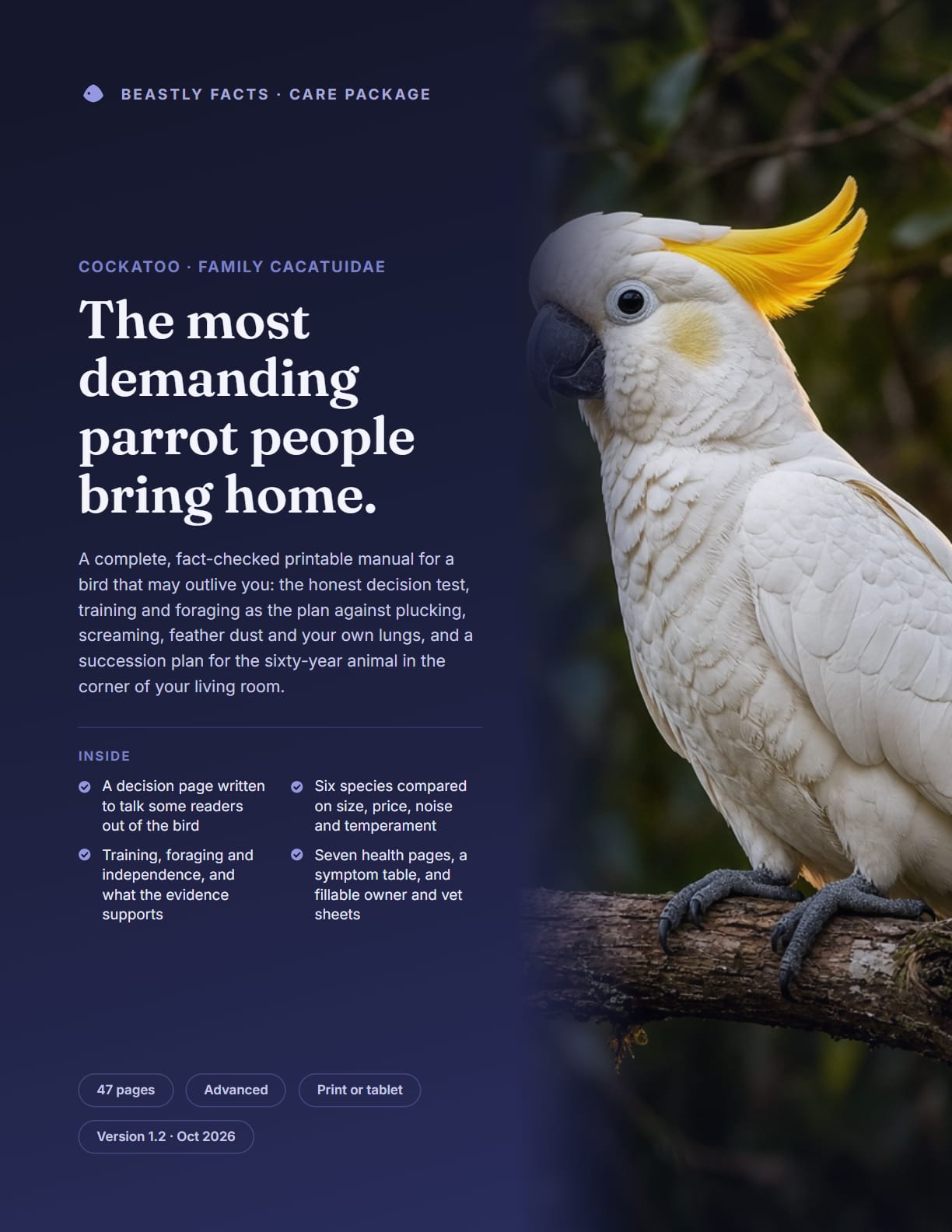
A sick cockatoo is no time to be scrolling. The Cockatoo Care Package puts these red flags, a symptom quick reference and an emergency card on paper, in a 49-page PDF, $8.99.
Frequently Asked Questions
What causes feather-destructive behavior in cockatoos?
Stress, boredom, loneliness, separation anxiety, and poor early socialization are the main behavioral causes, and this issue is particularly prevalent in cockatoos specifically, more so than in most other parrots. Medical triggers like giardia or PBFD can also cause plucking, so a vet visit to rule those out always comes first.
What is psittacine beak and feather disease (PBFD)?
A circovirus first described in Australian cockatoos. White cockatoo species specifically are noted for beak malformations from this disease. It's incurable, often fatal, and highly contagious, confirmed through PCR testing at a vet.
What are the warning signs of PBFD?
Feathers that come in abnormal or clubbed, a beak that looks glossy because the normal powder-down coating is gone, and beak deformity. It spreads easily, so quarantine any new bird before it meets an established one.
Are lipomas and fatty liver disease related in cockatoos?
Yes, both are tied to the same root cause, a high-fat, seed-heavy diet. Lipomas are common in overweight cockatoos, and hepatic lipidosis (fatty liver disease) comes from the same seed-heavy overfeeding pattern, watch for an enlarged liver and changes in beak or nail keratin.
Is screaming always just a behavioral issue in cockatoos?
Usually. It's a leading welfare concern and the top reason cockatoos get surrendered. But when a stable bird's vocal or behavioral pattern changes suddenly, that can signal pain or illness underneath, so a real change in behavior is always worth a vet visit.
What's the single biggest preventable cause of cockatoo health problems?
A seed-heavy diet, which drives both the lipomas and the fatty liver disease here. Too little social interaction and enrichment sit behind the feather-destructive behavior, and a new bird brought in without quarantine is how PBFD spreads.
More on the Cockatoo
Cockatoo care guide
🦜 How Much Does a Cockatoo Really Cost?
🦜 How to Handle a Cockatoo (And Why They're So Often Surrendered)
🦜 Cockatoo Cage Setup: Size, Material, and Daily Enrichment That Actually Matters
🦜 Cockatoo Feeding: Schedule, Diet, and the Ratio Worth Memorizing
🦜 10 Surprising Cockatoo Facts
Recommended Gear
As an Amazon Associate I earn from qualifying purchases through the links above, at no extra cost to you.

Written by Michael Ryan
Mike has looked after a neighbor’s cockatoo on and off for years.
Mike keeps two rescued bearded dragons, Dex and Cera, and writes the care guides on BeastlyFacts from his own research and mistakes. He is not a veterinarian.
More about Michael Ryan →