Why Is My Budgie's Cere Changing Color? What It Actually Means
On This Page▾

The cere is easy to overlook. It is a small fleshy patch above the beak where the nostrils sit, but it is one of the most useful pieces of information a budgie keeper has, both for figuring out sex and for noticing when something's off.
Using Cere Color to Sex a Budgie
Cere color is one of the more reliable simple sexing methods available in the bird world. Adult males typically have a blue to purple-blue cere. Adult females typically have a tan, brown, or pale white cere that can thicken and roughen during breeding condition. Juveniles of both sexes usually show a pink or pale purple cere that hasn't yet settled into its adult color, which is why sexing a very young budgie by cere alone isn't reliable. The adult color usually settles between 6 and 12 months of age, and a bright, deep, true blue is the mark of a mature male.
Cere-based sexing works well enough in standard-colored budgies that it's one of the few visual sexing methods experienced keepers trust without needing DNA testing or surgical sexing, which many other parrot species require.
The Color Mutations That Break the Rule
The blue-for-males rule holds for standard blue and standard gray budgies: a true blue cere for a male, white to brown for a female. It does not hold across every color variety. In the pastel and solid-color mutations the cere stays a pinkish lavender for life, whatever the bird's age or sex. A pale lavender cere at any age means the bird could be either, and the answer is a DNA test, not another month of waiting. Anyone buying a budgie to pair should get that test before relying on a seller's call.
Hormonal Cere Changes in Females
A female's cere responding to hormonal shifts is completely normal biology, not a symptom on its own. Increased daylight exposure, the presence of a mate, or access to nesting material can all trigger breeding condition, visible as a browner, thicker, sometimes crusty cere. It typically smooths back out and lightens once she's out of that hormonal state.
When Cere Color Changes Signal a Problem
Context matters more than the color alone. A brown, crusty cere in a female is usually breeding condition. The same change in a mature male is a different story.
A male's blue turning brown or tan. Budgies are unusually prone to tumors of the kidney and gonads, and some testicular tumors, Sertoli cell tumors among them, produce female hormones. The cere can show it: a deep blue fading to tan over a short period, sometimes with other feminizing changes. The reverse happens too, when an ovarian tumor gives a female that has always been brown a sudden blue cere. Lameness in one leg often travels with these tumors, because the mass presses on the nerve to the leg. Surgery is the treatment where the tumor allows it, a hormone-suppressing implant has helped some birds, and the outlook is often poor, which is the case for getting the cere checked when it first changes.
A crusty, porous or honeycombed cere. That texture in either sex points to scaly face mites, which burrow into the featherless skin of the cere, beak, the skin around the eye, the legs and the vent. A vet confirms it and treats it.
Pale, white or red. A pale or whitish cere can go with liver disease or a vitamin A shortfall in the diet, and a red, inflamed cere with infection.
Sudden changes, bleeding, or a change that comes with lethargy or labored breathing are all reasons to see an avian vet rather than assume it's hormonal.
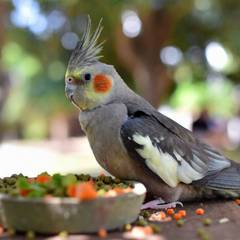
It's a small patch of skin, but it tells you more than almost anything else you can check at a glance, and it is a budgie-specific tell: the cockatiel it is most often compared with is sexed by the color of its face and the barring under its tail instead.
Sources & Further Reading
Frequently Asked Questions
What color cere means my budgie is male?
A blue or purple-blue cere is the standard indicator of an adult male budgie. Some color mutations produce slightly different shades, but blue-toned is the reliable pattern across most standard budgie colorations.
Why does my female budgie's cere look brown and crusty?
This is a normal sign of breeding condition. Hormonal changes cause the cere to thicken and develop a browner, sometimes crusty texture, especially with more daylight exposure or the presence of a mate or nesting material. It typically returns to a smoother, paler tan or white outside of breeding condition.
Can I tell a budgie's sex before it's fully grown?
Not reliably. Juvenile budgies of both sexes usually have a pink or pale purple cere regardless of sex, and the adult blue-versus-brown distinction usually settles between 6 and 12 months of age. In pastel and solid-color mutations it never settles at all, and only a DNA test sexes the bird.
Is a change in cere color always a health concern?
No. In females, brown and crusty is a normal hormonal state. In a mature male, a cere that turns from blue to brown or tan is a warning sign: it can mean a testicular tumor producing female hormones. A crusty, honeycombed texture in either sex points to scaly face mites. Both need an avian vet.
Can diet or hormones affect cere color in adult budgies?
Yes. Hormonal state is the main driver of cere changes in females specifically, and overall health and hormone balance can influence cere texture and color intensity in both sexes over time, which is part of why sudden or unusual changes are worth paying attention to.
More on the Budgie

Written by Michael Ryan
Mike has looked after neighbors’ budgies and lovebirds on and off for years.
Mike keeps two rescued bearded dragons, Dex and Cera, and writes the care guides on BeastlyFacts from his own research and mistakes. He is not a veterinarian.
More about Michael Ryan →