Bioactive Setups for Bearded Dragons
On This Page▾

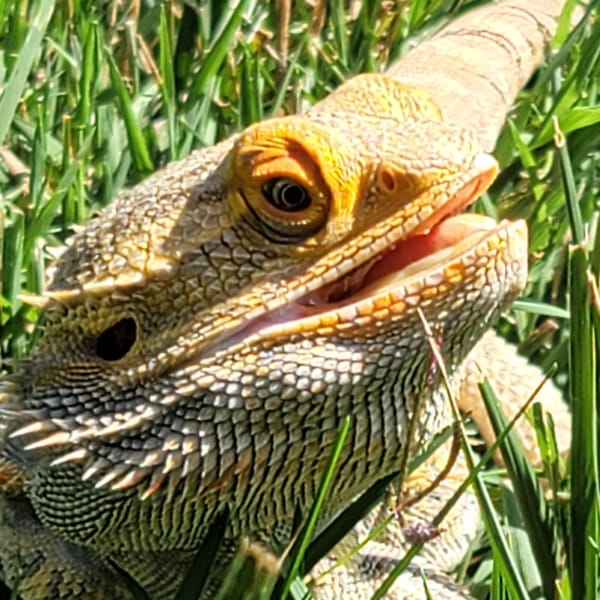
A bearded dragon digs, climbs, grazes on whatever green thing is in reach, and spends its day moving between hot rock and cooler ground. A bioactive enclosure gives it more of that to do. It is a planted enclosure with a living substrate and a cleanup crew of isopods and springtails that break down waste, so the floor works more like a small patch of scrub than a sterile tank that needs stripping every few weeks.
I switched Dexter over to a bioactive build a while back, and it has been a game changer for him: more to explore, and less cleaning for me.
Why Go Bioactive?
A good bioactive setup can:
- Reduce full substrate changes to almost none, once the crew is established
- Give the dragon somewhere to dig and something to explore
- Look far more natural
- Hold a little moisture low in the substrate while the surface stays dry
It is not magic. The dragon still needs the same UVB, heat, and diet as in any other setup. The bioactive part changes the floor and the cleaning, nothing else.
Enclosure and Substrate
An adult bearded dragon needs a 4x2x2 enclosure at minimum, and bioactive makes the case for going bigger, because plants take up floor space the dragon would otherwise use.
The substrate is where most first builds go wrong. The widely shared DIY mix of about 50% fine sand, 30% organic topsoil and 20% excavator clay makes a good naturalistic loose substrate, but on its own it is not bioactive-ready. The ready option is a pre-formulated arid bioactive substrate, topped with a layer of dry leaf litter for the crew to shelter and feed in. Whatever the mix, it goes in 4 to 6 inches deep across the floor, deep enough for plant roots, for digging, and for a moisture gradient that keeps the bottom slightly damp for the crew while the top stays dry for the dragon. Use organic topsoil with no fertilizer or added chemicals if you mix your own.
Plants
Bearded dragons eat plants, including the ones meant as decoration, so every plant in the enclosure has to be safe to eat, free of pesticides, and able to take a desert basking lamp. Succulents, spineless cacti and arid grasses are the usual choices. Pothos, often suggested for reptile enclosures, is a poor pick here: it contains insoluble calcium oxalates, which cause intense mouth irritation, drooling and vomiting in the dogs and cats it is documented in, and a grazing lizard has no reason to be the test case. The safe plant guide for herbivorous reptiles covers which leafy plants a plant-eating lizard can graze on and which to keep out of reach. Rinse nursery plants before they go in, and never collect plants from anywhere that may have been sprayed with pesticide or herbicide.
Cleanup Crew
The crew is what makes the enclosure bioactive. For an arid dragon build, pick species that tolerate dry conditions: powder orange or powder blue isopods, dwarf white isopods, and arid springtails. Isopods break down feces, shed and dropped food; springtails graze mold and fungus. Seed them in the damper lower layers and give them a few weeks to a month to multiply before the dragon goes in. Damp leaf litter tends to collect residents far too small to see as well, including tardigrades, the near indestructible water bears.
Shopping List and Cost
The bioactive part sits on top of a normal bearded dragon setup: the enclosure, lighting and heat are the same either way. What it adds, for a 4x2x2:
| Item | How much | Approximate cost |
|---|---|---|
| Arid bioactive substrate | 80 to 120 quarts for a 4x2 floor at 4 to 6 inches deep | $195 to $260 in 36-quart bags, or about $320 as a complete 4x2x2 kit with leaf litter and moss |
| Isopods | One culture of 20, powder orange or powder blue | About $40 |
| Arid springtails | One 8-ounce culture | About $25 |
| Plants | A desert plant kit sized for a 55-gallon or 4-foot enclosure | $43 to $75 |
| Leaf litter | Enough to cover the surface thinly | Included in most kits |
That puts the bioactive add-on at roughly $300 to $460 up front, most of it substrate. Running costs after that are low: a top-up of leaf litter about once a year in an arid build, and a replacement plant when the dragon eats one to the root.
Prices last checked September 2026 at The Bio Dude. Retail prices move; treat the table as a snapshot, not a quote.
Lighting, Heating, and Daily Care
Nothing changes here from a standard setup. The dragon still needs strong UVB (Arcadia 12 percent or similar), a basking surface of 95 to 110°F for an adult, checked with an infrared thermometer, and a cool side of 75 to 85°F. The complete UVB lighting guide explains why UVB strength matters as much as it does, and plants do not change that: keep them out of the basking zone so they do not shade the dragon from the tube.
The plants and crew want a little water now and then, so mist or water plant bases lightly and let the surface dry. Bearded dragons come from arid country, and a damp surface is the fastest way to turn a bioactive into a problem.
A bioactive enclosure does not get the monthly strip-down a standard one does, but it still gets looked over daily. Pick up any feces and uneaten insects you can see and let the crew handle what you miss; the cadence and the reasoning sit in the reptile enclosure cleaning schedule, which also covers why the water bowl still gets scrubbed like any other. When set up and run well, a bioactive substrate can go 10 years or more without replacement.
Common Mistakes to Avoid
- Substrate that is too shallow for roots and crew
- A bagged sand, soil and clay mix treated as bioactive-ready when it is not
- Plants that are toxic, sprayed with pesticide, or too tender for a desert lamp
- Over-misting, which turns an arid build into a swamp
- Moving the dragon in before the crew has had a few weeks to establish
Is It Worth It?
For Dexter, yes. He seems happier with more to explore, and I spend less time on deep cleans. It is more work and more money up front, and it pays that back slowly.
If you enjoy the building and planting side of keeping, you will probably love it. If you want the simplest possible routine, a tile or solid substrate setup still does the job. Either way, lighting, temperatures and a varied diet matter more than the floor, and a bioactive build only copies the dry open scrub described in the bearded dragon encyclopedia profile more closely than a bare tank can.
Sources
❓ Frequently Asked Questions
Is a bioactive setup safe for a baby bearded dragon?
Most keepers wait until a dragon is a juvenile or older before moving to bioactive, since hatchlings are harder to monitor closely in a more naturalistic setup and their care needs change quickly in the first few months. A simpler substrate is usually easier to manage during that early stage.
How long before I can add my dragon to a new bioactive setup?
Give the plants and cleanup crew a few weeks to a month to establish before introducing the dragon. Moving a dragon in too early means the isopods and springtails haven't built up enough of a population to keep pace with waste.
Do bioactive setups need less cleaning?
Yes, for full substrate changes. A healthy cleanup crew processes waste continuously, and a well-run bioactive substrate can go years without replacement. You still pick up any feces you can see and top up the leaf litter about once a year in an arid build. Bioactive cuts the deep cleaning, not the daily look-over.
Can I use bioactive substrate in any size enclosure?
Bioactive works best in a 4x2x2 or larger enclosure, since the substrate needs real depth (4 to 6 inches minimum) for the cleanup crew and plant roots to function properly. Smaller enclosures don't have room for that depth without cutting into the dragon's usable floor space.
What happens if my cleanup crew dies off?
Waste will start accumulating faster than it's processed, and you'll likely notice odor or mold developing. This usually points to a substrate that's too wet, too dry, or lacking enough organic material to sustain the isopods and springtails - check moisture levels first, then consider a fresh starter culture if the population doesn't recover.
📰 More on the Bearded Dragon
📘 Bearded Dragon care guide
🦎 How Much Does a Bearded Dragon Really Cost?
🦎 How to Handle a Bearded Dragon Without Stressing It Out
🦎 Common Bearded Dragon Health Issues and What Causes Them
🦎 Bearded Dragon Enclosure Setup: Temperature, UVB, and Everything Else
🦎 Bearded Dragon Feeding: Schedule, Diet, and Why They Stop Eating
🦎 10 Surprising Bearded Dragon Facts
🦎 Bearded Dragon Brumation: Triggers, the Routine, and When to Worry
🦎 Female Bearded Dragons: Eggs, Lay Boxes, and Egg Binding
🦎 Bearded Dragon Growth, Weight, and At-Home Health Checks
🥬 Bearded Dragon Safe Foods List: Staple, Occasional, and Never Foods
🦎 The Bearded Dragon Starter Shopping List (Buy Once, Cry Once)
🦎 Bearded Dragon Enrichment: Climbing, Digging, and Safe Free-Roam
🦎 Is It Legal to Own a Bearded Dragon? State-by-State Guide
🛒 Recommended Gear
As an Amazon Associate, we earn from qualifying purchases through the links above - at no extra cost to you.
Written by Michael Ryan
Written from Mike’s own two dragons, Dex and Cera.
Mike keeps two rescued bearded dragons, Dex and Cera, and writes the care guides on BeastlyFacts from his own research and mistakes. He is not a veterinarian.
More about Michael Ryan →