How to Handle a Green Anole (Carefully, and Rarely)
On This Page▾

Green anoles are delicate compared to the larger pet lizards, including the bearded dragon, blue-tongued skink, ackie and savannah monitors, and uromastyx, and that size difference should shape how you think about handling this species from the start.
A Small, Fast, Fragile Lizard
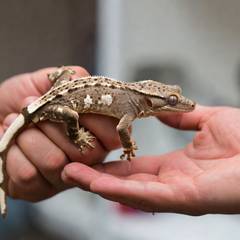
At 6 to 8 inches, green anoles are among the smallest reptiles in the pet trade, and considerably more fragile than their larger relatives. ReptiFiles is direct about this, green anoles generally make better display animals than a pet you take out and handle regularly. If you want a lizard you can hold often, this genuinely isn't the right species, its whole appeal lives in observation. For a sense of how different that is, a bearded dragon or a blue-tongued skink is built to tolerate far more frequent handling.
The "American Chameleon" Name Is Misleading
Green anoles are sometimes called American chameleons, but they aren't true chameleons at all, and their color-changing ability is far more limited than the name suggests. They shift between green and brown based on mood, temperature, and stress level, a real but modest ability compared to a genuine chameleon's dramatic range. Don't buy this species expecting chameleon-level color displays, that's simply not what's happening here.
A green anole's color shift between green and brown is driven by mood, temperature, and stress, not the deliberate camouflage act people picture when they hear "chameleon." It's a real ability, just a far more modest one than the name implies.
Why the Tail Matters So Much
Like many lizards, green anoles drop their tail as a defense mechanism, but this species does it especially readily. Specialist sources describe them as extremely fragile all around, with tails that break off easily even under fairly gentle handling. A dropped tail does regrow, but as cartilage rather than true bone, and it never looks quite the same as the original. Never grab or restrain a green anole by the tail under any circumstances.
First-Timer Mistakes
- Grabbing the tail, by far the most common way keepers accidentally trigger tail drop.
- Over-handling a species that's genuinely better suited to being watched than held.
- Pulling away if bitten. A green anole bite is harmless but can break the animal's own jaw if you yank back, stay still and let it release on its own.
How This Compares to the Brown Anole
Green and brown anoles are commonly confused. The brown anole is an invasive species from Cuba, always brown, more ground-dwelling, and has a red-orange throat fan, while the native green anole turns green, tends to perch higher, and has a pink to red throat fan. Care needs are nearly identical between the two, so the difference is mostly about which one you're looking at.
The green anole also appears alongside three very different terrarium animals in Green Anole, Argentine Tegu, Fire-Bellied Toad & Tiger Salamander compared.
❓ Frequently Asked Questions
How big does a green anole get, and does that affect handling?
6 to 8 inches, among the smallest reptiles in the pet trade, and considerably more fragile than larger relatives like the bearded dragon or blue-tongued skink. ReptiFiles is direct about it, green anoles generally make better display animals than a pet you take out and handle regularly.
Is a green anole a chameleon?
No, and the American chameleon nickname oversells it. A green anole shifts between green and brown with mood, temperature, and stress level, which is a real ability but a narrow one beside a true chameleon's range.
Can you pick up a green anole by the tail?
Never. Green anoles drop the tail readily, and specialist sources describe tails breaking off under even fairly gentle handling. A dropped tail regrows as cartilage instead of bone, and it never looks quite like the original.
What should I do if my green anole bites me?
Stay still and wait. The bite is harmless to you, but yanking your hand back can break the anole's own jaw. It will let go on its own.
What are the most common first-timer mistakes with green anoles?
Grabbing the tail, which is how most keepers trigger a tail drop. Handling a display animal as though it were a pet lizard. And pulling away from a bite instead of holding still.
What's the difference between a green anole and a brown anole?
The brown anole is an invasive Cuban species: always brown, lower to the ground, with a red-orange throat fan. The native green anole turns green, perches higher, and has a pink to red fan. Care needs are nearly identical.

Written by Michael Ryan
Mike keeps two rescued bearded dragons, Dex and Cera, and writes the care guides on BeastlyFacts from his own research and mistakes. He is not a veterinarian.
More about Michael Ryan →Comments
No comments yet - be the first!