Five Reptiles That Actually Make Sense for Beginners
On This Page▾

Reptile care has a reputation for being complicated: heat lamps, UVB percentages, humidity gradients. These five are the ones that earn their beginner reputation honestly, each for a slightly different reason.
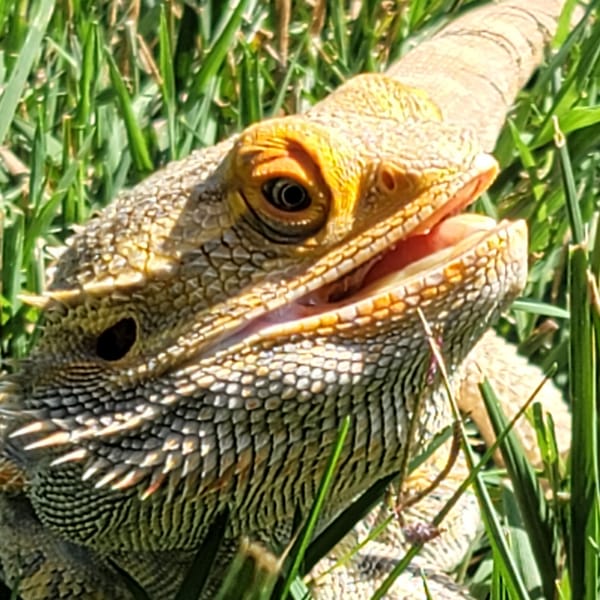
Bearded Dragon: The One That Acts Like It Wants to Know You
Genuinely social for a reptile, most bearded dragons tolerate and even seem to enjoy daily handling once settled. The tradeoff is UVB, this species needs strong, specific lighting to stay healthy, more demanding than most of the others on this list. The rest of the brief is size and space: an adult reaches 18 to 22 inches from nose to tail tip, and a lizard from arid and semi-arid southeastern Australia needs room to cross from a hot basking spot to a cooler end. What earns the beginner label is temperament, since bearded dragons are docile, curious and easy to tame.
Bearded Dragon Cost · Handling · Health Issues · Enclosure Setup
Leopard Gecko: The One That Forgives Mistakes
Doesn't strictly need UVB, tolerates a fairly wide temperature range, and is about as forgiving as reptile care gets. The one thing to know going in: never grab the tail, it drops as a defense mechanism, though unlike a crested gecko's, this one grows back. Leopard geckos come from the grasslands and deserts of India and Pakistan, they are nocturnal, and the vast majority of pets are captive bred. Feeding follows the clock: insects go in during the late afternoon, when a gecko is waking up to hunt.
Leopard Gecko Cost · Handling · Health Issues · Enclosure Setup
Ball Python: The Gentle Giant That Isn't a Giant
Ball pythons have a reputation for being calm almost to a fault, their main defense is curling into a tight ball, not striking. They stay a manageable size their whole life, which is part of why they're the classic first snake. Manageable is not tiny, though. Subadults and adults over 3 feet long do best in a 48 by 24 by 24 inch enclosure or larger, about 8 square feet of floor.
Ball Python Cost · Handling · Health Issues · Enclosure Setup
Crested Gecko: The One With a Permanent Decision to Make
Low maintenance and genuinely well suited to first-time keepers, with one detail worth knowing before you ever pick one up: unlike a leopard gecko, a crested gecko's tail does not grow back once dropped. Handle gently and that's rarely an issue. The other number to respect is heat, and here the crested gecko runs cooler than the rest of this list: 82 to 85°F at the top of the enclosure, 70 to 75°F at the bottom, and consistent temperatures above 85°F can cause stress and heat stroke. Humidity cycles between 60 and 80%, so misting is part of the routine.
Crested Gecko Cost · Handling · Health Issues · Enclosure Setup
Corn Snake: The Standard the Others Get Compared To
Hardy, docile, and about as straightforward as snake keeping gets. If ball pythons weren't so popular, corn snakes would probably be the default answer to "what's a good first snake," and plenty of experienced keepers would argue they still are. Adults average 3 to 5 feet and need at least a 48 by 24 by 24 inch enclosure. The one skill a corn snake keeper needs from day one is security: small, slender and curious, corn snakes are talented escape artists, so a glass tank needs lid clamps and a front-opening enclosure needs a lock.
Corn Snake Cost · Handling · Health Issues · Enclosure Setup
All five of these share the same real requirement: correct temperature and, for most of them, correct UVB. Get those two things right and the rest of reptile care is genuinely manageable, these species didn't earn their beginner reputation by accident.
Last reviewed 12 Jul 2026 · 3 sources
- VCA Animal Hospitals: Bearded Dragons, Owning
- LafeberVet: Basic Information for Leopard Gecko
- ReptiFiles: Ball Python Terrarium Size and Lighting; Crested Gecko Temperatures and Humidity; Corn Snake Terrarium Size
Frequently Asked Questions
What's the single easiest reptile on this list for a total beginner?
Leopard geckos are usually the most forgiving: no strict UVB requirement, a fairly wide tolerable temperature range, and a calm temperament. Corn snakes are a close second for the same reasons, minus the tail-dropping consideration geckos come with.
Do all five of these reptiles need UVB lighting?
No. Bearded dragons need strong, specific UVB to stay healthy, and it matters for leopard and crested geckos too, though less strictly. Ball pythons and corn snakes don't have the same UVB dependency, though many keepers still provide low-level UVB as a general wellness measure.
Which of these reptiles tolerates handling best?
Bearded dragons are the most consistently social of the five, many seem to enjoy daily handling once settled. Ball pythons and corn snakes both handle well too; the main thing to know with either gecko is to never grab the tail.
🐍 How Much Does a Ball Python Really Cost?
🦎 How Much Does a Bearded Dragon Really Cost?
🐍 How Much Does a Corn Snake Really Cost?
🦎 How Much Does a Crested Gecko Really Cost?
🦎 How Much Does a Leopard Gecko Really Cost?
🐍 How to Handle a Ball Python: Timing Matters More Than Technique
🦎 How to Handle a Bearded Dragon Without Stressing It Out
🐍 How to Handle a Corn Snake
🦎 How to Handle a Crested Gecko (And Why Tail Loss Is Different Here)
🦎 How to Handle a Leopard Gecko Safely
🐍 Common Ball Python Health Issues and What Causes Them
🦎 Common Bearded Dragon Health Issues and What Causes Them
🐍 Common Corn Snake Health Issues and What Causes Them
🦎 Common Crested Gecko Health Issues and What Causes Them
🦎 Common Leopard Gecko Health Issues and What to Watch For
🐍 Ball Python Enclosure Setup: Humidity Is the Detail That Makes or Breaks It
🦎 Bearded Dragon Enclosure Setup: Temperature, UVB, and Everything Else
🐍 Corn Snake Enclosure Setup: Floor Space, a Mandatory Thermostat, and a Humidity Debate
🦎 Crested Gecko Enclosure Setup: Vertical Space, Humidity, and a Hard Temperature Ceiling
Written by Michael Ryan
Mike keeps two rescued bearded dragons, Dex and Cera, and writes the care guides on BeastlyFacts from his own research and mistakes. He is not a veterinarian.
More about Michael Ryan →