Bearded Dragon vs. Leopard Gecko: Which Beginner Reptile Should You Get
On This Page▾

Both are the two most commonly recommended "first reptile" species, and for good reason - both are calm, well-documented, and captive-bred in huge numbers. But they're genuinely different animals to keep day to day, and the choice mostly comes down to how much you want to spend up front and whether you want an animal that's active while you are.
The Comparison
| Bearded Dragon | Leopard Gecko | |
|---|---|---|
| Adult size | 16-24 inches | 6-9 inches |
| Lifespan | 10-15 years | 10-20 years |
| Minimum enclosure | 4x2x2 ft | 36x18x18 in |
| UVB requirement | Required (Zone 3, strong) | Optional but beneficial (Zone 1, low) |
| Diet | Omnivore - insects, greens, veg | Insectivore only |
| Activity pattern | Diurnal - active by day | Crepuscular/nocturnal |
| Feeding frequency (adult) | Greens daily or every other day, insects a few times a week | Every 2 to 4 days |
| Approx. setup cost | Higher | Lower |
The full care picture for each is in the Bearded Dragon care guide and the Leopard Gecko care guide.
UVB Is the Biggest Practical Difference
A bearded dragon's UVB isn't optional - they're intense desert baskers and need a strong Zone 3 T5 HO setup to metabolize calcium correctly, full stop. A leopard gecko's UVB need is real but much lower stakes: current research recommends low-output Zone 1 UVB as genuinely beneficial, but leopard geckos have historically been kept without it and can get by on calcium supplementation alone if a keeper chooses to skip it. That single difference affects both setup cost and the margin for error if a bulb burns out and isn't replaced right away.
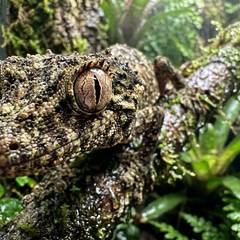
Leopard geckos have movable eyelids and blink to keep their eyes clean, which is unusual among geckos - most other gecko species have a fixed transparent scale over the eye and lick it clean instead. It's a small detail, but it's one of the easiest ways to tell a leopard gecko apart from most other pet gecko species at a glance.
Diet: Omnivore vs. Pure Insectivore
Leopard geckos eat gut-loaded insects (crickets, dubia roaches, mealworms) dusted with calcium, and that's the whole diet - no vegetables, ever. Bearded dragons start out mostly insectivorous as juveniles and shift toward a diet that's 80% or more vegetables and greens as adults, meaning an adult beardie owner is regularly chopping fresh produce, not just tossing in insects. If you want the simpler, less hands-on feeding routine, that favors the gecko.
Size and Space Add Up Fast
A leopard gecko's 36x18x18 inch minimum enclosure fits comfortably on a dresser or small table. A bearded dragon's 4x2x2 foot minimum is a genuine piece of furniture that needs its own dedicated floor or stand space, and that size difference cascades into everything else - a bigger enclosure needs a bigger UVB fixture, a bigger basking setup, and more substrate. If space or a tight budget is the deciding factor, the gecko is meaningfully cheaper to set up correctly.
A Leopard Gecko is the better fit if you want a smaller footprint, a simpler insect-only diet, and a lower-stakes UVB requirement. The tradeoff is timing, it's crepuscular, so most of the activity you'll actually see happens around dusk, not during the afternoon.
Activity Pattern Matters More Than People Expect
This is the difference that trips up new owners the most, because it's easy to overlook until you actually live with the animal. A bearded dragon is out, basking, and visibly doing things during the exact hours you're home and awake. A leopard gecko spends most of the day tucked in a hide and only becomes active around dusk - which is a perfectly fine, healthy pattern for the gecko, but a disappointing surprise for someone who pictured checking on an active pet all afternoon.
Choose a Bearded Dragon if you want an interactive daytime pet you'll see doing things during normal waking hours. That interactivity comes with mandatory strong UVB, a bigger enclosure, and daily vegetable prep once it's an adult.
Bottom Line
Get a leopard gecko if you want a smaller footprint, a lower and more forgiving UVB requirement, a simpler diet, and you don't mind an animal that's most active in the evening. Get a bearded dragon if you want a genuinely interactive daytime pet and don't mind the bigger enclosure, stronger lighting requirements, and daily vegetable prep that comes with it. Both are excellent first reptiles - they're just suited to different lifestyles, not different skill levels. Natural history for each is in the Bearded Dragon encyclopedia profile and the Leopard Gecko encyclopedia profile.
More of each family is in the Lizards and Geckos care guide categories.
Sources & Further Reading
Last reviewed 8 Jul 2026 · 3 sources
- How much UV-B does my reptile need? The UV-Tool, a guide to the selection of UV lighting for reptiles and amphibians in captivity, Journal of Zoo and Aquarium Research 4(1):42-63 (Baines et al., 2016)
- Eublepharinae, Britannica
- PetMD: How Long Do Leopard Geckos Live?; How Long Do Bearded Dragons Live?
Frequently Asked Questions
Which is truly easier for a first-time reptile owner?
Leopard geckos, on balance - a smaller enclosure, lower mandatory UVB requirement, and a simpler insect-only diet with no vegetables to manage. Bearded dragons aren't hard, but they demand more precisely: a bigger tank, mandatory strong UVB, and a mixed diet that changes ratio as they grow.
Which needs less daily feeding work?
Leopard geckos. Adults typically eat every 2 to 4 days and the diet is just gut-loaded insects with calcium dusting, no chopping vegetables. Adult bearded dragons get fresh greens daily or every other day and insects a few times a week, which is more daily hands-on prep.
Which one will I see active during the day?
Bearded dragons, clearly. They're diurnal and will bask, explore, and interact with you during normal daytime hours. Leopard geckos are crepuscular to nocturnal and are typically hiding and inactive for most of the day, becoming active at dusk.
Which lives longer, a bearded dragon or a leopard gecko?
Leopard geckos, somewhat surprisingly given their smaller size: 10 to 20 years is typical, and some reach 25 to 30. Bearded dragons typically live 10 to 15 years, occasionally reaching the high teens with excellent care. Both are a real long-term commitment, but the gecko is the longer one.
Can a bearded dragon and a leopard gecko be housed together?
No. Different climate needs, different UVB requirements, different diets, and a size mismatch that puts the smaller leopard gecko at real risk. Reptiles of different species should essentially never share an enclosure regardless of apparent size compatibility.
🦎 How Much Does a Bearded Dragon Really Cost?
🦎 How Much Does a Leopard Gecko Really Cost?
🦎 How to Handle a Bearded Dragon Without Stressing It Out
🦎 How to Handle a Leopard Gecko Safely
🦎 Common Bearded Dragon Health Issues and What Causes Them
🦎 Common Leopard Gecko Health Issues and What to Watch For
🦎 Bearded Dragon Enclosure Setup: Temperature, UVB, and Everything Else
🦎 Leopard Gecko Enclosure Setup: What Your Gecko Actually Needs
🦎 Bearded Dragon Feeding: Schedule, Diet, and Why They Stop Eating
🦎 Leopard Gecko Feeding: Schedule, Diet, and Why They Stop Eating
🦎 10 Surprising Bearded Dragon Facts
🦎 10 Surprising Leopard Gecko Facts
🦎 Bearded Dragon Brumation: Triggers, the Routine, and When to Worry
🦎 Female Bearded Dragons: Eggs, Lay Boxes, and Egg Binding
🦎 Bearded Dragon Growth, Weight, and At-Home Health Checks
🥬 Bearded Dragon Safe Foods List: Staple, Occasional, and Never Foods
🦎 The Bearded Dragon Starter Shopping List (Buy Once, Cry Once)
🦎 Bioactive Setups for Bearded Dragons
🦎 The Complete Leopard Gecko Temperature Guide
🦎 Bearded Dragon Enrichment: Climbing, Digging, and Safe Free-Roam
🦎 Leopard Gecko Enrichment: What the Research Actually Supports
🦎 Is It Legal to Own a Bearded Dragon? State-by-State Guide
🦎 Is It Legal to Own a Leopard Gecko? State-by-State Guide
Recommended Gear
As an Amazon Associate, we earn from qualifying purchases through the links above - at no extra cost to you.

Written by Michael Ryan
Written from Mike’s own two dragons, Dex and Cera.
Mike keeps two rescued bearded dragons, Dex and Cera, and writes the care guides on BeastlyFacts from his own research and mistakes. He is not a veterinarian.
More about Michael Ryan →