Bearded Dragon Brumation: Triggers, the Routine, and When to Worry
On This Page▾

A bearded dragon that suddenly stops eating, spends most of the day tucked into a hide, and barely moves can look alarming if you've never seen it before. Most of the time, especially in a dragon over a year old as the weather turns, this is brumation: a natural seasonal slowdown, not a medical crisis. This guide covers what actually triggers it, the vet check to do first, the routine to run while it's happening, and the specific point where a normal brumation becomes a reason to call a vet.
What Brumation Is
Brumation is a reptile's version of a winter slowdown, triggered by shorter days and cooler nights rather than a switch that flips overnight. It's a state of sluggishness and reduced activity, not true hibernation, since a brumating reptile stays somewhat responsive and will still get up occasionally to drink water. In the wild, Australian bearded dragons brumate through the region's winter months, when daytime temperatures run 68 to 72°F (20 to 22°C) and nights drop to 40 to 44°F (4 to 7°C). A dragon kept indoors in a heated home doesn't need anywhere near that cold to start slowing down, shorter day length and a modest household temperature dip are usually enough to cue it.
Brumation is most common in dragons over a year old. Younger dragons that are still actively growing rarely brumate in any meaningful way, and a hatchling or young juvenile that goes quiet and stops eating is far more likely to be sick than seasonal. That age line matters when you're deciding whether to treat a slowdown as normal or as a reason to call a vet immediately.
Everything outside brumation, from the enclosure to the diet, is in the full Bearded Dragon care guide.
Signs of Brumation
Expect a gradual shift over several weeks rather than an abrupt change:
- Eating less, then not at all
- Spending more time in a hide, further from the basking spot
- Sleeping earlier and getting up later
- Lower activity and less interest in handling
- A noticeably darker beard or body color for some dragons
- Little to no defecation, since there's nothing moving through the gut
Brumation vs. Illness: How to Tell Them Apart
This is the part worth getting right before anything else, because the same list of signs above can also describe a genuinely sick dragon. If the household temperature is a normal 60 to 70°F (16 to 21°C), a quiet, food-refusing dragon may not be brumating at all, it may be sick. Low temperatures, parasites, dehydration, and poor nutrition can all produce the same lethargic, off-food picture that brumation does, and treating a sick dragon as though it's simply brumating delays the care it needs.
The quickest gut check: brumation is slow and low-energy, developing gradually over weeks and lining up with cooler, darker months in a dragon over a year old. A dragon going downhill quickly, at a normal warm room temperature, outside of the season, or before its first year, is a vet visit, not a waiting game.
The Pre-Brumation Vet Check
Before assuming a slowdown is brumation and simply letting it happen, get your dragon checked by a reptile-experienced vet. The visit should include a physical exam and a fecal test to rule out parasites and confirm the dragon is starting brumation from a healthy baseline, not entering it while already sick or malnourished. A dragon with an existing parasite load or poor body condition is at real risk of coming out of brumation in far worse shape than it went in, so this check is the single most useful thing you can do before the season turns. If your dragon has never been to a reptile vet, our Bearded Dragon health issues guide covers the conditions a pre-brumation fecal test is specifically screening for, including internal parasites and the early signs of metabolic bone disease.
Once you have a clean bill of health, don't force the issue in the other direction either. Don't force-feed a dragon that's genuinely winding down, and don't try to prevent brumation from happening in an otherwise healthy adult. Confirm health first, then let the natural process run its course.
The Weekly Brumation Routine
Once brumation is confirmed and underway, the routine is deliberately light. Here's what to do, once a week unless noted:
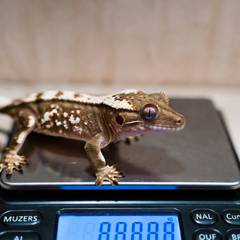
- Weigh the dragon. A kitchen scale that reads in grams is enough, and the growth and weight guide has the routine. Weekly weigh-ins are how you catch weight loss trending past the point that's normal for this process, long before it becomes obvious by eye.
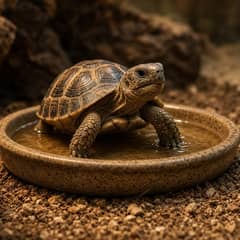
- Offer a shallow, lukewarm soak. Keep it brief, chest-deep at most, never unsupervised. Most brumating dragons ignore it, some drink during it, and it costs nothing to offer.
- Offer fresh greens every few days. No insects during this period. A dragon that isn't basking regularly can't produce the stomach acid and digestive enzymes needed to actually process a meal, and undigested food sitting in a cold gut is its own problem.
- Shorten the light cycle. Drop to 8 to 10 hours of light on a timer, or leave lights off entirely if the dragon is fully asleep in its hide and not coming out to bask at all.
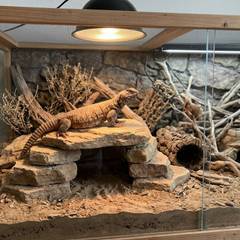
- Keep the room from dropping below 65°F (18°C). Brumation is a slowdown, not a cold-tolerance test. Track it with a digital thermometer rather than guessing by feel, and if the ambient room temperature falls below that floor overnight, a ceramic heat emitter or deep heat projector on its own thermostat should hold the line, the same setup the enclosure setup guide calls for for a normal nighttime low.
Resume the full normal schedule, lighting, feeding, and all, the day your dragon reappears and starts basking on its own. There's no need to ease back in gradually once it's clearly awake and interested in the basking spot again.
How Long Brumation Lasts
Brumation typically runs 1 to 3 months. Check in with a vet if it stretches past about three and a half months, comes with more than 10 percent body weight loss, or if appetite hasn't returned within 2 to 3 weeks of the dragon reappearing and basking again. That three-and-a-half-month mark, not a hard four months, is the point where a normal seasonal slowdown needs a second look.
Stool during this period looks different too, and that's expected. Adults that normally pass a firm stool every 1 to 4 days will often produce only urate, the white to off-white component, without solid feces for days at a stretch while brumating and not eating. That's not automatically a red flag on its own, it becomes one when it's paired with the warning signs below, or when a dragon that is eating normally suddenly stops producing stool at all.
Waking Up From Brumation
Waking up isn't usually instant. A dragon coming out of brumation typically starts basking more, becomes more alert and active, and its appetite gradually returns, usually within about 2 to 3 weeks. Offer food again once you see it basking with real interest rather than force-feeding on a calendar date. Go back to gut-loading and dusting insects with plain calcium powder from the first meal back, using feeding tongs to offer small amounts at first rather than a full-sized portion. If appetite doesn't pick back up within that 2 to 3 week window, or the dragon looks noticeably thinner than it did going in, that's the same signal the feeding guide treats as food refusal that's crossed from normal into concerning, and it's worth a vet visit rather than more waiting.
When to Call a Vet, No Question Asked
Some signs mean brumation has crossed into a medical problem, or that what looked like brumation never was one to begin with:
- Brumation stretching past roughly three and a half months with no sign of waking
- Weight loss of more than about 10 percent of starting body weight
- Appetite that hasn't returned within 2 to 3 weeks of waking up and basking again
- Sunken eyes, thick or stringy saliva, or other signs of dehydration during or after the process
- Diarrhea, foul-smelling stool, or blood in the stool, none of which are part of normal brumation
- Limb swelling, tremors, or trouble lifting the body, which point toward metabolic bone disease rather than seasonal dormancy
- Any of this happening in a dragon under a year old, which is far too young for typical brumation
- A slowdown that started at a normal 60 to 70°F (16 to 21°C) room temperature with no seasonal light change to explain it
A Worked Example
Say your three-year-old adult starts eating less in late October, spends more time in its cool-side hide, and stops basking as much by early November. You book the vet visit, get a clean fecal test, and confirm there's no other cause. Through November and December you weigh weekly, offer a soak and fresh greens every few days, keep the light cycle at 9 hours, and watch the room thermometer to make sure it doesn't dip below 65°F (18°C) overnight. By late January, your dragon is back on the basking platform daily and eating again within 10 days. That's a textbook, unremarkable brumation, roughly 3 months, no vet visit needed beyond the one you already did going in.
Now say the same dragon is still refusing food and hiding by mid-March, four and a half months in, and has visibly lost weight. That's past the 3.5-month checkpoint and the 10 percent weight-loss threshold both. That's the point to call the vet rather than keep waiting it out.
Brumation isn't unique to bearded dragons. Plenty of temperate and desert reptiles do some version of it, but because bearded dragons are such popular pets, theirs is one of the better-documented brumation patterns in captive reptile care.
The Takeaway
A healthy adult bearded dragon slowing down for a season isn't an emergency, it's a normal part of keeping one long-term. Get the pre-brumation vet check done, run the light routine, keep weighing weekly, and hold the line on that 65°F (18°C) room floor. The moment the timeline or the symptoms above cross into the warning list, that's your cue to stop waiting and call a vet. The enclosure setup guide covers the enclosure that keeps the rest of the year on track. Other lizards are in the Lizards care guide category.
Sources & Further Reading
Last reviewed 16 Sep 2026 · 3 sources
- VCA Animal Hospitals: Brumation in Bearded Dragons; Bearded Dragons, Housing
- NC State Veterinary Hospital: Caring for Your Pet Bearded Dragon
- Merck Veterinary Manual: Providing a Home for a Reptile
Frequently Asked Questions
How long does bearded dragon brumation last?
Typically 1 to 3 months. Call a vet if it passes about three and a half months, if the dragon loses more than 10 percent of its body weight, or if appetite has not returned within 2 to 3 weeks of it basking again.
How do I know if my dragon is brumating or sick?
Brumation is slow, steady, and tracks with cooler, darker months, in a dragon over a year old that had a clean pre-brumation vet check. A sudden change at a normal room temperature, or one paired with abnormal stool, sunken eyes, or weight loss, points toward illness instead. When in doubt, a fecal test and physical exam settle it.
Should I feed my bearded dragon during brumation?
No insects, since a dragon that isn't basking regularly can't digest them properly. Offer fresh greens every few days and a shallow lukewarm soak once a week. Most brumating dragons ignore both, and that's normal.
Do I need to do anything before brumation starts?
Yes. Book a vet visit for a physical exam and fecal test first, ideally as soon as you notice the early slowdown in fall. This rules out parasites or poor body condition that could turn a normal brumation into a real medical problem.
What happens when my dragon wakes up from brumation?
Appetite and basking behavior should return within about 2 to 3 weeks. Resume the normal light cycle and feeding schedule the day it reappears and starts basking again, rather than waiting for it to ask.
More on the Bearded Dragon
Bearded Dragon care guide
🦎 How Much Does a Bearded Dragon Really Cost?
🦎 How to Handle a Bearded Dragon Without Stressing It Out
🦎 Common Bearded Dragon Health Issues and What Causes Them
🦎 Bearded Dragon Enclosure Setup: Temperature, UVB, and Everything Else
🦎 Bearded Dragon Feeding: Schedule, Diet, and Why They Stop Eating
🦎 10 Surprising Bearded Dragon Facts
🦎 Female Bearded Dragons: Eggs, Lay Boxes, and Egg Binding
🦎 Bearded Dragon Growth, Weight, and At-Home Health Checks
🥬 Bearded Dragon Safe Foods List: Staple, Occasional, and Never Foods
🦎 The Bearded Dragon Starter Shopping List (Buy Once, Cry Once)
🦎 Bioactive Setups for Bearded Dragons
🦎 Bearded Dragon Enrichment: Climbing, Digging, and Safe Free-Roam
🦎 Is It Legal to Own a Bearded Dragon? State-by-State Guide
Recommended Gear
As an Amazon Associate I earn from qualifying purchases through the links above, at no extra cost to you.

Written by Michael Ryan
Written from Mike’s own two dragons, Dex and Cera.
Mike keeps two rescued bearded dragons, Dex and Cera, and writes the care guides on BeastlyFacts from his own research and mistakes. He is not a veterinarian.
More about Michael Ryan →