Uromastyx Enclosure Setup: Hotter and Drier Than You'd Guess
On This Page▾

Uromastyx husbandry pushes further into extreme heat and low humidity than almost any other commonly kept reptile.
Enclosure Size
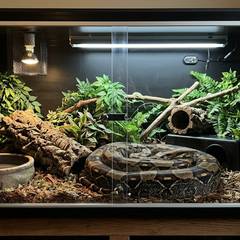
4 feet long by 2 feet wide by 2 feet tall is the minimum for species up to about 18 inches. Larger species, the Egyptian uromastyx especially, need up to 8x4x4 feet for a full-grown adult. House one uromastyx per enclosure.
Building a 4x2x2 ft PVC enclosure at this minimum size is a genuine part of the investment.
Hatchlings and Juveniles
A hatchling uromastyx goes into the same kind of hot, dry setup as an adult, with the same basking and UVB targets. One thing changes for the first couple of months: paper towel replaces loose substrate. A shallow water dish, about half an inch deep, sits in the enclosure at every age. Older uromastyx take most of their water from food and may rarely touch it, but young, breeding and sick animals are the ones that need it most. Juveniles eat daily and are far more skittish than adults, so the enclosure needs several hides a small lizard can reach from anywhere along the gradient.
Temperature: The Defining Requirement
Basking surface temperature needs to reach 110 to 120F, with the giant Egyptian species needing at least 130F. Cool zone should sit around 85F, with nighttime dropping to around 68F and never below 65F, usually without needing supplemental night heat.
Halogen flood bulbs, usually two, positioned over a Retes stack let your uromastyx choose its exact preferred spot. The stack is flat slate or flagstone layered with spacers between the pieces, so the lizard can bask on top or wedge into the crevices below at a lower temperature. Check the top surface with an infrared temperature gun, and leave a probe thermometer on it to track the reading between checks.
Humidity: The Other Defining Requirement
Uromastyx need humidity low enough to make a bearded dragon look tropical by comparison, just 20 to 30% ambient, measured on the cool side. High humidity makes this species genuinely sick. A humid microclimate within a burrow is beneficial, the key is keeping the surface layer of substrate dry while allowing moisture to persist deeper down. A few coastal species, like the Yemen uromastyx, want closer to 50% humidity. The bearded dragon enclosure setup guide shows how much more humid that species' own setup runs by comparison.
A uromastyx drinks its salad. Most of its water comes from greens and seeds rather than a dish, which is how a lizard lives at 20 to 30 percent humidity.
Substrate
Fine sand or a sandy soil mix, or a DIY blend of roughly 50% play sand, 30% topsoil, and 20% excavator clay, packed at least 4 inches deep to support burrowing. A 4x2 foot enclosure takes at least 2.5 cubic feet of it. Avoid moisture-retaining substrates like coco fiber, mulch, or moss, and skip loose calcium sand or walnut shell products entirely, both carry real impaction risk.
A desert sand substrate is a straightforward way to cover the fine-sand portion of that mix.
Cleaning follows the substrate. Scoop feces and urates every day, taking the contaminated sand with them and topping up with fresh. Replace the whole bed every 3 to 4 months. A sick or injured uromastyx comes off loose substrate onto paper towels until it recovers. The reptile hygiene guide covers the weekly and monthly disinfecting around that routine.
Lighting
Strong UVB is required, not optional, for this diurnal species. A high-output T5 HO bulb in the 14% range, targeting a basking-area UVI of 4.5 to 6.0, paired with a bright daylight LED bar. That target puts uromastyx in Ferguson Zone 4, the most intense of the four UVB zones, alongside ackie monitors. Replace UVB bulbs on the manufacturer's schedule, typically every 6 to 12 months. A UV index meter is an optional way to confirm the setup actually hits that 4.5 to 6.0 target.
The Non-Obvious Requirement: Seeds in the Diet
Uromastyx are near-strict herbivores, unusual among commonly kept lizards. Leafy greens and vegetables are the base, seeds like lentils and millet a limited extra rather than a daily one, and most of their water comes from food.
Sources & Further Reading
Frequently Asked Questions
What size enclosure does a uromastyx need?
Plan on 4x2x2 feet for species that top out around 18 inches, and up to 8x4x4 for a full-grown Egyptian. Keep it to one animal per enclosure.
How hot does a uromastyx basking spot need to be?
The basking surface has to hit 110 to 120F, and giant Egyptians want at least 130F. Cool side around 85F, night around 68F and never below 65F, usually with no supplemental heat needed.
How humid should a uromastyx enclosure be?
Just 20 to 30% ambient humidity, low enough to make a bearded dragon look tropical by comparison. High humidity makes this species sick. A few coastal species, like the Yemen uromastyx, want closer to 50% humidity.
What substrate is best for a uromastyx?
Fine sand, sandy soil, or a mix of roughly 50% play sand with 30% topsoil and 20% excavator clay, at least 4 inches deep for burrowing. Skip moisture-holding options like coco fiber, mulch, and moss, plus calcium sand and walnut shell for the impaction risk.
What UVB does a uromastyx need?
UVB is required here, not optional. Use a T5 HO bulb around 14%, aim for a UVI of 4.5 to 6.0 at the basking spot, and add a daylight LED bar. Bulbs typically get replaced every 6 to 12 months on the manufacturer's schedule.
Do uromastyx need seeds in their diet?
Yes. This is a near-strict herbivore, unusual among commonly kept lizards, with insects optional at most. Seeds such as lentils and millet are a limited extra, never daily, alongside leafy greens and vegetables. Most of its water comes from food rather than from drinking.
Recommended Gear
As an Amazon Associate I earn from qualifying purchases through the links above, at no extra cost to you.

Written by Michael Ryan
Mike keeps two rescued bearded dragons, Dex and Cera, and writes the care guides on BeastlyFacts from his own research and mistakes. He is not a veterinarian.
More about Michael Ryan →