African Grey Parrot Cage Setup: Size, Placement, and Enrichment Done Right
On This Page▾

An African grey's cage needs to support a large, intelligent, long-lived bird, and getting the size and placement right matters as much as anything else in this species' care.
Cage Size
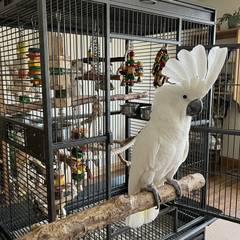
36 inches wide by 24 inches deep by 48 inches tall is a commonly cited minimum, with some veterinary guidance recommending closer to 40 by 30 by 60 inches. Whatever size you land on, your bird needs to be able to fully extend and flap its wings without touching the bars in any direction. Bar spacing runs 3/4 inch to 1 inch, never wider, on stainless steel or powder-coated bars.
The cage is home base, not the whole territory. A grey needs three to four hours of supervised time outside it every day, and a bird-safe play stand or gym gives that time a place to happen.
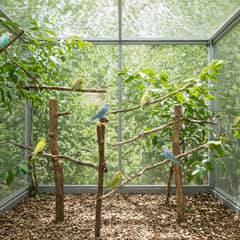
Building out a large flight cage at this size, fitted with a variety of perches, is a real part of the investment.
Temperature
Standard household temperatures, roughly 65 to 80F, work well. Avoid drafts and cold spots, but no special heating or cooling is needed indoors.
Placement Matters More Than It Might Seem
The cage belongs in a well-lit, draft-free spot near where the family spends its day, away from loud, chaotic rooms. Excellent ventilation without direct drafts is important. Remove fresh food promptly rather than letting it sit, this directly ties into the aspergillosis risk. Keep the cage well away from the kitchen entirely, since fumes from overheated nonstick cookware are deadly to birds, and keep the bird safely separated from household cats or dogs.
Cage Floor and Hardware
A paper liner on the cage bottom makes cleaning straightforward. Avoid any hardware with zinc coating, because chewing on it is a heavy-metal poisoning risk.
Cleaning, Dust and Damp
The daily routine for a grey:
- Every food and water dish washed with soap and hot water, then dried thoroughly before it is refilled.
- The paper liner changed, so droppings and dropped food never sit overnight.
- Fresh food out of the cage within a few hours, before it spoils.
That last point matters more for a grey than for most parrots. Aspergillosis, the fungal respiratory infection this species is prone to, takes hold in warm, damp, dirty conditions, and wet food debris in the bottom of a cage is exactly that. Which disinfectants are safe for the deeper scrub of cage, perches and toys, and which fumes are not, is set out in the bird household hazards guide.
Greys also produce large amounts of powder down, the fine feather dust that settles on the cage, the furniture and every surface near it. Wiping that dust down is part of the cleaning, and the filtration and bathing that keep it under control are the same for greys as for cockatoos and cockatiels.
Lighting
UVB exposure supports vitamin D3 synthesis and calcium absorption, directly relevant to preventing hypocalcemia. Unfiltered sunlight is the ideal source, but window glass and screens block it. Indoors, an avian UVB bulb mounted 12 to 18 inches from the perch and run 6 to 8 hours a day does the job, replaced every 6 to 12 months even while it still lights up. Maintain 10 to 12 hours of true darkness for sleep every night.
Powder down feathers never finish growing. Instead of being shed once a year like ordinary plumage, their tips break down all year round into a fine keratin powder, which is why a grey's cage needs dusting as well as scrubbing.
The Non-Obvious Requirement: Enrichment Isn't Optional
Foraging toys, varied perches, and daily social interaction are welfare essentials for an African grey. A bored, under-slept, under-stimulated grey reliably develops plucking and excessive screaming.
The calcium side of the lighting question is the same one reptile keepers work through, and the UVB lighting guide covers how mounting distance changes what a bulb delivers and why bulbs are replaced on a schedule.
Sources & Further Reading
Last reviewed 17 Jul 2026 · 3 sources
- Tree of Life Exotic Pet Medical Center: African Grey Parrot Care
- Merck Veterinary Manual: Overview of Pet Birds (cage size and bar spacing table); Management of Pet Birds; Toxicoses of Pet Birds
- NASPHV: Compendium of Measures to Control Chlamydophila psittaci Infection Among Humans and Pet Birds
Frequently Asked Questions
What size cage does an African grey parrot need?
The commonly cited minimum is 36 wide by 24 deep by 48 inches tall, and some veterinary guidance pushes closer to 40 by 30 by 60. The test at any size: the bird can fully extend and flap its wings without hitting the bars.
How far apart should the cage bars be?
3/4 inch to 1 inch, and no wider than 1 inch.
What temperature range is safe for an African grey?
Roughly 65 to 80F, so ordinary room temperature. No special heating or cooling indoors, just keep the cage off drafts and cold spots.
Where should I place the cage?
Somewhere with excellent ventilation and no direct drafts, well away from the kitchen entirely, since fumes from overheated non-stick cookware are deadly to birds, and safely separated from household cats or dogs.
Does an African grey need special lighting?
UVB, from unfiltered sunlight or an avian UVB bulb 12 to 18 inches from the perch for 6 to 8 hours a day. It supports vitamin D3 and calcium absorption, which helps prevent hypocalcemia.
Is enrichment necessary, or just nice to have?
It's a welfare essential, not an accessory. A bored, under-slept, under-stimulated grey reliably develops plucking and excessive screaming, so foraging toys, varied perches, and genuine daily social interaction all matter.
More on the African Grey Parrot
African Grey Parrot care guide
🦜 How Much Does an African Grey Parrot Really Cost?
🦜 How to Handle an African Grey Parrot
🦜 Common African Grey Parrot Health Issues and What Causes Them
🦜 African Grey Parrot Feeding: Schedule, Diet, and Why They Stop Eating
🦜 African Grey Enrichment: Foraging Is the One With Real Evidence
Recommended Gear
As an Amazon Associate I earn from qualifying purchases through the links above, at no extra cost to you.

Written by Michael Ryan
Mike keeps two rescued bearded dragons, Dex and Cera, and writes the care guides on BeastlyFacts from his own research and mistakes. He is not a veterinarian.
More about Michael Ryan →