Common African Grey Parrot Health Issues and What Causes Them
On This Page▾

African greys face a mix of nutritional, behavioral, and infectious health risks, and this species is more prone to a couple of specific conditions than smaller parrots are.
Hypocalcemia (Low Blood Calcium)
This is the signature health issue in this species. Veterinary sources describe it as the most common cause of central nervous system disease in African greys specifically. Watch for muscle tremors, weakness, and in serious cases, seizures. A seizure is an emergency, get to a vet immediately for injectable calcium. Longer-term, this is managed through proper diet, vitamin D, and UVB exposure.
Feather-Destructive Behavior (Plucking)
Bald patches and damaged feathers. African greys are specifically noted as especially prone to this compared to smaller parrot species such as the budgie and the cockatiel. Causes include stress, boredom, loneliness, insufficient sleep, poor diet, sexual frustration in a bird with no mate, or an underlying medical issue. Always rule out medical causes with a vet first. On the boredom side, foraging work is the intervention with the most research behind it.
African greys are specifically noted as more prone to feather-destructive plucking than smaller parrot species, and the underlying cause is often as simple as insufficient sleep or an under-stimulated day, not a single dramatic trigger.
Aspergillosis
A fungal respiratory infection commonly seen in greys. Watch for labored breathing, sneezing, lethargy, weakness, and weight loss. Bacterial infections of the airways produce the same signs, so telling the two apart takes a vet and a test. Caused by warm, moist, unsanitary conditions or mold, often from fresh food left in the cage too long. Always see a vet, treatment can take months, and this can be fatal if untreated.
Psittacosis
Caused by Chlamydia psittaci. Signs include tail-bobbing, wheezing, nasal discharge, diarrhea, and a fluffed-up appearance. This is zoonotic, it can spread to people in the household, and needs a vet for antibiotic treatment.
PBFD (Psittacine Beak and Feather Disease)
A virus causing feather and beak deformities along with immune suppression. It is uncommon in greys today, but in a young bird it can progress to fatal disease through bone marrow suppression. Diagnosed through vet testing.
Cancer also turns up in greys with some frequency, one more reason the yearly exam below is not optional.
The First Exam and the Workup Behind It
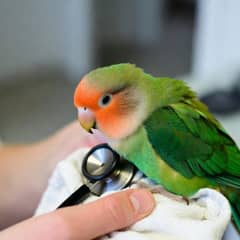
A new grey sees an avian vet within one to two weeks of coming home, and afterward at least once a year, with many avian vets advising twice. Greys hide illness like every prey species, so the exam is how problems get found early. The vet should be a member of the Association of Avian Veterinarians, and that membership list is the place to start looking. The timing of that first visit against the quarantine period is the same for every new bird.
A baseline workup usually includes:
- A physical exam, with the bird's weight recorded as the reference number for the rest of its life, and the droppings checked.
- Blood work. A complete blood count and a chemistry panel that measures calcium, among other values. For a grey, that calcium reading is the early look at the hypocalcemia at the top of this page.
- Whole-body X-rays, usually under sedation or gas anesthesia, to check organ size and position, masses such as granulomas, and swallowed foreign bodies.
- Disease screening as indicated: psittacosis, polyomavirus, avian bornavirus, and circovirus, the virus behind PBFD.
- A fecal exam for intestinal parasites, and swabs of the mouth and vent for abnormal bacteria or fungus.
Not every vet runs every test at the first visit. The exam findings and any contact with other birds decide which ones are needed.
The Husbandry Pattern Worth Remembering
A seed-heavy diet with insufficient UVB directly causes hypocalcemia, the most defining health risk for this species. Boredom and insufficient sleep drive feather plucking, particularly common in greys. And a damp, poorly ventilated cage with old food left sitting invites aspergillosis. A quality pelleted diet and a gram scale for tracking weight over time both support catching problems early.
Sources & Further Reading
Last reviewed 17 Jul 2026 · 2 sources
- VCA Animal Hospitals: Common Conditions of Pet Birds; Veterinary Care, New Bird Visit
- Furry Critter Network: African Grey Health
Frequently Asked Questions
What is the most common health issue in African grey parrots?
Hypocalcemia, low blood calcium. Veterinary sources call it the most common cause of central nervous system disease in greys, and the signs are muscle tremors, weakness, and seizures in serious cases.
What should I do if my African grey has a seizure?
Treat it as an emergency and get to a vet immediately for injectable calcium. Longer-term, hypocalcemia is managed through proper diet, vitamin D, and UVB exposure.
Why are African greys especially prone to feather plucking?
African greys are specifically noted as especially prone to feather-destructive behavior compared to smaller parrot species. Causes include stress, boredom, loneliness, insufficient sleep, poor diet, or an underlying medical issue, so medical causes should always be ruled out with a vet first.
What is aspergillosis and why is this species prone to it?
A fungal respiratory infection this species is prone to, caused by warm, moist, unsanitary conditions or mold, often from fresh food left in the cage too long. Watch for labored breathing, sneezing, lethargy, and weight loss. Treatment can take months, and it can be fatal if untreated.
Is psittacosis dangerous to people, not just birds?
Yes. Psittacosis, caused by Chlamydia psittaci, is zoonotic and can spread to people in the household. Signs include tail-bobbing, wheezing, nasal discharge, diarrhea, and a fluffed-up appearance, and it needs a vet for antibiotic treatment.
What is PBFD?
Psittacine beak and feather disease. The virus deforms feathers and beaks and suppresses the immune system, it's potentially fatal, especially in young birds, and vet testing diagnoses it.
More on the African Grey Parrot
African Grey Parrot care guide
🦜 How Much Does an African Grey Parrot Really Cost?
🦜 How to Handle an African Grey Parrot
🦜 African Grey Parrot Cage Setup: Size, Placement, and Enrichment Done Right
🦜 African Grey Parrot Feeding: Schedule, Diet, and Why They Stop Eating
🦜 African Grey Enrichment: Foraging Is the One With Real Evidence
Recommended Gear
As an Amazon Associate I earn from qualifying purchases through the links above, at no extra cost to you.
Written by Michael Ryan
Mike keeps two rescued bearded dragons, Dex and Cera, and writes the care guides on BeastlyFacts from his own research and mistakes. He is not a veterinarian.
More about Michael Ryan →