Box Turtle Enclosure Setup: Land, Water, and Real Space Requirements
On This Page▾

A box turtle enclosure needs to support both the land-dwelling and water-access sides of this species' semi-terrestrial life, floor space, burrowing depth, and a real basking setup all matter here.
Enclosure Size
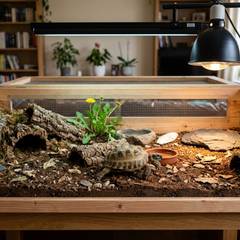
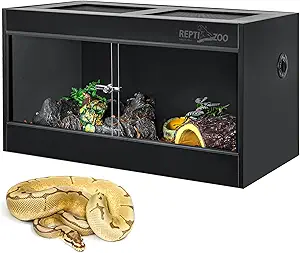
36 by 18 inches is a workable minimum, but larger is considerably better, closer to 5.5 feet by 3 feet for an eastern box turtle, or around 4 feet by 2 feet for the somewhat smaller ornate box turtle. Floor space matters far more than height, this is a ground-dwelling, burrowing species. An enclosure at this minimum size is a reasonable starting point, though an outdoor pen is genuinely excellent where your climate allows, with walls buried deep enough and secured well enough to keep predators out.
Temperature
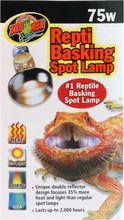
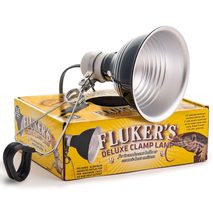
Provide a clear warm basking zone with a gradient down to a cooler area, using an indoor heat source. Basking zone 90 to 100°F, cooler end roughly 70 to 75°F. Extra heat and light are not necessary overnight as long as the enclosure holds 65 to 70°F. A basking bulb set in a basking dome fixture covers this well. The line for a turtle living outside is 60°F: bring a box turtle indoors once the temperature drops below it.
Humidity
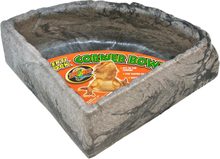
Relatively humid, 60 to 80%. Mist daily and provide a shallow water dish large enough for your turtle to genuinely soak in, this ties directly to the semi-terrestrial lifestyle. Hatchlings and young turtles dehydrate especially easily and need consistently moist substrate, not just an occasional misting.
Substrate
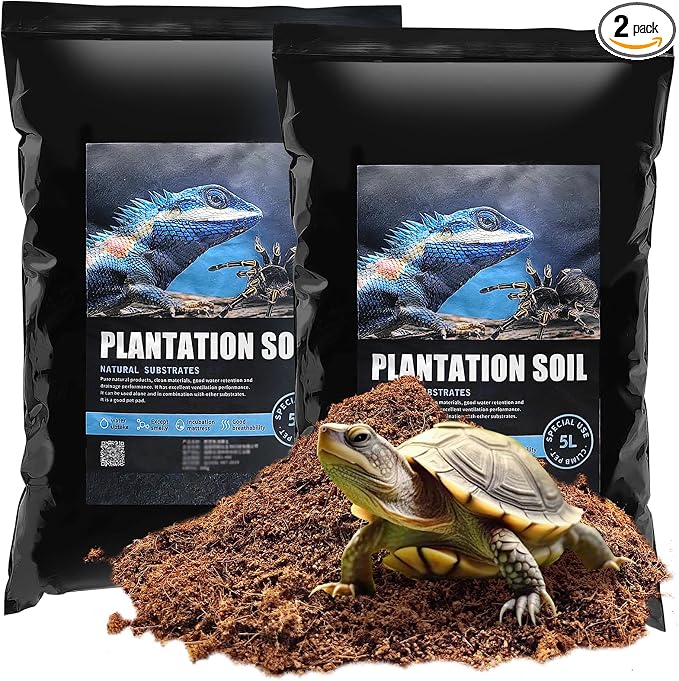
Wood chips or a topsoil and coconut fiber mix, at least 2 to 3 inches deep to support burrowing. Avoid gravel, sand, additive-laden potting soil, crushed walnut shells, and cat litter entirely, all carry real impaction risk for a species that will investigate and sometimes ingest its substrate.
An outdoor pen, walls buried deep and secured well against predators, is considered genuinely excellent housing for a box turtle where climate allows, arguably better than any indoor enclosure this species could be given.
Lighting
UVB is essential, not optional. A T5 HO bulb (6% strength or the equivalent Zoo Med ReptiSun 5.0 T5 HO) in a reflective fixture, targeting a basking-area UV index of 3.0 to 4.0. Run a longer photoperiod in summer, around 14 hours, tapering to about 10 hours in winter.
The Non-Obvious Requirements
Both land and shallow water access, non-negotiable for this species, a dry-only or water-only setup doesn't match how box turtles actually live. And a 4 to 5 inch opaque barrier along the front glass helps curb the stress-driven pacing that clear-walled enclosures can cause, this species can see through glass in a way that creates real, ongoing stress if left unaddressed.
Diet: Half Animal, Half Plant
Unlike the strictly herbivorous tortoises, box turtles eat a real mix, roughly half animal matter and half plant matter. Earthworms, insects, and occasional lean protein alongside leafy greens and vegetables make up a balanced diet for this species.
See how this species compares to a leaf-tailed gecko, California kingsnake, and oscar fish in Leaf-Tailed Gecko, California Kingsnake, Box Turtle & Oscar Fish compared.
For how UVB actually works and why the bulb distance matters as much as the bulb, see our complete guide to UVB lighting.
❓ Frequently Asked Questions
What size enclosure does a box turtle need?
36 by 18 inches is the workable minimum, though bigger is considerably better: near 5.5 by 3 feet for an eastern, around 4 by 2 feet for the smaller ornate. Height barely matters for a ground-dwelling, burrowing animal.
What temperature does a box turtle enclosure need?
An indoor heat source giving a warm basking zone and a gradient down to a cool end. Basking zone 90 to 100°F, cooler end near 70 to 75°F, and 65 to 70°F overnight with no added heat or light. Below 60°F outdoors, this species should come inside.
How humid should a box turtle enclosure be?
60 to 80%. Mist daily, and give a shallow water dish big enough for the turtle to soak in. Hatchlings and young turtles dehydrate especially easily, so their substrate needs to stay consistently moist, not just misted occasionally.
What substrate is safe for a box turtle?
Wood chips, or topsoil mixed with coconut fiber, 2 to 3 inches deep at least so the turtle can burrow. Gravel, sand, additive-laden potting soil, crushed walnut shells, and cat litter all carry real impaction risk.
What UVB setup does a box turtle need?
A 6% T5 HO bulb, or the equivalent Zoo Med ReptiSun 5.0 T5 HO, mounted in a reflective fixture for a basking-area UV index of 3.0 to 4.0. Light it about 14 hours in summer, tapering to 10 in winter.
Does a box turtle enclosure need both land and water?
Yes. A dry-only or water-only setup does not match how box turtles live. A 4 to 5 inch opaque barrier along the front glass also helps curb the stress-driven pacing that clear-walled enclosures can cause.
📰 More on the Box Turtle
🛒 Recommended Gear
As an Amazon Associate, we earn from qualifying purchases through the links above - at no extra cost to you.

Written by Michael Ryan
Mike keeps two rescued bearded dragons, Dex and Cera, and writes the care guides on BeastlyFacts from his own research and mistakes. He is not a veterinarian.
More about Michael Ryan →Comments
No comments yet - be the first!