Zebra Danio Care Guide
Fish
Beastly Facts · Updated
The tireless little striped torpedo that never stops commuting!
On This Page▾

Did you know? Zebra danios, also called zebrafish, are the most widely used non-mammalian vertebrate in developmental biology and genetics. Their embryos develop transparently outside the mother's body within hours of fertilization, so organs can be seen forming in real time, and roughly 70 percent of human genes have a recognizable counterpart in the zebrafish genome, sequenced in full in 2013. That same genetic malleability is also how GloFish, the first genetically modified animal ever sold as a pet, came to exist: they're fluorescent zebra danios.
The first week
The numbers a new owner needs in the first week, each from the article it links to. Rows with no link come from the encyclopedia.
- How many
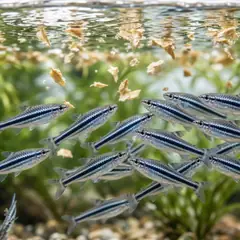
- At least 6, and 8 to 10 is the better start. In a small group the nipping lands on the same fish over and over; a larger one spreads it out.Handling guide →
- Tank size
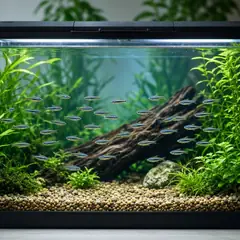
- A 20-gallon long is the practical minimum for a school of 8 to 10. Long beats tall for a school this fast, and a 10-gallon is too short.Setup guide →
- Heater
- Optional at 64 to 75°F, if the room holds that range day and night. Add one if the room runs cooler or tropical tankmates need warmer, steadier water.Setup guide →
- Water chemistry
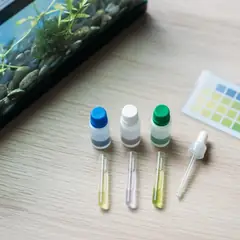
- pH 6.0 to 8.0 and hardness anywhere from about 90 to 357 ppm. Ammonia and nitrite still read zero before stocking.Setup guide →
- Filtration and flow
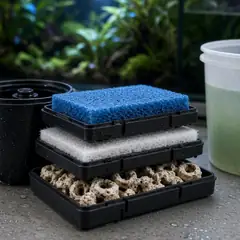
- Turnover 4 to 5 times the volume an hour, about 80 to 100 gallons per hour on a 20-gallon. A sponge or hang-on-back filter both work.Setup guide →
- The lid
- They jump when startled, and a small gap in the hood is enough. Close every seam before you call the tank covered.Setup guide →
- Planting
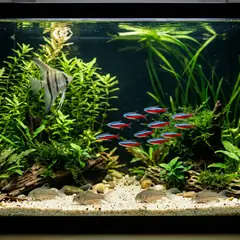
- Substrate and live plants, not bare glass. Plant the sides and back and leave the middle open, so there is cover and somewhere to sprint.Enrichment guide →
- Feeding
- Twice a day, what the school finishes in two to three minutes.Feeding guide →
- Fry you did not plan
- Daily live or frozen food is what triggers spawning. Two or three times a week is variety; every day is breeding conditioning.Feeding guide →
- Acclimation
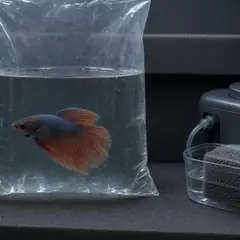
- Float the sealed bag 15 to 20 minutes, then a quarter cup of tank water every 5 minutes for another 15 to 20. The bag water goes down the drain, not in the tank.Handling guide →
- Quarantine
- The first school goes straight into the cycled tank. Every later fish spends at least 30 days in a 10-gallon with a lid and its own sponge filter. Keep a spare sponge running in the main tank, and never put a used quarantine sponge back.Handling guide →
- Budget
- $2 to $3 a fish, about $12 to $30 for the school; GloFish are the same species at about $8 each. Setup roughly $175 to $360.Cost guide →
- Lifespan
- Around 3.5 years, up to 5.5 with excellent care.Cost guide →
- Adult size
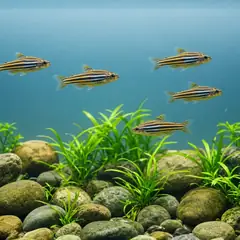
- 1.5 to 2 inches (4 to 5 cm); the largest on record reached about 2.5 inches (6.4 cm) in captivity.
- Mycobacteriosis
- Lethargy, emaciation, ulcers and pale patches, with no reliable cure. Isolate the fish, ask a vet about humane euthanasia, and wear gloves for tank work if you have a cut.Health guide →
- Cycling
- Cycle before any fish go in, up to 8 weeks. The tank is ready when a dose of ammonia is gone within a day, nitrite reads zero and nitrate has started to show.Setup guide →
- Water changes
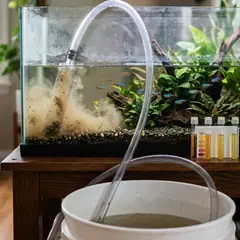
- About 10 percent weekly or 25 percent every other week, gravel vacuumed, never more than half at once. Change water the same day ammonia or nitrite tops 0.1 ppm, or nitrate tops 20 ppm.Setup guide →
- Power outage
- Oxygen is the threat, not darkness. Unplug the filter rather than letting it sit dead in the water, and keep the surface moving.Power outage guide →
Emergency card
Test the water first, then act on these today. Not every vet sees fish, so find one who does before you need one.
- Small white spots like grains of salt: ich. Raise the tank toward 75°F a couple of degrees a day and dose an ich medication daily, for at least 3 to 5 treatments and until every spot has been gone for several days
- Several fish gasping, lethargic or off their food in a tank under about 6 weeks old: ammonia or nitrite. Test, then change part of the water that day
- A fish spinning or spiraling: test the water, then call a vet if it tests clean
- Ulcers, wasting or a swollen belly: move the fish to a separate tank, because mycobacteriosis has no reliable cure
A slow-growing, sometimes painful bump on your own skin after tank work is a doctor's visit; the same bacterium infects people through cuts.
Where to go next
How Much Does Zebra Danio Ownership Really Cost?
$2 to $3 a fish, $175 to $360 for a first setup, the ich medication and vet rows, and why GloFish cost four times as much.
Zebra Danio Tank Setup: The Rare Community Fish That Might Not Need a Heater
The 35 by 12 inch footprint, 64 to 75°F, the setup order and cycling time, and the weekly water routine.
Zebra Danio Feeding: Diet, Schedule, and the Live Food That Can Trigger an Accidental Spawn
Twice a day, two to three minutes, and the live food that triggers an accidental spawn.
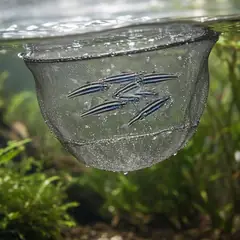
Zebra Danio Handling: A Hardy Fish That Is Hard to Net
Trap and guide instead of chasing, the trip home and float timings, the first week, and quarantine.
Zebra Danio Health Issues: Ich, Fin Rot, Swim Bladder and Fish Tuberculosis
What to treat today, ich step by step, and the fish tuberculosis that has no cure.
Zebra Danio Enrichment: Plants, Length and a Full School
Plants and a floor, a long tank, a real group, and how to tell it is working.
What to buy
As an Amazon Associate I earn from qualifying purchases. Underlined items are paid Amazon links, at no extra cost to you.
Prices and the reasoning behind each item are in How Much Does Zebra Danio Ownership Really Cost?.
Full Zebra Danio gear listFrequently Asked Questions
What size tank does a school of zebra danios need?
A 20-gallon long tank is the practical minimum for a school of 8 to 10. Even a small group needs a base of about 35 by 12 inches (90 by 30cm), and a standard 10-gallon is only about 20 inches long.
Do zebra danios need a heater?
Not in every home. Their range is 64 to 75°F, so a tank in a room that stays inside that range day and night can run without one. Add a heater if the room drifts cooler or the danios share a tank with tropical fish.
How many zebra danios should I keep together?
At least 6, and 8 to 10 or more is the better start for natural schooling behavior. A group that's too small is more likely to direct fin-nipping energy at tankmates instead of schooling normally.
Encyclopedia
Zebra Danio
Danio rerio
Fillable forms for any pet
Universal Pet Kit
25 pages · PDF · $4.99
Deep Dive
Health and More
Fun Facts
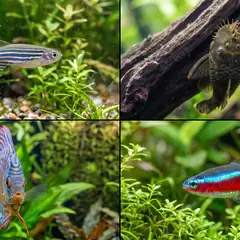
🐠 The Fish Behind GloFish
GloFish started out as a pollution alarm. Professor Gong Zhiyuan at the National University of Singapore put a fluorescent jellyfish gene into zebra danios, aiming for fish that would glow in response to toxins in the water. A US company licensed the idea, and the first GloFish sold was red, borrowing its glow from a sea anemone gene.
Explore More