How Much Does Platy Fish Ownership Really Cost?
On This Page▾

Platies are one of the more affordable fish on this entire site, cheap to buy, cheap to keep, and easy to house in a modest setup.
The Fish: $2 to $6, More for Premium Strains
Standard varieties, reds, blues, tuxedos, wags, and most of the common patterns, run $2 to $6 each, with a six-pack landing around $30. Less common varieties like tiger ruby platies can reach $8 to $9. Whichever variety you pick, the day-to-day care is identical underneath the color.
Every eye-catching color and pattern sold as a platy today, from solid reds to wag-tailed bicolors, is the product of decades of selective breeding. In the wild, platies are actually quite plain: a dull olive-green with dark marbling, built for camouflage in shallow, vegetated water rather than for standing out.
Upfront Setup: $120 to $225
| Item | Cost Range |
|---|---|
| 10-gallon tank | $15 - $40 |
| Aquarium heater | $15 - $30 |
| Gentle filter | $5 - $20 |
| Live or silk plants | $15 - $30 |
| Tight-fitting glass lid (fits most standard 10 gallon tanks; measure your tank's opening) | $35 - $40 |
| Liquid water test kit | $25 - $40 |
| Water conditioner that neutralizes chlorine and chloramine | $5 - $15 |
| First supply of small pellets | $5 - $10 |
| Setup total | $120 - $225 |
Typical price ranges across retailers.
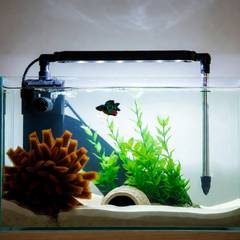
A 10-gallon tank holds a small group of about five, so you don't need to start at molly-sized 20-gallon territory the way you would for that bigger livebearer, though the stricter base-footprint figure is one a 20 long meets and a 10 does not. A basic setup, the tank and lid, filter, heater, a bit of planting and water care, runs $120 to $225 depending on the brands you choose.
Ongoing Costs: $15 to $20 a Month
| Item | Annual Cost |
|---|---|
| Flake/pellet food with some vegetable content | $20 - $35 |
| Water conditioner | $10 - $15 |
| Water test kit (periodic refill) | $20 - $35 |
Typical price ranges across retailers.
Platies are genuinely unfussy eaters, so food costs stay modest, add water conditioner, occasional filter media, and a little electricity for the heater and filter, and full monthly upkeep for a 10-gallon platy tank commonly lands around $15 to $20.
Vet Costs
Like most aquarium fish, platies rarely see a vet in any traditional sense. Most platy health issues, ich, fin rot, dropsy, and the occasional bout of "shimmy," get managed at home with water quality correction and over-the-counter medication rather than a clinic visit. Dedicated aquatic vets exist but are uncommon and rarely necessary for a species this hardy.
Lifespan
2 to 4 years, with 3 to 4 achievable under stable conditions and excellent, consistent water quality pushing a fish toward 5. That's close to a guppy's lifespan, and noticeably shorter than a molly's, which commonly reaches 3 to 5 years on a bigger setup.
The Cost to Plan For: More Platies Than You Started With
This is the detail that catches new owners off guard, and it's the same one that trips up new guppy and molly owners. Platies are livebearers, females give birth to live, free-swimming fry rather than laying eggs, and a single mating goes a long way. Female platies store sperm in the folds of their oviduct for months at a time, which means one encounter with a male can fertilize several separate broods without him ever being present again. A typical brood runs 20 to 50 fry, with a documented range up to 80 in ideal conditions, roughly every 4 to 6 weeks.
Put males and females in the same tank with no plan, and you'll have meaningfully more platies within a couple of months than you started with, which means more tank space and more of every ongoing cost listed above.
The platy also shows up alongside the swordtail and molly in our roundup of Three Livebearers That Breed Whether You Plan to or Not.
For more on the species, check the Platy encyclopedia profile.
Sources & Further Reading
Frequently Asked Questions
How much does a platy fish cost?
Most standard varieties run $2 to $6 each, with a six-pack around $30. Premium or less common strains like tiger ruby platies can reach $8 to $9.
What does a basic platy tank setup cost?
A 10-gallon setup, the tank and lid, filter, heater, a bit of live or silk planting and water care, runs $120 to $225. That's a modest starting point, close to what a guppy setup costs, since a small platy group doesn't need much more room than that.
What are the ongoing costs of keeping platies?
Low. Flake or pellet food, water conditioner, and occasional test kit refills make up most of the monthly cost, with a small amount of electricity for the heater and filter on top. Full monthly upkeep for a 10-gallon platy tank commonly lands around $15 to $20.
How long do platies live?
2 to 4 years. Stable conditions get most of the way there, and excellent, consistent water quality can push a fish toward 5. That is close to a guppy and noticeably shorter than a molly.
What's the cost new platy owners usually forget to plan for?
More platies than they started with. A single female can store sperm from one mating for months and go on to produce repeat broods of 20 to 50 fry, occasionally up to 80, roughly every 4 to 6 weeks. Mixing males and females with no population plan means more tank space and more of every ongoing cost above within a couple of months.
More on the Platy
Platy care guide
🐠 Platies Aren't Handled Either, But They Do Need a Breeding Plan
🐠 Common Platy Health Issues (And the Truth About 'Platy Tumors')
🐠 Platy Tank Setup: A Real 10 Gallons, Hard Water, and a Plan for Fry
🐠 Platy Feeding: Schedule, Diet, and Why Overfeeding Is the Real Risk
🐠 Platy Enrichment: Hardy Is Not the Same as Unaffected
Recommended Gear
As an Amazon Associate, we earn from qualifying purchases through the links above - at no extra cost to you.

Written by Michael Ryan
Mike keeps two rescued bearded dragons, Dex and Cera, and writes the care guides on BeastlyFacts from his own research and mistakes. He is not a veterinarian.
More about Michael Ryan →