Betta Fish Tank Setup: Bigger, Warmer, and Cycled
On This Page▾

The bowl-on-a-desk image most people have of betta fish is outdated. Modern betta care centers on a proper heated, filtered tank, and the setup itself isn't complicated once you know what actually matters.
Tank Size
Five gallons is the current standard minimum, and it's a genuine improvement over older advice. Bettas can technically survive in smaller volumes, but bigger tanks are easier to keep stable, temperature and water chemistry swing less in more water, which means fewer sudden stresses on the fish. Use a lid, bettas are surprisingly good jumpers.
The sources do not all agree on that floor. PetMD gives at least 2.5 gallons with 5 to 10 ideal, and a University of Florida extension paper on commercial culture found that males do well in small containers when water quality, nutrition and health management are right. Five gallons holds here because more water swings less in temperature and chemistry, and the enrichment research found that restricted space raised hiding and inactivity.
Heater
A 15 to 25 watt adjustable heater sized for a small aquarium is typically right for a 5-gallon betta tank, which is about 3 to 5 watts per gallon. Target a stable temperature of 76 to 82°F, with 78 to 80°F being the sweet spot for long-term health. Avoid rapid temperature swings, consistency matters more than hitting an exact number. The betta water parameters guide has the full target ranges, pH included.
Filter
A gentle, low-flow filter is important, bettas have long, flowing fins that struggle against strong current. Sponge filters are widely considered the gold standard for this exact reason, they provide filtration without pushing the fish around.
A betta's flowing fins are exactly what make it vulnerable to the kind of filter most other tropical fish do fine with. A power filter's outflow that a tetra barely notices can exhaust a betta and shred its fins over time, which is the real reason sponge filters became the default recommendation for this species specifically.
Water: Cycling and Maintenance
Cycle the tank (establishing the beneficial bacteria colony that processes waste) before adding your betta, rather than adding the fish to unestablished water. Always treat tap water with a dechlorinator or conditioner before it goes in the tank. Test ammonia, nitrite, and nitrate periodically with a test kit, and aim for a pH close to neutral, around 7, inside the 6.5 to 7.8 range bettas tolerate.0, but stability matters more than the exact number, so a steady reading slightly outside that band is better than one that swings after every water change.
Do a 25 to 30% water change weekly using a gravel vacuum, this removes waste from the substrate without stripping out all the beneficial bacteria that keeps the tank stable, which a full water change would do.
Environment
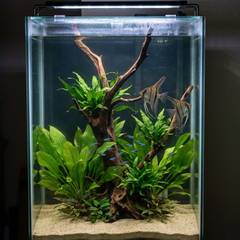
Provide hides, silk or live plants (avoid sharp plastic decor that can tear fins), and something like a betta hammock or leaf near the surface. This last point matters more than it might seem, bettas breathe air directly through a labyrinth organ, so keeping clear access to the surface is a genuine physiological need, not just a nice touch.
Lighting and Day Length
A betta needs no special light, but it does need a day and a night. An LED over the tank helps any live plants and gives the fish a steady day-night rhythm, and the simplest way to keep that rhythm is an outlet timer that switches the light on and off at the same time every day. In a newly planted tank, start at 6 to 8 hours a day while the plants settle, then build up to 8 to 12 hours as they grow. If algae starts to take over, shorten the day again. Light left on around the clock does not help the plants, which still need their night, and it hands the extra light to algae.
The fish's side of the case comes from breeding research. In a 2012 study, Giannecchini, Massago and Fernandes kept pairs under five schedules, from constant light to 8 hours of light a day. Pairs on 12 or 16 hours of light spawned most often and laid the most eggs, about 470 to 545 per spawn, while pairs under 20 hours or constant light laid roughly 190 and 130. Weight gain did not differ between schedules. For a pet betta, the working rule is a normal-length day, a dark night, and no light left on overnight.
Place the tank out of direct sunlight and away from drafts. Sunlight through a window adds heat and light that neither the heater's thermostat nor the timer controls.
Diet
A betta's stomach is about the size of its own eye, and overfeeding is the single most common mistake in betta keeping.
Check the Betta Fish encyclopedia profile for more.
Sources & Further Reading
Last reviewed 24 Sep 2026 · 5 sources
- PetMD: Betta Fish Care Sheet
- Aquarium Co-Op: How to Balance Aquarium Lights to Grow Healthy Plants and Avoid Algae
- Giannecchini, Massago and Fernandes, Revista Brasileira de Zootecnia 41(4) (2012): Effects of photoperiod on reproduction of Siamese fighting fish Betta splendens
- UF/IFAS Extension FA212 (Tuckett, Ritch, Lawson and Hill): Evolution, Culture, and Care for Betta splendens
- Aqueon: Weights and Measures and Quick Tips, aquarium specifications (catalog PDF)

The Betta Fish Care Package carries this setup as a checklist with the targets to hit, in a 54-page PDF you can keep by the tank, $8.99.
Frequently Asked Questions
What size tank does a betta fish need?
Five gallons is the current standard minimum, a genuine improvement over older bowl-based advice. Bettas can technically survive in smaller volumes, but bigger tanks are easier to keep stable since temperature and water chemistry swing less in more water. Always use a lid, bettas are surprisingly good jumpers.
What heater and filter does a betta tank need?
A 15 to 25 watt adjustable heater sized for a small aquarium, targeting a stable 76 to 82°F with 78 to 80°F as the sweet spot. Pair it with a gentle, low-flow filter, sponge filters are the gold standard here since bettas have long, flowing fins that struggle against strong current.
How do I cycle a betta tank before adding the fish?
Cycle the tank first to establish the beneficial bacteria colony that processes waste, rather than adding your betta to unestablished water. Always treat tap water with a dechlorinator or conditioner, test ammonia, nitrite, and nitrate periodically, and aim for a pH close to neutral, around 7, inside the 6.5 to 7.8 range bettas tolerate.0, and a stable pH slightly outside the ideal band beats one that swings.
How many hours of light does a betta tank need?
Put the light on a timer: 6 to 8 hours a day in a newly planted tank, rising to 8 to 12 once plants grow, and shorter if algae takes off. Keep nights dark and the tank out of direct sunlight. In a breeding study, bettas spawned best on 12 to 16 hours of light and worst under constant light.
What and how often should I feed a betta?
Two to 4 small, high-protein pellets a meal, no more than would fit in the size of the fish's eye. Once or twice a day is the usual schedule, and up to three smaller meals spaced 6 to 8 hours apart also works; keeping one routine consistent matters more than the count. Fast one day a week. Overfeeding is the most common mistake in betta keeping and leads to bloating, swim bladder problems, and fouled water.
More on the Betta Fish
Recommended Gear
As an Amazon Associate I earn from qualifying purchases through the links above, at no extra cost to you.

Written by Michael Ryan
Mike keeps two rescued bearded dragons, Dex and Cera, and writes the care guides on BeastlyFacts from his own research and mistakes. He is not a veterinarian.
More about Michael Ryan →