Invertebrate Emergency Plan: Power Outages, Travel, and Shipping
On This Page▾

Ask a reptile keeper what happens to their bearded dragon in a power outage and you get a real answer involving thermometers and hand warmers. Ask a tarantula keeper the same question and the honest answer is usually a shrug. That difference is the whole story of this guide. Most pet invertebrates, tarantulas, scorpions, praying mantises, millipedes, hissing cockroaches, and stick insects, live at ordinary room temperature with no equipment running day to day, so the emergencies that genuinely threaten a reptile or a fish tank barely register for them. The real risk in this corner of pet keeping sits somewhere else entirely: in a car ride, in a shipping box, and in the one commonly kept invertebrate, the hermit crab, that actually does depend on equipment the way a reptile does.
Power Outages: Mostly a Non-Event, With One Real Exception
Start with what a power outage actually threatens. For a reptile, it's heat. For a fish tank, it's a filter and often a heater. For the great majority of pet invertebrates on this list, there's no equipment in the loop to lose in the first place. Pet tarantulas are comfortable across roughly 70 to 85°F, which describes an ordinary living room in most climates for most of the year, not a range that needs a dedicated heat source to maintain. Emperor scorpions are the exception here, kept at 75 to 85°F with a side heat mat, so an outage in a cool house matters for them. Mantises, millipedes, hissing cockroaches, and stick insects are commonly kept the way tarantulas are, at whatever temperature the room already sits at, with a heat mat reserved for keepers in genuinely cold homes rather than a default requirement.
That means the two things actually worth tracking during an outage for this group are humidity and extreme cold, not a lost heat lamp. A tropical species kept in a sealed, moist enclosure can tolerate a stretch of unmanaged humidity better than it can a house that's turned genuinely cold because a furnace has been off for a stretch in winter. If your home is genuinely losing heat in cold weather, the fix isn't a piece of invertebrate-specific gear, it's the same fix as for the rest of the house: warm blankets over the enclosure, moving it to the warmest interior room, and treating a multi-day cold snap as the actual emergency rather than the outage itself.
| Group | Typical home temperature setup | Outage risk |
|---|---|---|
| Tarantulas | Room temperature, roughly 70-85F, no heat source in most homes | Low, a normal outage rarely pushes a house below this range outside of genuinely cold weather |
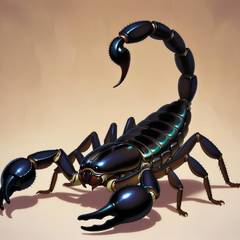
| Scorpions | Emperor scorpions run warm, 75 to 85°F with a side heat mat | Moderate in a cool house, since the mat goes off |
| Praying mantises | Room temperature | Low |
| Millipedes | Room temperature, tropical species care more about humidity than heat | Low on temperature, worth a humidity check on a long outage |
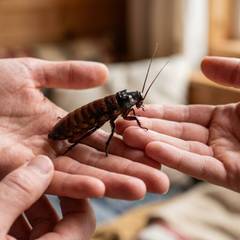
| Hissing cockroaches | Warm room temperature | Low |
| Stick insects | Room temperature | Low |
| Hermit crabs | Actively heated and humidified, see our hermit crab tank setup guide for the target range | High, this is the real exception in the group |
That last row is worth saying plainly rather than burying it. A hermit crab is a crustacean, not an arachnid or an insect, and it breathes through modified gills that need consistently warm, moist air to function at all. That's an actively maintained condition, not a comfortable-room condition, which puts a hermit crab's outage risk much closer to a reptile's or a fish's than to a tarantula's. If you keep hermit crabs, a battery-powered backup for the heat source and a plan for holding humidity, a sealed lid and damp substrate, belongs in your outage kit the same way it would for a reptile. For the actual numbers and setup, our hermit crab enclosure setup guide covers the heat and humidity targets this exception is built around.
Leaving Town: Reasoning Through It Without a Fixed Number
There's a genuine temptation to print a clean answer here, a tarantula is fine alone for X days, and move on. That number doesn't hold up to scrutiny once you look for where it actually comes from, so it isn't in this article. What holds up instead is the reasoning, and the reasoning is actually more useful than a number would be, because it tells you what to check rather than what to assume.
Start with food. The period a tarantula stops eating before and during a molt is a completely normal physiologic fast, not a sign of distress, and the general feeding guidance for a healthy adult is a few times a week, not daily. Put those two facts together and a short trip's missed meals simply aren't the constraint people assume they are. A tarantula that skips its normal feeding for several days because you're out of town is not meaningfully different from one fasting through a molt, which it does on its own schedule regardless of what you're doing.
Water is the tighter constraint, and it's also the simpler one to solve before you leave. A full, shallow water dish, refilled the morning you go, changed for a fresh one, and stable ambient humidity in a properly sealed enclosure are what a short absence actually needs, more than any feeding schedule. That's true across most of this group, scorpions, mantises, millipedes, and roaches all do better on a topped-off water source and a checked lid than on any attempt to pre-feed extra insects before a trip, which mostly just leaves live prey wandering the enclosure while you're gone, a stress and injury risk in its own right that our invertebrate molting guide touches on in more detail for an animal that's due to shed soon.
Hermit crabs break this pattern the same way they break the power outage pattern. Because they depend on actively maintained heat and humidity rather than a comfortable room, a hermit crab genuinely needs someone checking equipment during any real absence, in a way a tarantula in the next room over simply doesn't. Treat a hermit crab trip like a reptile trip: someone needs to be able to read a thermometer and hygrometer and know what to do if either reading has drifted.
Tarantulas run on a metabolism slow enough that a single cricket can take days to fully digest, which is part of why an owner's absence and a tarantula's own molt fast look nearly identical from the animal's point of view. Neither one is a crisis, both are just the tarantula's ordinary relationship with food.
Transport: Where the Real Risk Actually Lives
If power outages are mostly a non-event for this group, transport is the opposite. A tarantula's abdomen, the rounded rear section that holds most of its organs and body fluid, is covered by a thin cuticle with none of the structural reinforcement of the legs or front body. A fall of even a modest height, off a hand, a table edge, or a shifting car seat, can rupture that abdomen, and a ruptured abdomen is close to unsurvivable without immediate intervention. That single fact should shape every transport decision you make with a tarantula, and it's the reason handling and moving a tarantula gets its own caution separate from every other part of its care, covered in more depth in our tarantula enclosure setup guide.
In a car:
- Use a secure, ventilated, genuinely escape-proof container, never a loose box or an open-top cup.
- Line it with soft substrate or folded paper towel to cushion any sliding or bouncing rather than leaving the animal on a bare, slick surface.
- Wedge the container so it can't tip, slide off a seat, or roll around, upright and stable is the goal, not just contained.
- Keep the container in the passenger area with you, never in a trunk, where temperature swings are worse and there's no way to check on the animal mid-drive.
- Avoid temperature extremes entirely. Don't leave the container in a hot closed car in summer or a freezing one in winter, even briefly, the swing inside a parked car happens faster than most people expect.
By hand:
- Move slowly and low to the ground, over a table or a bed rather than open floor, so a startled drop has somewhere soft and close to land.
- Never carry a tarantula over hard flooring, tile, or concrete if it can be avoided.
- Scorpions, mantises, and millipedes are generally sturdier against a short fall than a tarantula is, but the same low, slow, cushioned-surface habit is still the safer default across this whole group.
- Hermit crabs tolerate brief handling reasonably well but should go back into their humidity-controlled setup quickly rather than spend an extended trip out of it.
The single sentence worth remembering from this whole guide: a tarantula that survives a long stretch alone without any trouble at all can still be killed by a short fall onto a hard floor. Plan your caution around the drive and the handling, not the days you're away.
Shipping: Legal, Routine, and Genuinely Rule-Bound
Shipping live invertebrates across the country is a normal, legal part of the hobby in the US, and it happens constantly between breeders, sellers, and keepers. It is not, however, a free-for-all, and the rules that do exist are worth knowing in outline even though the specifics change and vary by carrier, species, and destination.
Start with the US Postal Service, since it's the carrier most people think of first and the one with the clearest published restriction. USPS's own mailing standards are blunt. Section 525.4 reads: "All poisonous insects and all spiders are nonmailable, except for scorpions under limited circumstances." Section 526.5 gives that exception in full: "Scorpions are mailable only when sent for the purposes of medical research or the manufacturing of antivenin," and even then only for delivery within the continental United States and only by surface transportation. Small, harmless, cold-blooded animals including nonpoisonous insects sit in a separate category with no additional requirements beyond the standard packaging rules. In practical terms, that means a pet tarantula or a display-purpose scorpion isn't going through the regular mail at all, which is why the live invertebrate trade in this hobby runs largely through other carriers' dedicated live-animal shipping programs instead, each with its own packaging, timing, and destination rules. Those programs and their current terms are something you check directly with the carrier before shipping, not something this article states on a carrier's behalf, since carrier policy is exactly the kind of thing that changes without much notice.
Beyond carrier rules, two federal frameworks can apply depending on species. USDA APHIS regulates the interstate movement of plant-feeding insects and mites under a permit system aimed primarily at agricultural risk, though it carries specific exemptions, including for arthropod colonies in the established feeder insect trade that are already maintained domestically rather than freshly imported. Separately, the US Fish and Wildlife Service's injurious wildlife list under the Lacey Act can restrict the interstate transport of specific species, including certain crustaceans and mollusks, when the Service has formally designated them a risk to US ecosystems, agriculture, or wildlife, with permits available only for zoological, educational, medical, or scientific purposes. Most commonly kept pet invertebrates in this guide aren't on that list, but "most" isn't "all," and state law adds another layer on top of both federal frameworks that varies by state and by species.
None of that adds up to a simple yes-or-no answer, and it shouldn't. The honest summary is that shipping a live invertebrate is legal and routine in general, some species and some destinations are genuinely restricted, and the only reliable way to ship correctly is to check the current policy of the specific carrier you intend to use alongside current state and federal rules for that exact species, every time, rather than trusting general hobby knowledge or an article like this one to still be accurate by the time you ship.
Build a Pet-Sitter Sheet for an Invertebrate
An invertebrate pet-sitter sheet looks different from a dog or cat version, and it's shorter than you'd expect. Most of the value is in what it tells a sitter not to do.
Contact block: your phone number, a backup contact, and the name of any local exotic vet if you have one, even though invertebrate-specific veterinary care is limited in most areas.
The basics, written out: what the enclosure needs day to day, if anything, water dish refills and roughly how often, and what a normal-looking animal looks like versus one that's simply mid-molt and should be left alone.
The do-not list, which matters more than the do list:
- Don't feed anything not already portioned or written down.
- Don't mist, adjust, or add water beyond what's specified, overwatering is a more common sitter mistake than underwatering.
- Don't open the enclosure to look closer, take photos through the glass instead.
- Don't attempt to handle, move, or "help" the animal for any reason.
- Don't remove uneaten live prey by hand, leave it or ask you what to do.
A clear call-me-if list: the animal is out of its enclosure, water has visibly spilled or run dry, or anything looks obviously wrong, discoloration, a fluid leak, or a fall. For hermit crabs specifically, add a heat and humidity check to that list, since those are the readings most likely to drift into a real problem during a longer absence.
Walk a new sitter through the actual enclosure once before leaving them alone with it, the same practice-visit principle that applies to reptile and small mammal sitters, covered in more depth in our reptile emergency plan guide for anyone managing a mixed collection of exotic pets under one roof. A quick walkthrough answers questions a written sheet can't anticipate, and it's the difference between a sitter who calls you with a real concern and one who quietly panics over completely normal behavior, like the pre-molt fast this guide already covers.
Sources & Further Reading
Last reviewed 24 Sep 2026 · 5 sources
- University of Illinois College of Veterinary Medicine: Caring for Pet Tarantulas
- USPS Postal Explorer: Publication 52: 525 Nonmailable Live Animals; Publication 52: 526 Mailable Live Animals
- USDA APHIS: Exceptions to Permitting Requirements for the Interstate Movement of Certain Plant Pests
- US Fish and Wildlife Service: Injurious Wildlife Listings
- Tree of Life Exotic Pet Medical Center: Hermit Crab Care
Frequently Asked Questions
How long can a pet tarantula safely be left alone?
No tested figure exists, so think about what actually runs out first. Tarantulas normally go without eating for stretches around a molt, a completely normal physiologic fast, so missing the usual few-times-a-week feeding for several days rarely stresses a healthy adult. Water and stable humidity are the tighter constraint, so a full, shallow water dish and a securely sealed enclosure do more for a short trip than anything related to food.
Do I need a backup power plan for a pet tarantula, scorpion, or mantis during an outage?
Usually not. Most of these animals are kept at ordinary room temperature with no heat lamp or heat mat running day to day, so a power outage that doesn't also make the house dangerously cold changes very little for them. The animals worth actively worrying about during an outage are the minority kept on supplemental heat, the emperor scorpion among them, and hermit crabs, which depend on both heat and humidity being actively maintained rather than merely comfortable.
Are hermit crabs different from tarantulas when it comes to power outages?
Yes, genuinely. A hermit crab is a crustacean, not an arachnid, and it breathes through modified gills that need consistently warm, humid air to function. That setup depends on active heating and moisture control in a way a room-temperature tarantula enclosure simply doesn't, which makes hermit crabs the clearest exception to the reassuring outage picture for this group of pets.
What's the safest way to transport a tarantula in a car?
Use a secure, ventilated, escape-proof container with soft substrate or paper towel to cushion any movement, and keep it upright and wedged so it can't tip, slide, or fall while the car is moving. Keep the container in the passenger area, never a trunk, and avoid temperature extremes, a hot closed car in summer or a freezing one in winter. A fall of even a modest height can rupture a tarantula's abdomen, which is the single biggest transport risk for this animal, not the ride itself.
Is it legal to ship a live tarantula or other invertebrate in the US?
Shipping live invertebrates is legal and happens routinely in the US, but the rules are genuinely carrier-specific and species-specific, and they change. USPS's own published mailing standards list spiders and poisonous insects as nonmailable, with a narrow exception for scorpions shipped for medical research or antivenin production, which is why most invertebrate shipments move through other carriers under separate live-animal programs instead. Federal plant-pest permitting and, for some crustaceans and mollusks, the Lacey Act's injurious wildlife list can also apply depending on the species. Always confirm current policy directly with the carrier and check applicable state and federal rules before shipping, don't rely on any single article, including this one, as the final word.
What's the most important thing to leave a pet sitter watching an invertebrate?
A short, specific do-not list matters more than a long one. Don't mist or feed beyond what's written down, don't open the enclosure unless it's on the list, and don't try to handle or move the animal. Invertebrate care mistakes are almost always the result of a well-meaning sitter improvising, not a lack of effort.
🦂 How Much Does an Emperor Scorpion Really Cost?
🦀 How Much Does a Hermit Crab Cost?
🕷️ How Much Does a Jumping Spider Really Cost?
🦗 How Much Does a Praying Mantis Cost?
🦋 How Much Does a Stick Insect Really Cost? (And a Legal Note to Read First)
🕷️ How Much Does a Tarantula Really Cost?
🦂 Should You Handle an Emperor Scorpion? Rarely, and Carefully
🦀 How to Handle a Hermit Crab (Minimally, and On Its Terms)
🕷️ How to Handle a Jumping Spider (And Why Its Eyesight Matters)
🦗 Can You Hold a Praying Mantis? Gently, and Rarely
🦋 How to Handle a Stick Insect (And Why You Can Keep More Than One)
🕷️ Should You Handle a Tarantula? Almost Always, No
🦂 Common Emperor Scorpion Health Issues and What Causes Them
🦀 Common Hermit Crab Health Issues (There's Almost No Vet Care, So Prevention Is Everything)
🕷️ Common Jumping Spider Health Issues
🦗 Common Praying Mantis Health Issues (Molting Is Where Nearly Everything Goes Wrong)
🦋 Common Stick Insect Health Issues (Molting Is the Biggest Risk)
🕷️ Common Tarantula Health Issues (Prevention Matters More Than Treatment)

Written by Michael Ryan
Mike keeps two rescued bearded dragons, Dex and Cera, and writes the care guides on BeastlyFacts from his own research and mistakes. He is not a veterinarian.
More about Michael Ryan →