Invertebrate Molting 101: What's Normal, Species by Species
On This Page▾

New invertebrate keepers tend to panic at the exact same moment: their pet goes still, hides, stops eating, and looks like it might be dying. In the overwhelming majority of cases, it's molting - shedding the rigid exoskeleton to grow - and it's one of the most vulnerable, and most misunderstood, events in an invertebrate's life.
Why Molting Happens at All
Exoskeletons don't stretch. Unlike a vertebrate's skin, an invertebrate's outer shell is rigid, which means the only way to grow is to shed the entire old exoskeleton - including, in some species, the lining of the stomach, book lungs, or fangs - and hardening a new, larger one underneath before it's fully exposed.
How the Signs and Timeline Differ by Species
| Species | Pre-Molt Signs | Typical Duration |
|---|---|---|
| Tarantula | Refusing food for weeks, dark and swollen abdomen, reduced movement | 15 minutes to several hours for the molt itself |
| Hermit crab | Burrowing completely underground, disappearing from view | Several weeks buried, depending on size |
| Jumping spider | Reduced activity, retreating to a silk hammock retreat, refusing food | Under an hour, often overnight |
| Millipede | Burrowing and vanishing from the surface, no feeding | Several weeks underground, then more days buried while the new shell hardens |
| Stick insect | Hanging motionless from the mesh roof, no feeding | Under an hour hanging upside down from the old skin |
The duration differences are the most common source of unnecessary panic. A tarantula owner who's used to a molt wrapping up in an afternoon can genuinely believe something is wrong when a hermit crab stays buried for three weeks - but for that species, three weeks is completely ordinary. Our species-specific guides for the Tarantula, Hermit Crab, and Jumping Spider cover the rest of each animal's housing and diet needs in more detail.
Hermit crabs don't just shed their exoskeleton during a molt - some individuals also regenerate lost limbs during this process, regrowing a claw or leg that was previously damaged or dropped defensively.
Molting Frequency: How Often Should It Happen?
Frequency drops sharply with age across every species covered here. Juveniles, growing quickly, may molt every few weeks to a couple of months. A mature adult tarantula might molt just once a year, and very old females of some species can go multiple years between molts. Hermit crabs follow a similar pattern - small, fast-growing juveniles molt more often than large, established adults. There's no fixed universal schedule, which is exactly why watching for behavioral pre-molt signs matters more than trying to predict molting by a calendar.
The One Rule That Applies to Every Species Here
Never disturb a molting invertebrate. This means no digging up a buried hermit crab or millipede to check on it, no attempting to "help" a tarantula that appears stuck, no touching a stick insect hanging from the roof, and no handling a jumping spider tucked into its silk retreat. The new exoskeleton is soft and vulnerable for hours to days after emerging, and physical disturbance during or immediately after a molt is one of the most common preventable causes of death across all three species.
Millipedes and Stick Insects
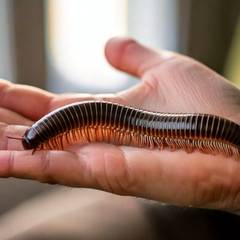
The two animals this guide did not originally cover molt at opposite ends of the room. A giant millipede goes down. Exotic vets are blunt about it: millipedes molt underground, do not disturb buried millipedes, and molting may take several weeks, so leave the animal undisturbed until it re-emerges. It will do this many times before maturity, and the two things that let it happen are substrate deep enough to burrow fully and substrate moist enough to hold a chamber. A millipede that has been gone for three weeks is a millipede molting, and the reader who digs to check is the one who kills it. The millipede enclosure setup guide gives the depth.
A stick insect goes up. Keeping Insects' care page has the two rules: stick insects need three times their body length in height, because they need that space while molting, and when they shed they hang upside down from their old skin, so the roof of the enclosure should be netting or mesh they can grip. Molting from the roof succeeds far more often than molting from branches or leaves, especially for the heavier species, and when the space is limited or the molt goes wrong the insect dies or is severely deformed. That is the whole reason the stick insect enrichment guide puts height first and a grippable ceiling second. A crowded enclosure adds a third failure, other insects knocking legs off a molting one, and a molting stick insect is the one animal on this page that should not have company within reach.
Feeding Around a Molt
Live prey left in an enclosure with a molting or freshly molted animal is a genuine hazard, not just a wasted feeding. Crickets and roaches will attack a molting tarantula or jumping spider that can't yet defend itself, and prey should always be removed well before signs of an approaching molt appear. Resume feeding only after the new exoskeleton has visibly hardened - typically 7 to 14 days after a tarantula molt, a shorter window for smaller species like jumping spiders, and for a millipede only once it has come back to the surface on its own.
When a Molt Actually Goes Wrong
A failed molt is a real risk, though far less common than a normal one. Warning signs include an animal that appears stuck half in and half out of the old exoskeleton for an extended period, visible struggling that doesn't progress, or limbs left twisted at the end of the process. Failed molts are usually linked to insufficient humidity during premolt, physical disturbance, or an underlying health issue - species-specific humidity and substrate depth requirements exist specifically to reduce this risk. If a molt does appear to fail, this is one of the few situations where experienced keeper or exotic vet intervention (never an untrained attempt to physically assist) may be necessary.
The Bottom Line
A still, hidden, food-refusing invertebrate is unsettling to watch, but across tarantulas, hermit crabs, jumping spiders, millipedes and stick insects alike, it's overwhelmingly the animal doing exactly what it's supposed to do. Looking dead without being dead is something invertebrates are unusually good at, and tardigrades take it to a genuine extreme, drying into a lifeless ball for decades before rehydrating and walking away. The best response in almost every case is also the hardest one for a worried keeper: leave it alone and wait.
Leave it alone and let it happen - that's really the whole guide in one sentence. The tarantula encyclopedia profile covers the animal most keepers first watch do it on its back.
Sources & Further Reading
Last reviewed 1 Jul 2026 · 2 sources
- Tree of Life Exotic Pet Medical Center: Giant Millipede Care; Tarantula Care
- Keeping Insects: Taking Care of Stick Insects
Frequently Asked Questions
How do I know a molt failed versus is just taking a long time?
Duration alone isn't the tell - a hermit crab buried for three weeks is normal, while a tarantula visibly stuck half in and half out of its old exoskeleton for hours, with no progress, is not. Look for active struggling that isn't resolving, rather than just going by the clock.
Should I increase humidity before an expected molt?
Yes, for most species. Slightly elevated humidity during premolt helps the old exoskeleton separate cleanly from the new one underneath, which reduces the risk of a failed molt. Species-specific care guides typically note a premolt humidity bump for exactly this reason.
Can I speed up a molt that seems stalled?
No, and attempting to should be avoided entirely. Physically assisting a molt without experience or training frequently causes fatal injury, since the new exoskeleton underneath is extremely fragile. If a molt genuinely appears to have failed, an exotic vet or a highly experienced keeper is the only appropriate intervention.
Do invertebrates eat their old exoskeleton?
Many do, and it's normal, not a sign of a problem. The shed exoskeleton contains calcium and other nutrients, and species like tarantulas and some hermit crabs will consume all or part of it after a molt completes.
How long after a molt can I resume handling?
Wait until the new exoskeleton has visibly hardened, which is typically 7 to 14 days for a tarantula and often shorter for smaller species like jumping spiders. A freshly molted invertebrate is soft, fragile, and easily injured by even gentle handling.
🦂 How Much Does an Emperor Scorpion Really Cost?
🦀 How Much Does a Hermit Crab Cost?
🕷️ How Much Does a Jumping Spider Really Cost?
🦗 How Much Does a Praying Mantis Cost?
🦋 How Much Does a Stick Insect Really Cost? (And a Legal Note to Read First)
🕷️ How Much Does a Tarantula Really Cost?
🦂 Should You Handle an Emperor Scorpion? Rarely, and Carefully
🦀 How to Handle a Hermit Crab (Minimally, and On Its Terms)
🕷️ How to Handle a Jumping Spider (And Why Its Eyesight Matters)
🦗 Can You Hold a Praying Mantis? Gently, and Rarely
🦋 How to Handle a Stick Insect (And Why You Can Keep More Than One)
🕷️ Should You Handle a Tarantula? Almost Always, No
🦂 Common Emperor Scorpion Health Issues and What Causes Them
🦀 Common Hermit Crab Health Issues (There's Almost No Vet Care, So Prevention Is Everything)
🕷️ Common Jumping Spider Health Issues
🦗 Common Praying Mantis Health Issues (Molting Is Where Nearly Everything Goes Wrong)
🦋 Common Stick Insect Health Issues (Molting Is the Biggest Risk)
🕷️ Common Tarantula Health Issues (Prevention Matters More Than Treatment)
Recommended Gear
As an Amazon Associate, we earn from qualifying purchases through the links above - at no extra cost to you.

Written by Michael Ryan
Mike keeps two rescued bearded dragons, Dex and Cera, and writes the care guides on BeastlyFacts from his own research and mistakes. He is not a veterinarian.
More about Michael Ryan →